Nuts grow across nearly every region of the United States, but no single nut tree thrives everywhere. Pecans dominate the South and parts of the Midwest, black walnuts spread through the eastern and central states, hazelnuts concentrate in the Pacific Northwest, and almonds and pistachios are almost entirely limited to California and a few neighboring western states. If you are specifically wondering where do hazelnuts grow in the United States, they are most concentrated in the Pacific Northwest, especially in areas with mild, wet winters. Chestnuts grow in cooler parts of the East and upper Midwest. Figuring out which nut trees will actually produce for you comes down to three things: your USDA hardiness zone, your local chilling hours in winter, and whether your summer heat is long and hot enough to mature the crop.
Where Do Nuts Grow in the US by Type and Region
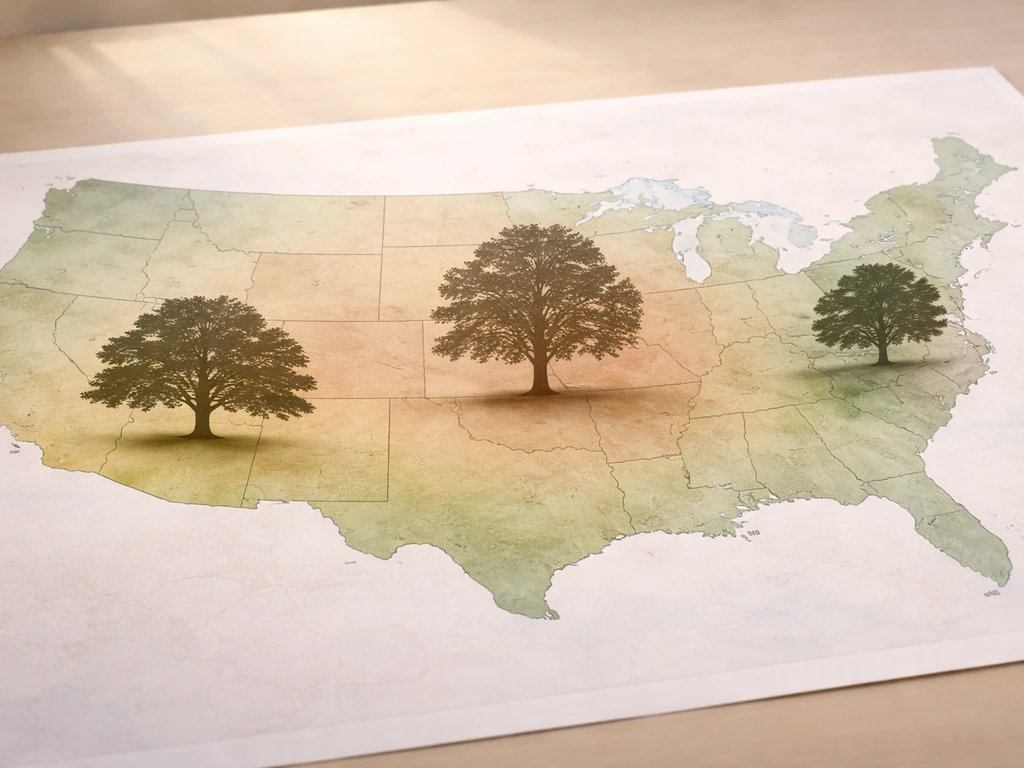
US Regions and Climates Where Nut Trees Thrive
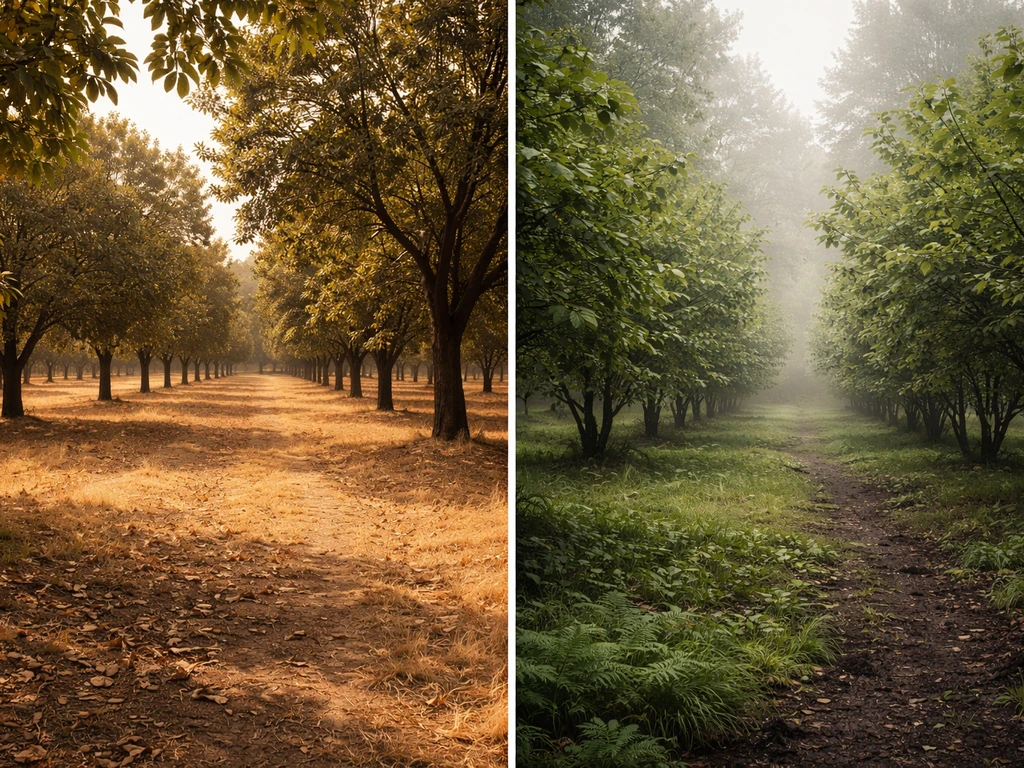
The United States covers enough climate diversity that at least one nut tree species is viable in almost any state, but the productive zones for each species are surprisingly narrow. The broad pattern breaks down into four regions: the humid South and Central Plains (pecan country), the eastern hardwood belt (black walnut, chestnut, hickory), the Pacific Coast and inland West (almonds, pistachios, English walnuts), and the cooler, wetter Pacific Northwest (hazelnuts). In Europe, hazelnuts are most often found in temperate regions with mild, wet winters and a reliable growing season, especially across parts of western and southeastern Europe where do hazelnuts grow in Europe. Understanding which region you fall into is step one, but you still need to dig into specifics like soil drainage, late frost risk, and whether you have room for cross-pollination partners.
The South and lower Midwest have the long, hot growing seasons that pecan needs to fill out and mature its nuts. The Pacific Northwest, particularly Oregon's Willamette Valley, has the mild winters and adequate moisture that hazelnuts prefer. Whether hazelnuts can hazelnuts grow in the tropics depends on whether the plants still get enough winter chill and a suitable season length for nut development hazelnuts prefer. California's Central Valley has the precise combination of winter chill and hot, dry summers that almonds and pistachios require. And much of the eastern half of the country, from the Appalachians through the Ozarks and into the upper Midwest, supports black walnut and chestnut well enough for both backyard and small-scale commercial production.
Major US Nut Types and Where Each One Grows
Pecan
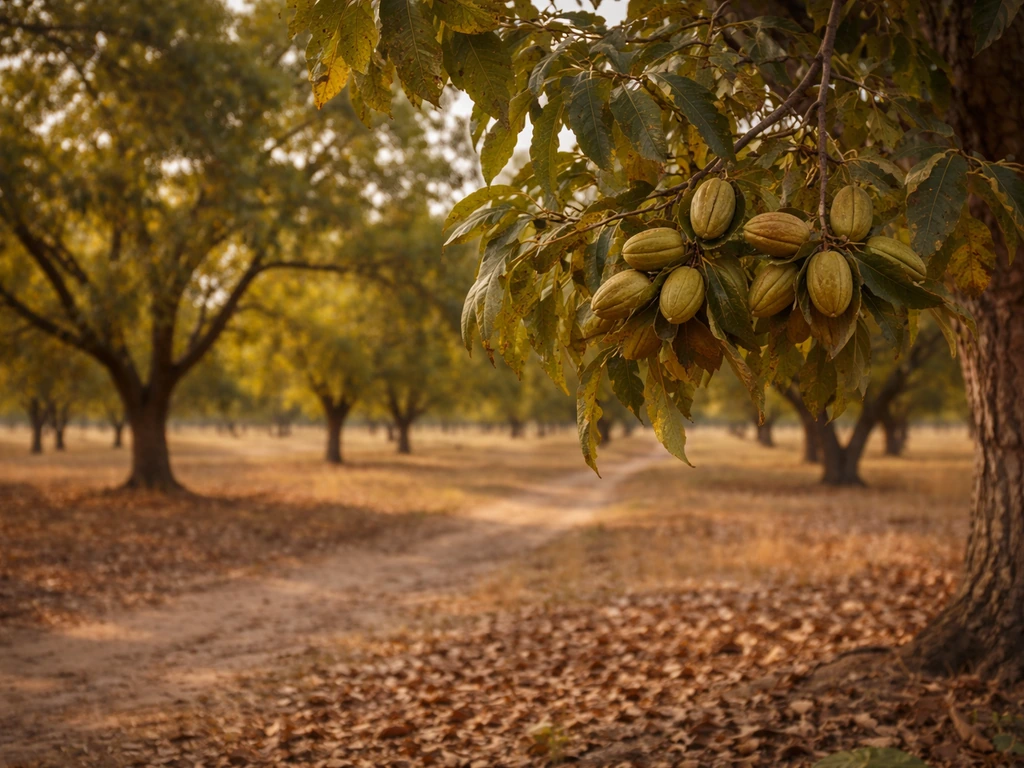
Pecan (Carya illinoinensis) is native to the Mississippi River valley and the American South, and it's the most economically important nut tree native to North America. It grows reliably in USDA zones 5B through 9A, which covers a huge swath of the country from the Gulf Coast states up through Kansas and into parts of the mid-Atlantic. The best commercial production runs through Georgia, Texas, New Mexico, Oklahoma, and Mississippi, but backyard trees do fine across much of the Southeast and lower Midwest. Pecan is a wind-pollinated species, and for good nut set you need multiple cultivars, ideally at least three with a mix of Type I and Type II pollination types. A single tree will often produce poorly. Site matters a lot too: pecan performs best on deep, well-drained alluvial soils like river bottoms, and shallow or poorly drained soils consistently reduce orchard performance.
Black Walnut and English Walnut
Black walnut (Juglans nigra) is native to the eastern US and grows wild from the Great Plains east through the Appalachians and into the mid-Atlantic. It's a tough, adaptable tree, but nut production is a different matter than tree survival. Walnut needs around 500 to 1,000 hours of chilling below 45°F for good development, and late-spring frosts are one of the most common causes of crop failure because they kill the flower buds. Purdue Extension specifically flags frost as a primary production limiter. Soil drainage matters too: wet, compacted, or shallow soils produce poor trees and poor crops. English (Persian) walnut (Juglans regia) is the grocery-store walnut and is grown commercially in California's Central Valley. It can succeed in parts of the Pacific Northwest, the mid-Atlantic, and even some areas of the upper South, but cultivar selection is critical. In places like Utah, many commercially available cultivars won't reliably fruit because of late-spring and early-fall freeze events.
Hazelnut
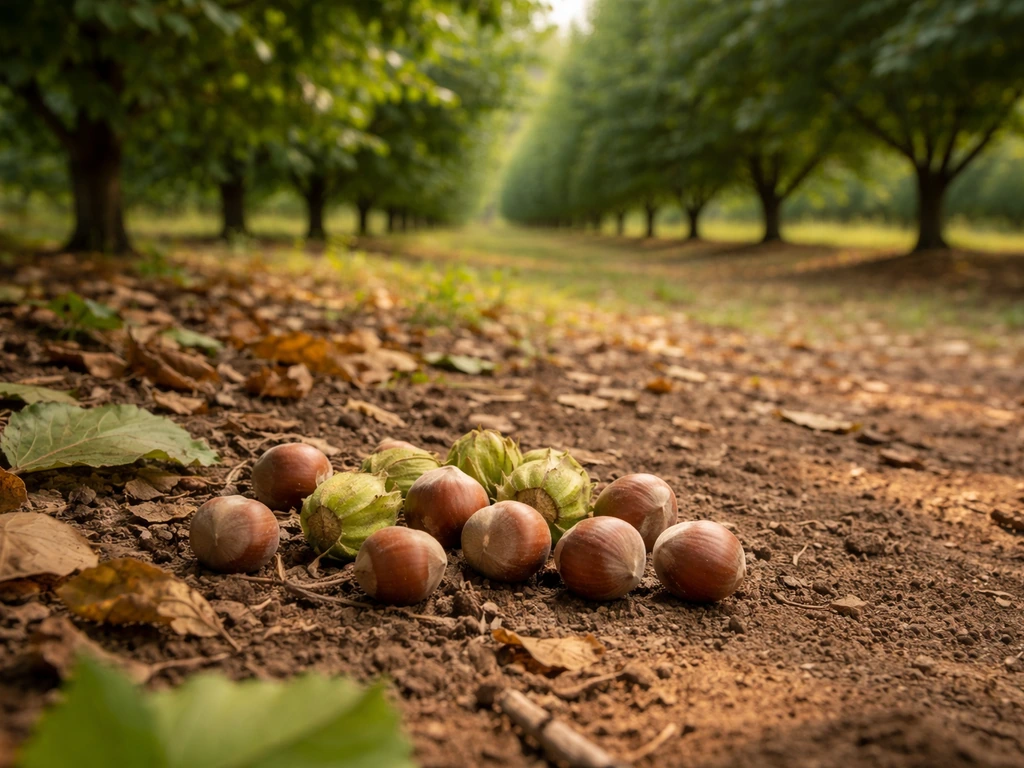
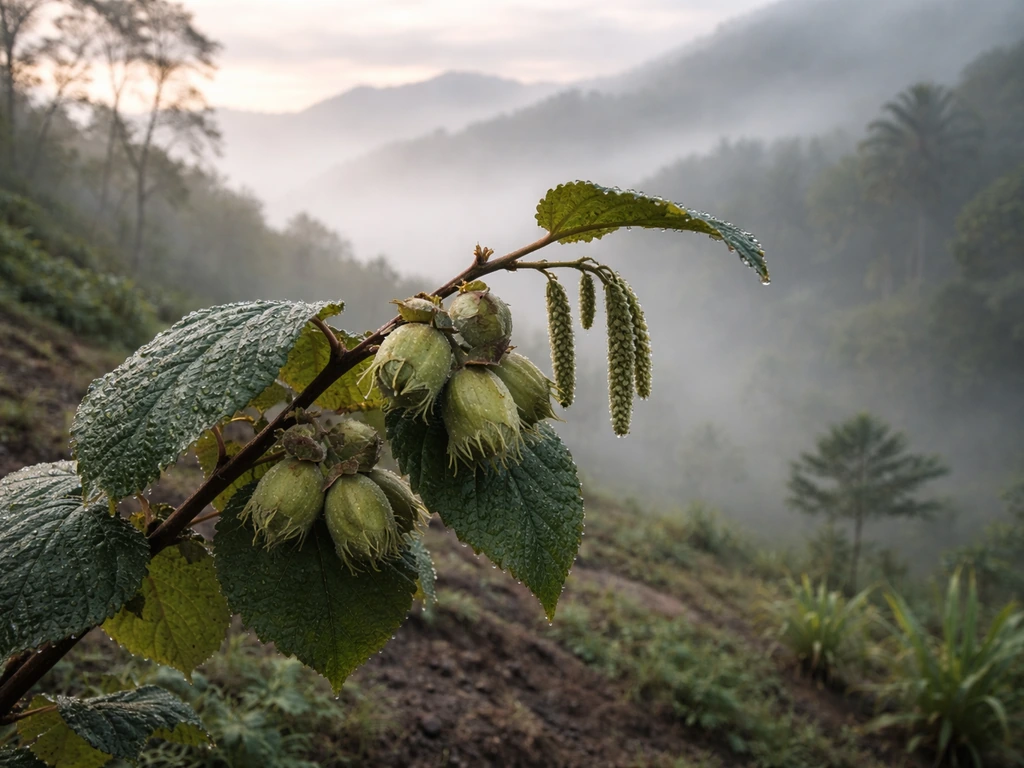
Hazelnuts are a Pacific Northwest specialty in the US. Oregon's Willamette Valley produces over 99% of the country's commercial hazelnut crop, according to Oregon State University Extension. The combination of mild, wet winters and warm, relatively dry summers creates near-ideal conditions. Washington produces smaller quantities in similar climates. The American hazelnut (Corylus americana) is a native shrub that grows wild across much of the eastern US, but it produces small nuts and isn't used commercially. Hybrid cultivars developed by OSU have expanded hazelnut growing into other zones, and disease-resistant varieties have addressed the eastern filbert blight problem that previously blocked East Coast hazelnut production. Chilling requirement for hazelnuts runs around 800 hours below 45°F, making them a cool-climate crop. If you're wondering where do hazelnuts grow in Australia, focus on regions with cool winters and reliable moisture so the trees can meet their chilling needs cool-climate crop. The regional picture for hazelnuts in the US connects closely to broader questions about what climates hazelnuts prefer worldwide. Because hazelnut growing depends heavily on chilling hours and winter moisture, you can find out whether they can grow in India by comparing these requirements to your region’s climate.
Almond
Almonds are botanically stone fruits (related to peaches), not true nuts, but they're grown and eaten as nuts and belong in any serious discussion of US nut production. California produces roughly 80% of the world's commercial almonds, concentrated in the San Joaquin and Sacramento valleys. Almonds need around 400 to 500 chilling hours below 45°F, which is a relatively low requirement that suits California's mild winters. The tradeoff is that almonds bloom very early in the year, making them vulnerable to frost damage in colder climates. Outside California, almonds can succeed in parts of the Pacific Northwest and select areas of the Southwest, but consistent commercial production is rare beyond California's borders.
Pistachio
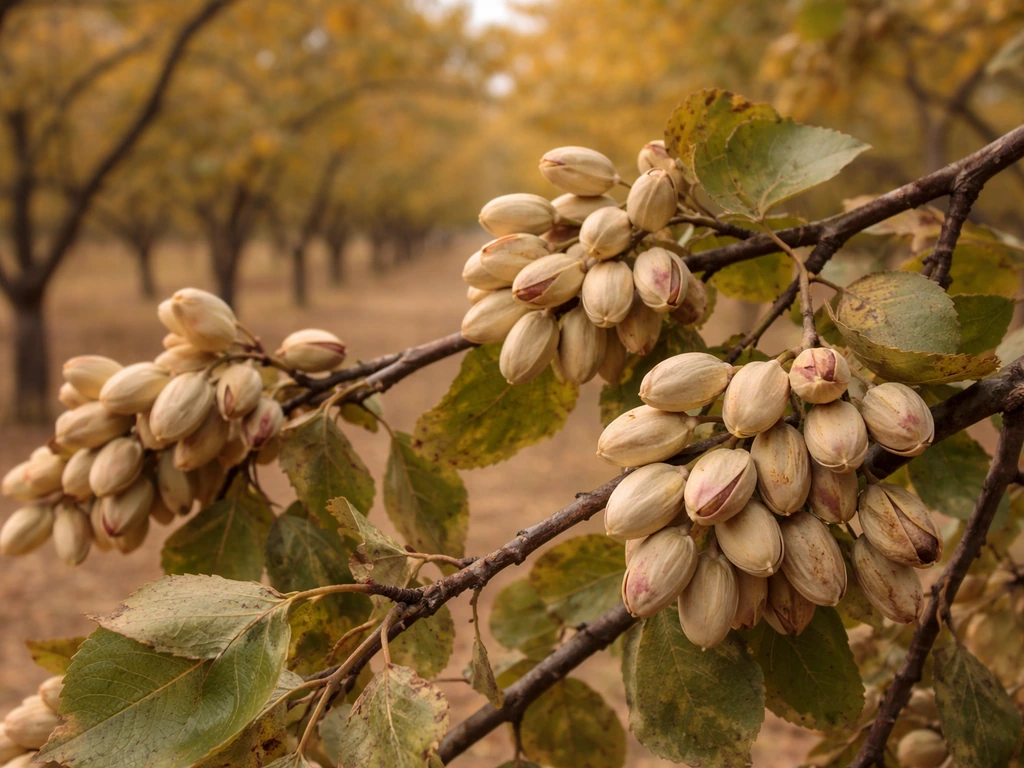
Pistachios are even more geographically restricted than almonds in the US. USDA marketing order data places US pistachio production in California, Arizona, and New Mexico, with California's Central Valley dominating by volume. Pistachios need a very specific climate: cold enough winters to satisfy a chill requirement (modeled at roughly 900 chill units) followed by hot, dry summers to mature the crop, with heat accumulation modeled at around 11,500 growing degree hours after dormancy breaks. They are also alternate-bearing (producing heavily one year and lightly the next), which is a biological limitation, not just a management issue. Outside the arid West, humidity and insufficient summer heat make pistachio cultivation unreliable.
Chestnut
Chestnuts occupy an interesting position in US nut growing because the native American chestnut (Castanea dentata) was essentially wiped out by chestnut blight in the early 20th century. Today's chestnut production relies on Chinese chestnut (Castanea mollissima), which carries natural blight resistance, or on hybrid cultivars that blend blight resistance with good nut quality. MSU Extension makes an important regional distinction: in eastern states where the blight pathogen is present, growers should plant Chinese or blight-resistant hybrid chestnuts, while in western states growers can sometimes use European chestnut (Castanea sativa) or European hybrids. Michigan is a significant chestnut-producing state, and good production also occurs in parts of Virginia, Maryland, the Carolinas, and Missouri. Chestnuts need well-drained, acidic soil and moderate summers.
How to Identify Nut Trees and Their Preferred Conditions
Identifying nut trees in the field comes down to a combination of leaf shape, bark texture, nut structure, and husk characteristics. Black walnut has compound leaves with 15 to 23 leaflets, deeply furrowed dark bark, and a green, tennis-ball-sized husk that stains everything it touches yellow-brown. Pecan leaves are also compound but the leaflets are more elongated and slightly curved. Hazelnuts are shrubs or small trees with rounded, double-toothed leaves and the nuts are enclosed in a papery or leafy husk. Chestnuts have long, lance-shaped leaves with sharp-toothed margins, and the nuts sit inside a spiny bur that looks like a medieval weapon. Knowing what you're looking at matters because wild nut trees don't always indicate good growing conditions for cultivated varieties.
Beyond identification, each species signals its preferred conditions through where it naturally grows. Black walnut thrives on moist, deep, well-drained soils on slopes and coves, not wet bottomlands or rocky ridges. Pecan's wild range closely follows river floodplains, telling you it wants deep, fertile, moisture-retentive but well-drained soil. Hazelnut grows in forest edges and thickets in areas with reliable winter moisture. Chestnut naturally occupies well-drained upland sites with acidic, often sandy or loamy soil. Reading the native habitat of a species is one of the most reliable guides to what site conditions it needs in cultivation.
Native vs. Cultivated Nuts and the Climate Limits That Matter
The difference between a native nut tree surviving in your yard and a cultivated nut tree producing a reliable crop is significant. A black walnut seedling might grow fine across a wide range of the eastern US, but if you want consistent nut production from a named cultivar, you need to match chilling hours, avoid late frost zones, and ensure adequate soil depth. The same principle applies to every major nut species. The three climate variables that most often determine success or failure are chilling hours, late frost risk, and growing season length.
| Nut Tree | Chilling Hours Needed | Primary US Region | USDA Zones | Key Climate Limit |
|---|---|---|---|---|
| Pecan | ~250 hours | South, Central Plains | 5B–9A | Short growing season in north; heat in south |
| Black Walnut | 500–1,000 hours | Eastern US, Midwest | 4–9 | Late spring frost kills buds |
| English Walnut | 500–1,000 hours | California, Pacific NW | 5–9 | Late/early freeze in inland areas |
| Hazelnut | ~800 hours | Pacific Northwest (OR/WA) | 4–8 | Eastern filbert blight in eastern US |
| Almond | 400–500 hours | California, Southwest | 7–9 | Early bloom, frost-prone areas fail |
| Pistachio | ~900 chill units | CA, AZ, NM | 7–10 | Humidity, insufficient summer heat |
| Chestnut | 400–700 hours | Upper South, Midwest, NE | 4–8 | Chestnut blight in eastern states |
Chilling hours are accumulated during winter when temperatures stay below 45°F. Too few chill hours and the tree either won't break dormancy properly or will produce poorly. Too many late-season frosts after dormancy breaks and you lose the flower crop for that year. For almonds and pistachios, the secondary concern is summer heat accumulation: you need enough hot days after bloom to mature the nuts, which is why these crops are limited to the warmest parts of the West.
Harvest Timing by Nut and Region
Nut harvest in the US is largely a fall event, but timing varies by species and geography. Here's a practical breakdown of when to expect harvest by nut type:
- Pecan: September through November depending on cultivar and latitude. Southern orchards in Texas and Georgia harvest earlier; northern-zone pecan trees closer to zones 5 and 6 push harvest toward October or November.
- Black Walnut: Late September to early October in most of the eastern US. The USDA-affiliated black walnut buying season starts October 1. Nuts mature quickly and drop; leaving them on the ground too long invites mold and quality loss.
- English Walnut: Mid-September through early November in California. Timing is marked by hull split, when a high percentage of nuts show open hulls. Harvest before excessive rain, which stains the shell.
- Hazelnut: Mid-September through October in Oregon's Willamette Valley. Kernels reach maturity in August or September and nuts begin dropping to the orchard floor before commercial harvest begins.
- Almond: Mid-July through October in California, depending on variety. Early varieties like Nonpareil hull-split in late July; late varieties extend into October.
- Pistachio: August through early September. Irrigation is reduced in August to let soil dry enough for harvest equipment and to manage late-season disease pressure.
- Chestnut: September through October for most of the eastern US. Chinese chestnut and hybrids in Michigan and the mid-Atlantic typically ripen in September, with later-maturing varieties extending into October.
Growing Nut Trees at Home: What You Actually Need
Before planting any nut tree, get two things sorted: your USDA hardiness zone and your local average chilling hours. The zone tells you about minimum winter temperatures; the chilling hours tell you whether a species will actually break dormancy and set fruit properly. Your county's cooperative extension service is the fastest way to get accurate local chilling hour data.
Space is a real constraint. Pecan trees grow large, often 70 to 100 feet tall at maturity, and you need at least two to three cultivars for cross-pollination. Black walnut is similarly large and produces juglone, a chemical that suppresses growth in many nearby plants. Hazelnut shrubs are much more manageable at 8 to 20 feet and can be maintained as a hedge. Chestnut trees are medium to large depending on species. Almonds and pistachios are orchard-scale crops that do best in full sun with irrigation control.
Soil preparation matters more than most home growers expect. Pecan needs deep, well-drained soil; planting in shallow or poorly drained ground will produce a weak tree and poor crops regardless of climate. Black walnut needs similar conditions: deep, moist but well-drained soil without a hardpan or gravel layer close to the surface. Chestnuts demand acidic, well-drained soil and won't tolerate waterlogged conditions. Test your soil pH and drainage before committing to a planting site.
- Look up your USDA hardiness zone and local chilling hours (your county extension office has this).
- Match those numbers to the species requirements in the table above.
- Evaluate your soil: drainage, depth, pH, and fertility.
- Plan for cross-pollination: pecan needs 3+ cultivars, hazelnut needs 2 compatible varieties, chestnut benefits from multiple trees.
- Choose cultivars selected for your region, not just general catalog descriptions. Regional extension services list recommended cultivars by state.
- Expect a wait: most nut trees take 5 to 10 years to produce a meaningful crop from a young sapling.
Troubleshooting Poor Nut Set and What to Do Next
If your nut tree is growing but not producing, or producing poorly, the cause almost always falls into one of four categories: pollination failure, late frost damage, inadequate chilling, or a poor site. Here's how to work through each one.
Pollination failure is the most common problem in home plantings. Pecan, walnut, and hazelnut are all wind-pollinated, and all benefit strongly from multiple trees or cultivars. A single pecan tree will often produce far fewer nuts than a planting of three or more complementary cultivars. If you only have one tree and it's not fruiting, adding a compatible pollinator is usually the simplest fix. For hazelnuts, incompatibility between cultivars is a documented problem: not all combinations cross-pollinate effectively.
Late frost damage is the sneakiest production limiter because it doesn't kill the tree, just that year's crop. If your walnut or pecan leafs out and then gets hit by a frost in April or May, the emerging catkins and pistillate flowers die and you lose the crop for that season. The tree looks fine through summer but produces nothing. If this happens repeatedly, you either need frost-protection measures or a later-leafing cultivar better matched to your local last-frost date.
Inadequate chilling is harder to diagnose but shows up as poor or erratic bloom, weak nut development, or failure to break dormancy uniformly. If you're growing a high-chill cultivar (say, an English walnut variety bred for 800-hour chill climates) in a zone 8 or 9 location that only accumulates 400 hours, the tree will struggle year after year regardless of other management. The solution is to switch to a cultivar with a lower chill requirement that matches your actual winters.
Site problems are the most permanent. A pecan planted in heavy clay with poor drainage, or a chestnut in alkaline soil, will underperform indefinitely. If you've ruled out pollination and frost issues and the tree still produces poorly after 7 to 10 years, take a hard look at soil drainage, pH, and depth. A soil test from your extension service will tell you exactly what you're working with and whether amendments can help or whether the site is fundamentally unsuitable. Sometimes the honest answer is that a different nut species would be a better fit for that specific spot.
FAQ
Where do nuts grow in the US, if I’m choosing by state or region? (Do I just pick a state?)
It depends on two thresholds, winter chill and summer heat, not just geography. Even within the same state, a nut variety may fail if your microclimate gets late-spring frosts (especially for walnut and pecan) or if you do not reach the cultivar’s chill requirement, so the “where” answer is always tied to your local last-frost date and chill hours.
Why can a nut tree thrive in one town but not a nearby one in the same state?
Yes, “nut belt” patterns do not always match USDA zones. A protected yard in a river valley can have more chill and fewer frost hits than the surrounding area, while a slope or exposed ridge can cost you the crop. Use your county extension office for site-specific chill and last-frost data rather than relying only on state or map-level zone averages.
When do nuts get harvested in the US, and does “grown in my region” mean the same month for everyone?
For most major cultivated nuts, harvest is fall, but the calendar shifts by region and variety. Pecans typically come later in warm regions, hazelnuts often finish in early fall, and chestnuts can be earlier or later depending on blight-resistant cultivar and local season length. If your goal is timing, confirm the specific cultivar’s harvest window because the tree being “grown in your region” does not guarantee the same fall dates.
If I see nut trees nearby, will planting one tree in my yard produce nuts?
Pecan, walnut, and hazelnut are wind-pollinated, but they still require good cultivar compatibility for reliable yields. A single tree often produces poorly, even if it survives, and hazelnuts can have incompatibility between certain cultivars. The practical fix is to plant at least two to three compatible cultivars (for pecans) or matched pollination partners (for hazelnuts).
If a nut grows wild in my area, can I assume it will produce well if I plant it?
Look for “native grows there” versus “commercially produces there.” A native black walnut or wild hazelnut may survive broadly, but cultivated nut quality and yield usually depend on selecting varieties matched to your exact chill hours, frost risk, and soil. If your purpose is consistent nuts, you generally want named cultivars, not random seedlings.
What’s the most common non-climate reason nuts don’t produce in places that look suitable?
Soil drainage is a common silent failure point, even in good climate zones. Heavy clay, shallow bedrock, or a perched water table can reduce root function and fruiting for years. Before planting, confirm drainage and test pH, especially for chestnuts (acidic preference) and pecans/walnuts (deep, well-drained conditions).
Are there nuts that can grow outside their main states, and what usually limits them?
Yes, there are “almost, but not quite” cases. English (Persian) walnut is centered in California but can fruit in parts of the Pacific Northwest and mid-Atlantic with the right cultivar, while almonds beyond California are often limited to specific pockets where frost timing and heat are workable. The deciding factors are bloom timing versus your frost windows and whether your summer season length is long enough to mature nuts.
Why are pistachios so geographically limited compared with other nuts?
Pistachios are the most strict in the US because they need enough chilling to break dormancy and enough hot, dry heat to mature the crop, plus they are alternate bearing. That combination makes them unreliable in more humid or cooler regions, even where a few years of success might happen.
My nut tree grew fine but didn’t produce nuts this year, what should I check first?
If a tree leafs out normally but produces no nuts, late frost damage to flowers is a top suspect. The tree can look healthy the same summer and still lose the crop because the catkins or flowers were killed after dormancy. The next step is to compare your last-frost date to the cultivar’s typical bloom timing, then consider a later-leafing or more frost-tolerant cultivar.
How do I tell whether inadequate chilling is the problem, not pollination or frost?
If poor production seems consistent year after year, inadequate chilling is another likely cause, especially when the cultivar’s chill requirement is higher than your local winter actually provides. Symptoms can include erratic bloom timing, weak nut development, or dormancy not breaking uniformly. The remedy is cultivar selection based on your actual chill hours, not just your hardiness zone.
What’s the fastest, most reliable way to figure out which nut varieties can work at my address?
The easiest way to confirm whether nuts are viable for your exact spot is to use your county cooperative extension’s chill hour resources and match that to the specific cultivar’s chill requirement. Then sanity-check late frost risk, because the same chill hours can still be a crop-killer if bloom happens too early. This two-step approach is more accurate than “USDA zone only.”