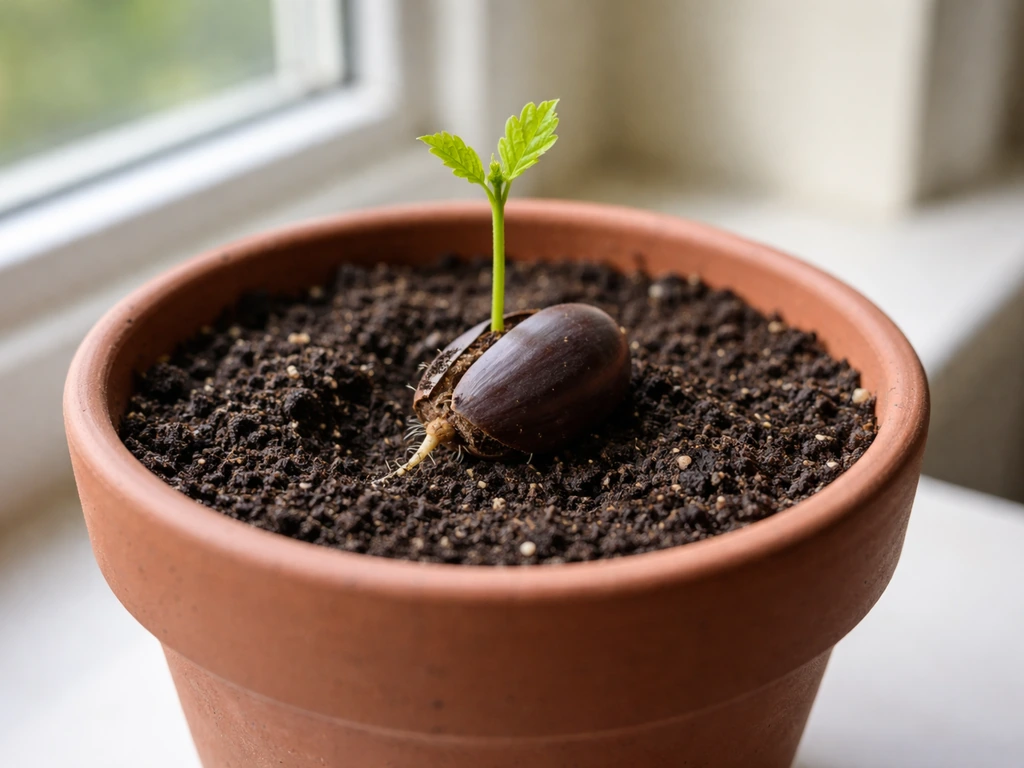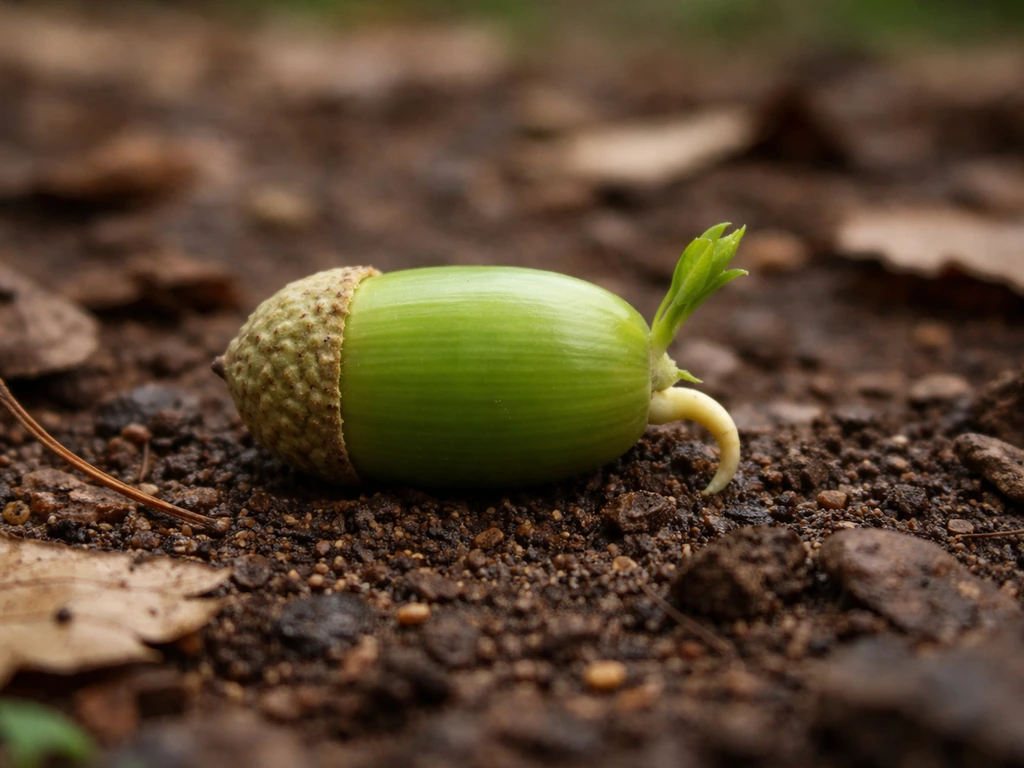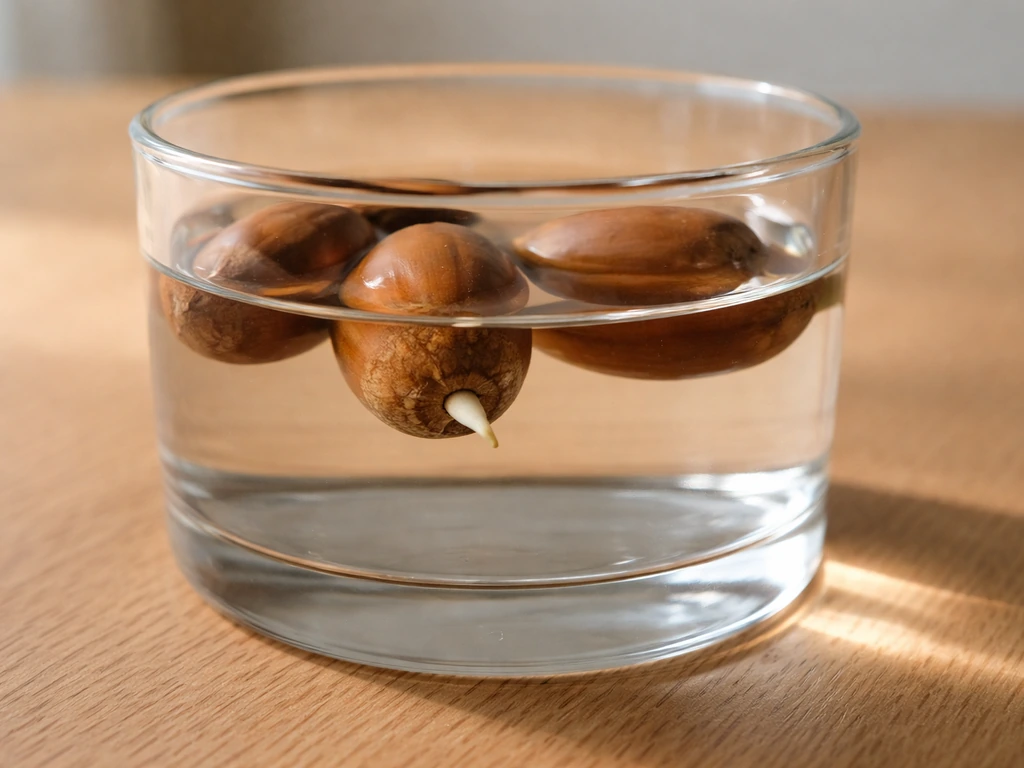
Most floating acorns will not grow into healthy oak seedlings. Floating usually means the acorn is hollow, insect-damaged, or has lost too much moisture to sustain germination. That said, "usually" is not "never." A small percentage of floating acorns do contain viable embryos, so the float test is a useful first filter but not a final verdict. If you want to maximize your germination success, the right approach is to use the float test as a starting point and then run a couple of quick follow-up checks before you commit to planting anything.
Will Acorns That Float Grow? How to Test and Germinate
Marcus Hendricks
27 May 2026
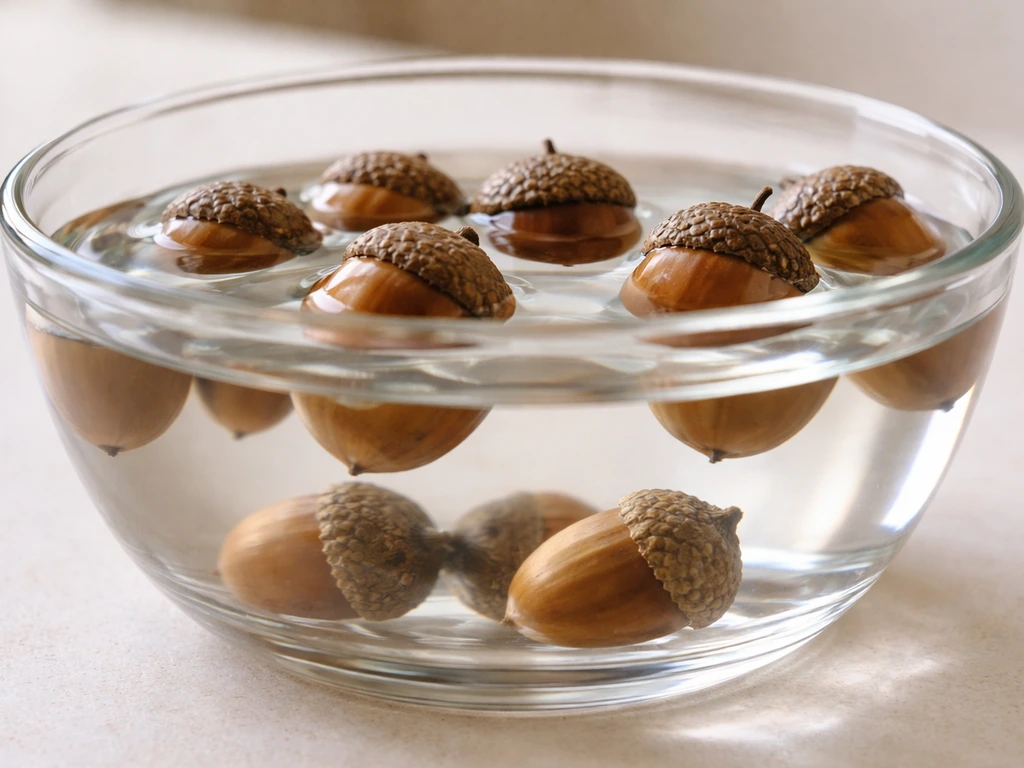
What the float test really means for acorn viability
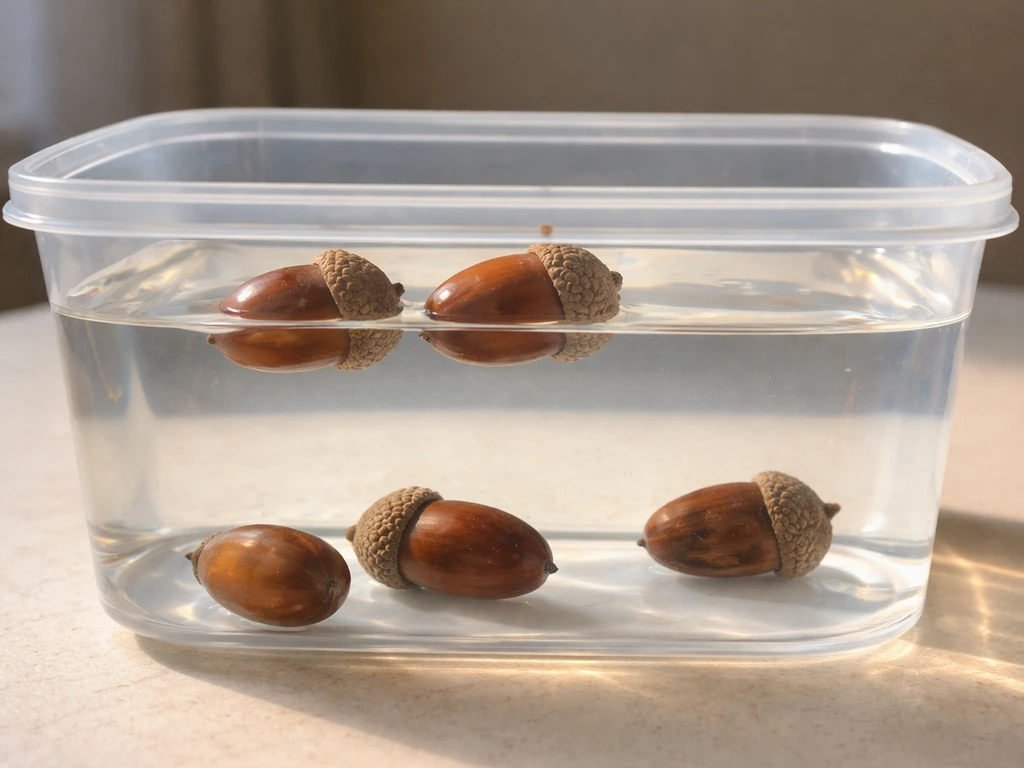
When an acorn floats, it usually means one of three things: the embryo and cotyledons have been eaten or tunneled through by an acorn weevil larva (Curculio spp.), the seed has dried out and the internal tissue has shrunk away from the shell leaving an air pocket, or the acorn was never fully developed in the first place. Any of those three scenarios kills germination potential. The research on Garry oak (Quercus garryana) makes this vivid: in a controlled float-test study, 77% of floating acorns had more than half of their cotyledon tissue destroyed by insect damage, and only 6% of floaters showed no insect damage at all. Meanwhile, 88 to 96% of the sinkers germinated successfully, with an average germination rate around 80%.
That said, researchers have also noted that the blank" rel="noopener noreferrer">float test's accuracy as a viability predictor is still considered "questionable" under certain conditions. Moisture content matters: a freshly collected, fully viable acorn that has surface-dried quickly or has a naturally dense shell can sometimes float due to trapped air between the seed coat and shell rather than internal damage. If you are wondering can you grow acorns in water, treat it as an alternative germination setup, but still account for moisture trapping and other factors that can make an acorn float even when it might be viable. Overcup oak (Quercus lyrata) is actually flagged by USDA forest guides as a notable exception to the general sink-means-viable rule. The broader takeaway is that sinking acorns are almost always worth planting, while floating acorns need a second look before you write them off entirely or trust them blindly. If you still need help after the float test, learn more about how to tell if an acorn will grow by running quick viability checks floating acorns. With patience and the right follow-up checks, you can sometimes grow acorns that floated by chance rather than because they are truly dead.
The float test also performs differently across oak species. Research comparing germination and viability tests for southern hardwood seeds found that floating was the best screening method for eliminating bad willow oak acorns, but for cherrybark oak, floating combined with visual inspection gave better results than the float test alone. For northern red oak, a large-scale study of over 18,000 acorns found the float method reliably identified insect-infested, diseased, and damaged seeds. For blank" rel="noopener noreferrer">northern red oak condition testing using the float method plus dissection, the float method was found reliable for identifying insect-infested, diseased, and otherwise damaged acorns in a study of 18,334 acorns. So the test is genuinely useful, just not infallible, and its reliability shifts depending on what species you are working with.
Quick checks to confirm whether a floating acorn can grow
Before you discard every floating acorn or blindly plant them all, run through these additional checks. They take about two minutes per acorn and will save you weeks of wasted effort.
- Shake test: Pick up the acorn and shake it next to your ear. If you hear or feel the seed rattling inside the shell, the embryo has dried out and separated from the shell wall. That acorn is dead. No rattling does not guarantee viability, but rattling is a definitive discard.
- Visual and cap inspection: Look at the cap scar (where the cap attached). If it is spongy, soft, or has a small exit hole about 1 to 2 mm wide, a weevil larva bored out after consuming the interior. Discard it. Also check the shell surface for cracks, mold, or shriveling.
- Firmness squeeze: Gently squeeze the acorn between your fingers. A viable acorn feels firm and dense all the way through. If it compresses or crinkles, the interior tissue has collapsed and it will not germinate.
- Cut test (for the uncertain ones): If an acorn passes the shake and squeeze tests but still floated, slice it lengthwise with a sharp knife. A viable seed has cream to pale yellow cotyledon tissue that looks dense, moist, and fills the shell. Brown, hollow, or shredded interior means it is dead. This is the most definitive test you can do without a lab.
If you are also sorting green acorns collected before full maturity, or acorns you have been storing for a while, the same tests apply. The cut test in particular will tell you things the float test cannot. If you have a batch of acorns and want to know how to assess viability more broadly, the same logic covered here applies whether the acorns are brown, green, or anything in between.
How to prep floating acorns for germination (stratification basics)
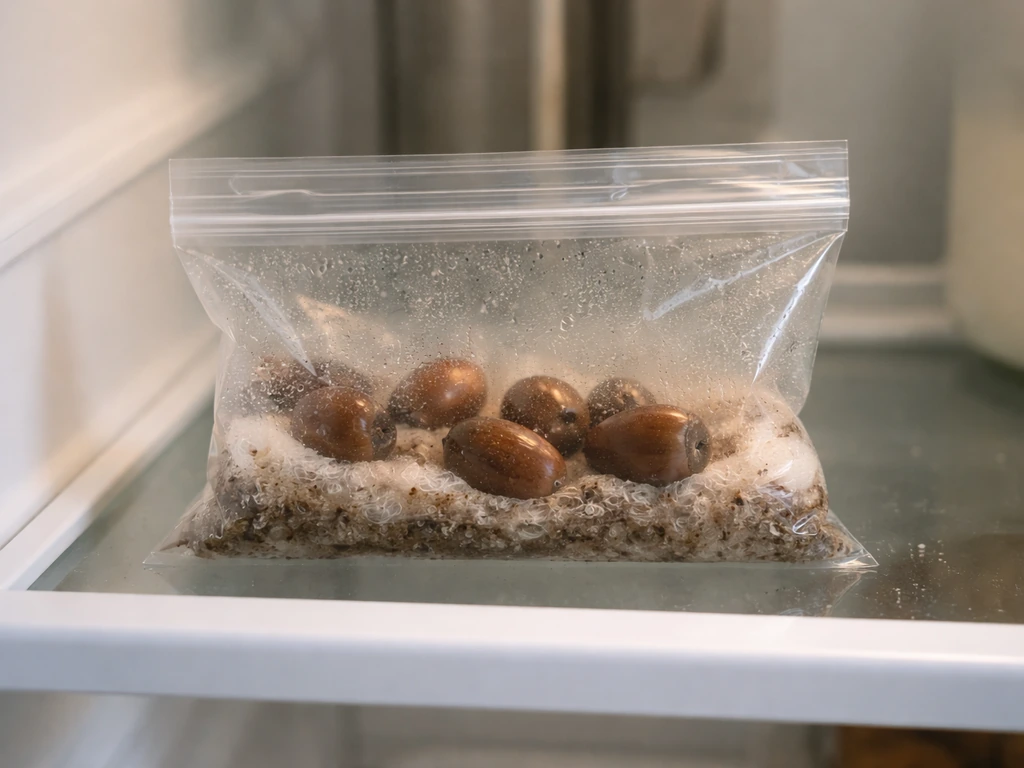
If a floating acorn passes your follow-up checks and you have decided it is worth trying, the preparation process is the same as for any acorn. Most oak species require cold stratification to break dormancy, which mimics the natural overwintering process the seed would go through if it fell in autumn and germinated in spring.
For white oak group species (white oak, bur oak, Garry oak), the stratification requirement is shorter, typically 30 to 60 days at 34 to 41 degrees Fahrenheit (1 to 5 degrees Celsius). Red oak group species (northern red oak, pin oak, water oak) need 30 to 45 days of cold treatment at the same temperature range. Some sources put red oak closer to 45 days to be safe. Bur oak is the most forgiving and will often germinate after just a month of cold.
To stratify: place your cleaned, viable acorns in a zip-lock bag with barely damp sphagnum moss or vermiculite, label it with the date and species, and store it in your refrigerator (not freezer). Check the bag every week or two. If you see mold forming on the moss, open the bag briefly to let it air out. If the acorns start to crack open and show a small white radicle (root tip), they are ready to plant right away. Do not let the radicle grow more than about half an inch before planting or it becomes fragile and easy to snap.
When and how to plant acorns for best odds
Timing depends on your approach. If you are planting directly in the ground, autumn is your best window. Plant acorns in fall after collecting them and let winter do the stratification work naturally. This is what squirrels do and it works remarkably well. For spring planting with stratified acorns, wait until soil temperatures have consistently climbed above 50 degrees Fahrenheit and frost risk has passed in your zone.
Plant acorns about one inch deep with the pointed end facing down and the cap scar facing up. If you are unsure which end is which, horizontal placement also works fine. Space them at least a few inches apart if planting in a nursery tray, or 12 to 18 inches apart in a seedbed if you are growing multiple trees. Cover with a light layer of soil and firm it gently to eliminate air pockets around the seed.
Soil should be well-draining but moisture-retentive. A mix of native soil with some compost or a standard potting mix with added perlite works well for containers. If you are wondering whether you can grow an acorn indoors, the same approach works, but you need container-ready soil and careful temperature and moisture control can i grow an acorn indoors. Keep the soil consistently moist but not waterlogged during germination. Germination starts with the shell cracking and the radicle pushing down before the shoot ever appears above ground, so do not be discouraged if you see nothing for three to six weeks. Patience is required.
Troubleshooting low germination and mold or rot prevention
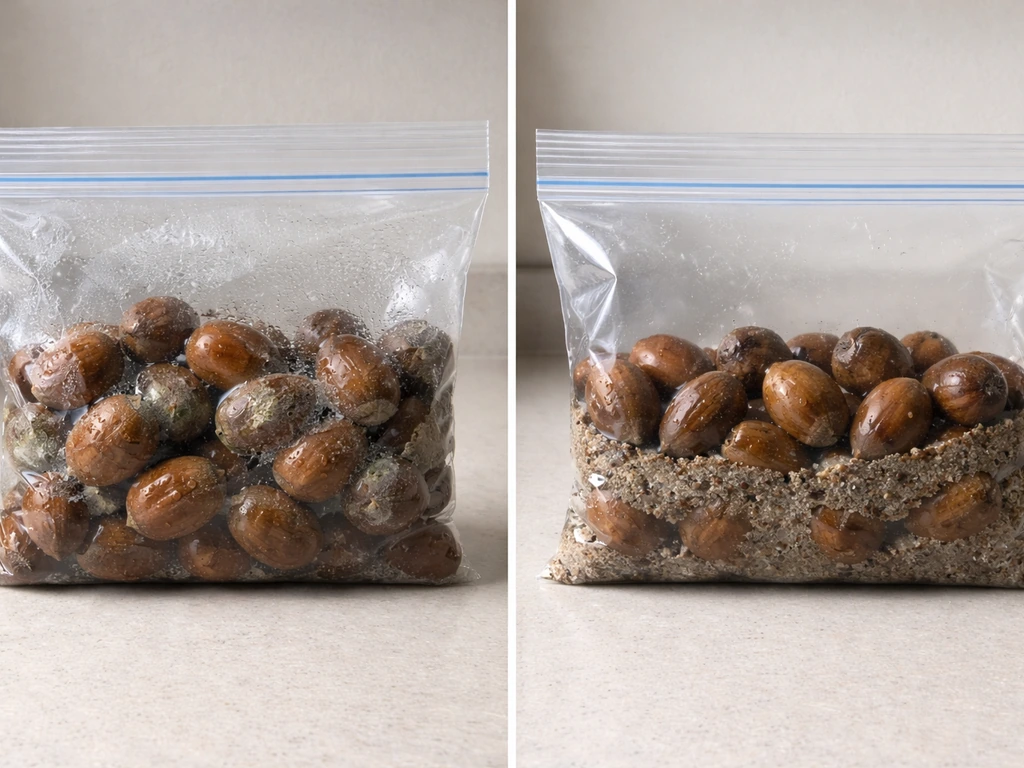
Low germination rates from a batch of floating acorns are almost always traceable to one of a few causes. Working through them systematically saves a lot of frustration.
- Mold during stratification: This usually means too much moisture in the bag. The moss or vermiculite should feel barely damp, like a wrung-out sponge, not wet. If you see white fuzzy mold on the acorn shell (not the flesh), gently wipe it off, reduce moisture, and reseal. Mold that has penetrated the shell or appears on the cut surface means the acorn is no longer viable.
- Rot after planting: Overwatering is the main culprit. If your soil stays soggy and cool for extended periods, the acorn embryo will rot before germination. Make sure your planting container or bed drains freely and that you are watering only when the top inch of soil starts to dry out.
- Nothing happening after six weeks: Check your stratification temperature. A standard household refrigerator set above 45 degrees Fahrenheit may not be cold enough to fully break dormancy in red oak group species. Also check that the acorns were not frozen at any point, which destroys the embryo.
- Germination starts but seedlings immediately die: This is usually damping-off fungus (Pythium or Fusarium), which thrives in wet, warm, poorly ventilated conditions. Use a sterile seed-starting mix, avoid overhead watering, and ensure air circulation around seedlings. Thinning overcrowded seedlings helps too.
- Weevil larvae emerging: If you see a small cream-colored grub exit a planted acorn or appear in your stratification bag, that acorn was infested and is not viable. Remove it immediately so it does not attract more pests or spread mold.
One honest note on expectations: even with perfect technique, germination rates from a mixed batch of collected acorns, especially floaters, will be uneven. If you started with 20 floating acorns, passed them all through the cut test, and ended up with 6 that looked viable internally, do not expect all 6 to germinate. A 50 to 70% germination rate from confirmed-viable acorns is a realistic and actually solid result. Collect more than you need and treat the extras as insurance.
Oak species and location: why results vary by region
The float test and germination process described above apply broadly to oaks, but results genuinely vary depending on the species you are working with and where you are growing it. Here is a quick reference for the most commonly grown species in North America.
| Oak Species | Float Test Reliability | Stratification Needed | Best Planting Approach | Notes |
|---|---|---|---|---|
| Northern Red Oak (Q. rubra) | High: float method reliably catches damaged/infested seed | 30–45 days cold (34–41°F) | Fall direct sow or spring after stratification | Widely studied; float test well-validated for this species |
| Bur Oak (Q. macrocarpa) | Moderate: generally reliable | 30–60 days cold | Fall direct sow or spring after stratification | Shorter stratification needed; very cold-hardy (Zones 3–8) |
| Pin Oak (Q. palustris) | Moderate | 30–45 days cold | Fall direct sow or spring after stratification | Prefers moist, acidic soils; common in eastern US |
| Garry Oak (Q. garryana) | Moderate to high: 77% of floaters had major insect damage | 30–60 days cold | Fall direct sow in Pacific Northwest | Float test very useful here; weevil damage is the dominant issue |
| Water Oak (Q. nigra) | High: floaters 'probably will not germinate' per USDA | 30–45 days cold | Fall direct sow or spring after stratification | Requires pregermination cold treatment; southern US species |
| Willow Oak (Q. phellos) | High: float test best method for eliminating bad seed | 30–45 days cold | Fall direct sow; southern/mid-Atlantic US | Float test especially effective for this species |
| Overcup Oak (Q. lyrata) | Low: known exception; viable acorns may float | 30–60 days cold | Use cut test to confirm viability before planting | USDA specifically flags this species as an exception to the sink rule |
Regional conditions add another layer. In the Pacific Northwest, Garry oak acorn crops are heavily impacted by weevil cycles in mast years, meaning floating acorn rates can spike in high-production years. In the southeastern US, water oak and willow oak growers deal with rapid post-collection deterioration in warm weather, so acorns need to be sorted and either planted or refrigerated within days of collection. In the upper Midwest and Northeast where bur oak and red oak dominate, fall planting is often the simplest and most reliable method because natural winter stratification does the work for you.
The bottom line is simple: use the float test as your first pass, follow it up with the shake, squeeze, or cut test on any floaters you want to save, stratify correctly for your species, and plant at the right time for your region. A floating acorn is a red flag, not a death sentence, but it does put the burden of proof on that seed to pass your additional checks before it earns a spot in your planting bed. If you are wondering can you grow a green acorn, the same viability checks apply, and a successful radicle means it is ready to stratify or plant. Green acorns can grow too, but the float test and follow-up checks help you confirm which ones are actually viable will green acorns grow.
FAQ
If an acorn floated, can I still grow it indoors?
Yes, but only if you first confirm viability and then use the same cold stratification schedule. The key difference indoors is you must prevent drying, because a floating acorn that trapped air may look fine on the outside but still lose moisture quickly in a household environment.
Does the float test work if I soaked acorns before testing them?
Do not rely on the float test if you already soaked acorns or if they sat in water for more than a short time. Waterlogging and trapped air can change buoyancy, so reassess only after you follow the same timing and conditions each batch.
How do I know when a stratified floating acorn is ready to plant?
A white radicle tip is your go-signal, but timing matters. Plant as soon as the radicle is visible and still short, and avoid waiting for more root growth, because long, delicate radicles often snap during planting.
What should I look for on a cut test of a floating acorn?
If you cut an acorn and see healthy, firm tissue, it is worth trying even if the float result was positive. However, if the interior is dark, mushy, or smells bad, that usually means rot or heavy insect damage, and you will get poor outcomes.
Should I retest floating acorns if I get mixed results?
Mostly no. Some species can float due to moisture or air pockets, but a repeated float after drying briefly and retesting is more concerning than a one-time float. If possible, retest a small sample to confirm the pattern before you discard a large batch.
Is it better to plant sinkers immediately and wait on floaters?
In most cases, planting sinkers first makes sense, and you can treat floaters as a smaller, experimental batch after follow-up checks. This reduces wasted labor because even confirmed-viable floaters will germinate unevenly.
Why are my floating acorns not germinating even after stratification?
It can take 3 to 6 weeks for the shell to crack and the radicle to appear, sometimes longer if temperatures are cool. If there is no sign of cracking by then, check that the stratification temperature was correct and that the medium stayed barely damp, not dry or waterlogged.
What should I do if mold shows up during refrigerator stratification?
Yes, mold can indicate excessive moisture or poor airflow. Open the bag briefly to air out and keep the medium barely damp, not wet, then monitor more frequently (for example, weekly) to prevent re-dampening.
Can I freeze stratifying acorns or keep them in the freezer for convenience?
For the common bag-and-fridge method, avoid freezing, do not let the medium dry out, and do not keep acorns in the freezer “to pause time.” Freezing usually damages embryos, which makes viability checks look confusing but results unreliable.
What if the acorn starts changing but I do not see a clear radicle yet?
If you see only tiny swellings, that may be early and not yet a true radicle. Wait for a visible white root tip before planting, and if you are unsure, extend short cold treatment rather than planting into warm soil.