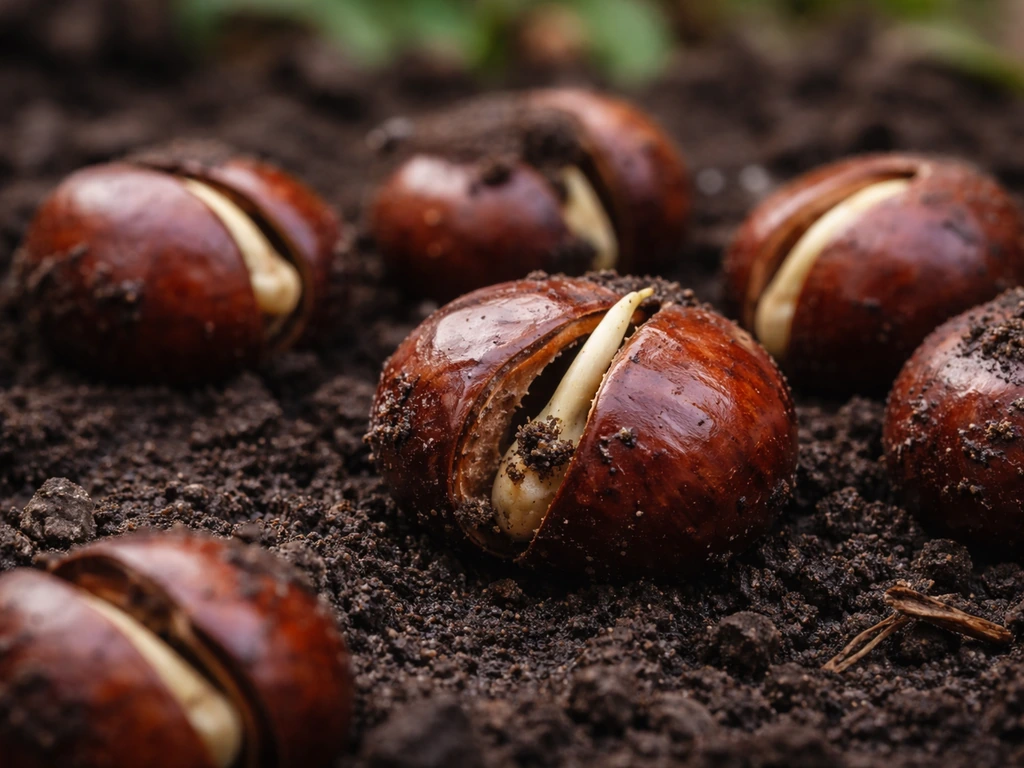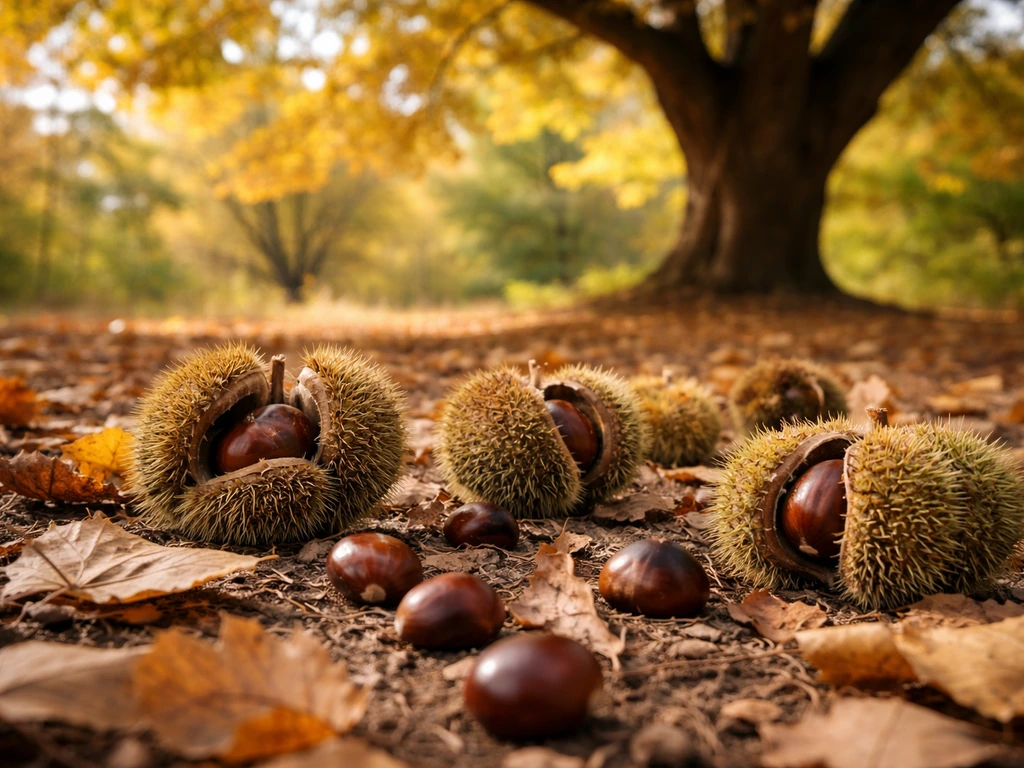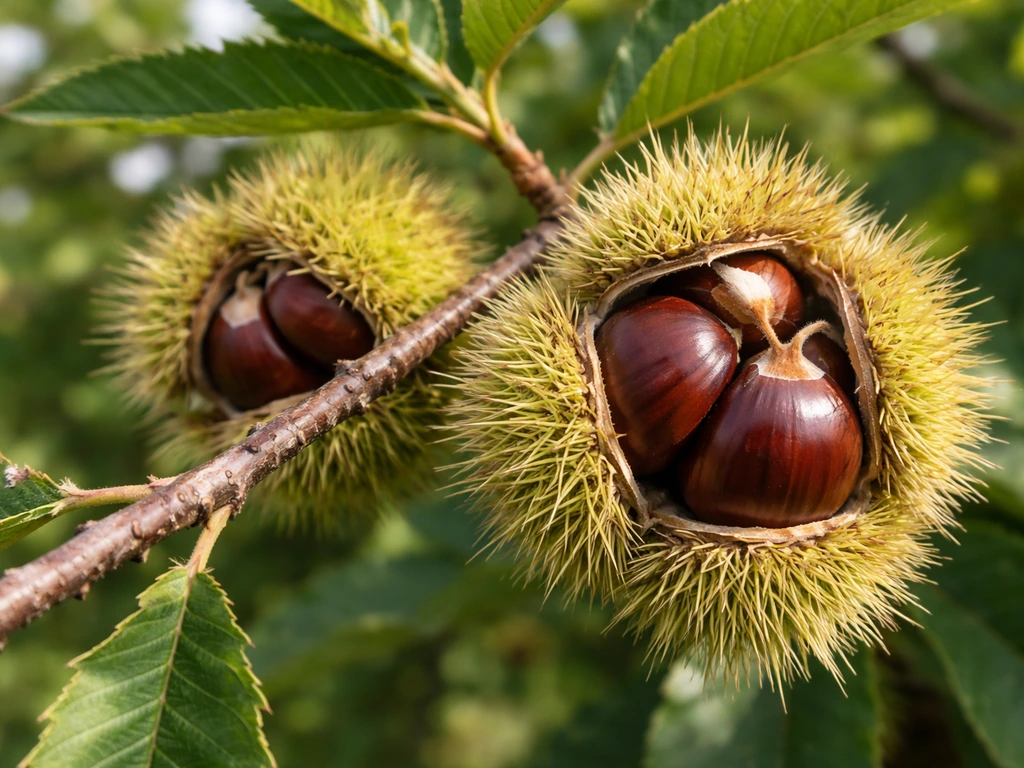
Yes, you can grow a chestnut tree from a chestnut nut. The nut itself is the seed, and under the right conditions it will sprout, root, and eventually become a full-sized tree. The catch is that viability matters enormously: a fresh, raw chestnut from the fall harvest has a real shot at germinating, while a roasted, dried, or processed one is dead and will never sprout. If you have a fresh chestnut and a patch of suitable ground, you have everything you need to start.
Can You Grow a Chestnut Tree From a Nut? How to Start
Marcus Hendricks
11 Apr 2026
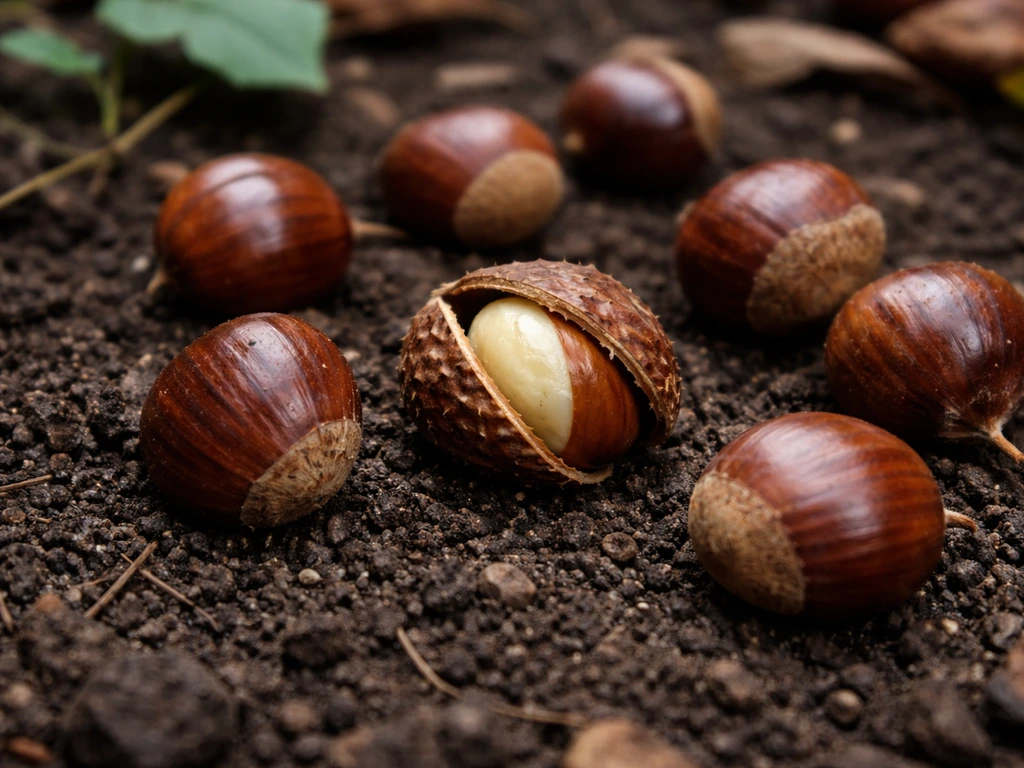
The nut is the seed, here's the botany behind it
A chestnut is botanically a true nut, but in horticultural terms it functions exactly like a seed. Inside that hard brown shell is a seed embryo surrounded by a starchy food reserve. When the nut falls from the tree in autumn, the embryo is already fully developed and waiting for the right conditions to germinate. There is no separate "seed" hidden inside, the whole nut is the propagule. This is different from fruits like apples, where you discard the flesh and plant the pip. With chestnuts, you plant the whole thing.
It helps to understand how chestnuts grow in nature: they fall inside a spiky burr, the burr splits open, and the nuts either get cached by animals or settle into leaf litter where cold, moist winter conditions naturally stratify them. Come spring, warmth triggers germination. When you grow from a nut at home, you are replicating that exact natural sequence, just with a little more control.
One thing that trips people up is confusing chestnuts with horse chestnuts (conkers). They look similar but are entirely different species. True chestnuts (Castanea species) produce edible nuts and are the ones covered in this guide. Horse chestnuts (Aesculus hippocastanum) are ornamental and mildly toxic. If you are working with conkers from an Aesculus tree, how to grow horse chestnut trees from conkers is a separate process with different requirements.
Does your chestnut still have viable seed inside?
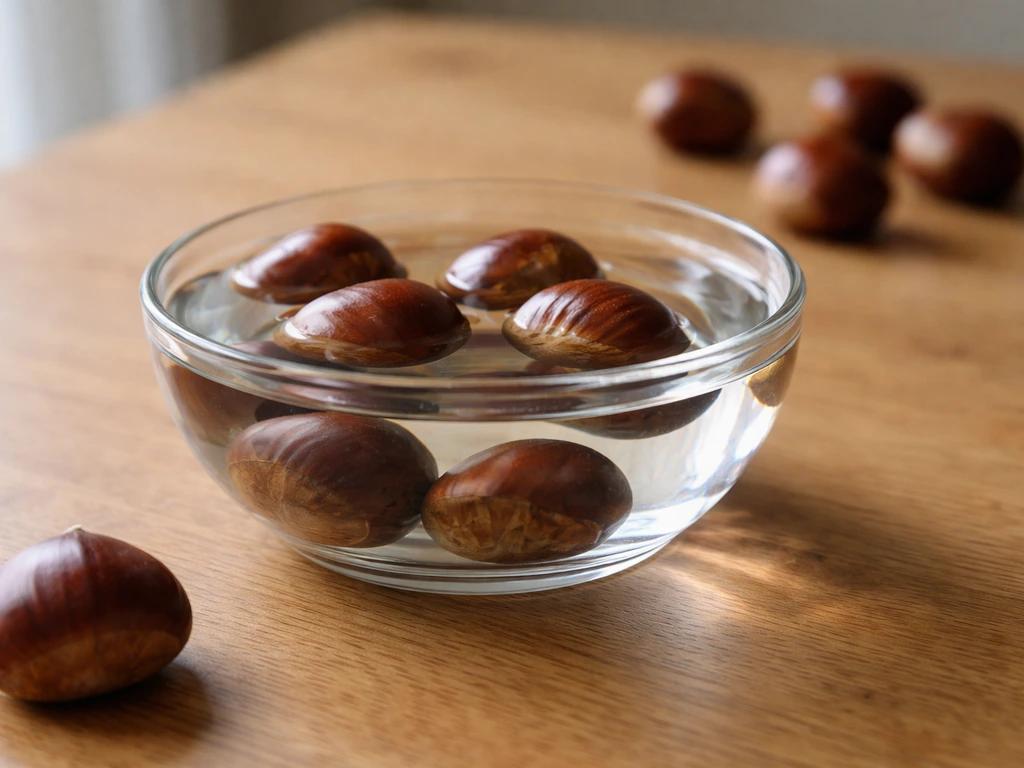
Before you do anything else, check viability. A chestnut that cannot germinate will just rot, and you will waste weeks waiting for nothing. Here is how to sort viable nuts from duds:
- Float test: drop the nut in a bowl of water. Sinkers are usually viable; floaters are often hollow or dried out and can be discarded.
- Firmness check: squeeze the nut gently. It should feel firm and heavy, not spongy or rattling inside the shell.
- Source matters: nuts from a fall harvest (September to November) that have been refrigerated since are your best bet. Nuts bought from a grocery store in spring, or ones that have been heat-treated for shelf life, will not germinate.
- Avoid anything labeled roasted, smoked, or dried, and avoid vacuum-sealed chestnuts that have been processed for long shelf life — the embryo will be dead.
Step-by-step: germinating a chestnut at home
The process has two distinct phases: a cold stratification period followed by warm germination. Skipping or rushing stratification is the most common reason home-grown chestnuts fail to sprout.
- Rinse the nuts and let them air-dry for an hour. Do not scrub the shell or damage the surface.
- Place the nuts in a zip-lock bag with a handful of slightly damp peat moss, coir, or paper towels. The medium should feel moist but not wet — if water drips out when you squeeze it, it is too wet, and mold will kill the nuts.
- Seal the bag and label it with the date. Put it in your refrigerator at 34–40°F (1–4°C). This is the stratification period. American chestnut (Castanea dentata) needs roughly 60–90 days at these temperatures. Chinese chestnut (Castanea mollissima) is similar. Do not rush this.
- Check the bag every week or two for mold or rot. Remove any nuts that have gone soft or show white fuzzy mold immediately so they do not spread. A small amount of surface condensation is fine.
- Keep chestnuts away from apples, pears, or other ethylene-producing fruits in the fridge — ethylene gas can trigger premature ripening and ruin viability.
- After 60–90 days, move the bag to a warmer spot (60–70°F / 15–21°C) or pot the nuts up directly. UF/IFAS germination data for Castanea dentata puts the ideal germination temperature at 60–70°F, with sprouting expected within 6–8 weeks once warmth is applied.
- Plant each nut about 1–2 inches deep in a pot of well-draining potting mix, pointed end down if you can identify it. A radicle (root) may already be emerging from some nuts by this point — be careful not to break it.
- Water lightly and keep the pots in a bright, warm location. Do not let them dry out, but do not waterlog them either.
Timing, chilling, and planting depth
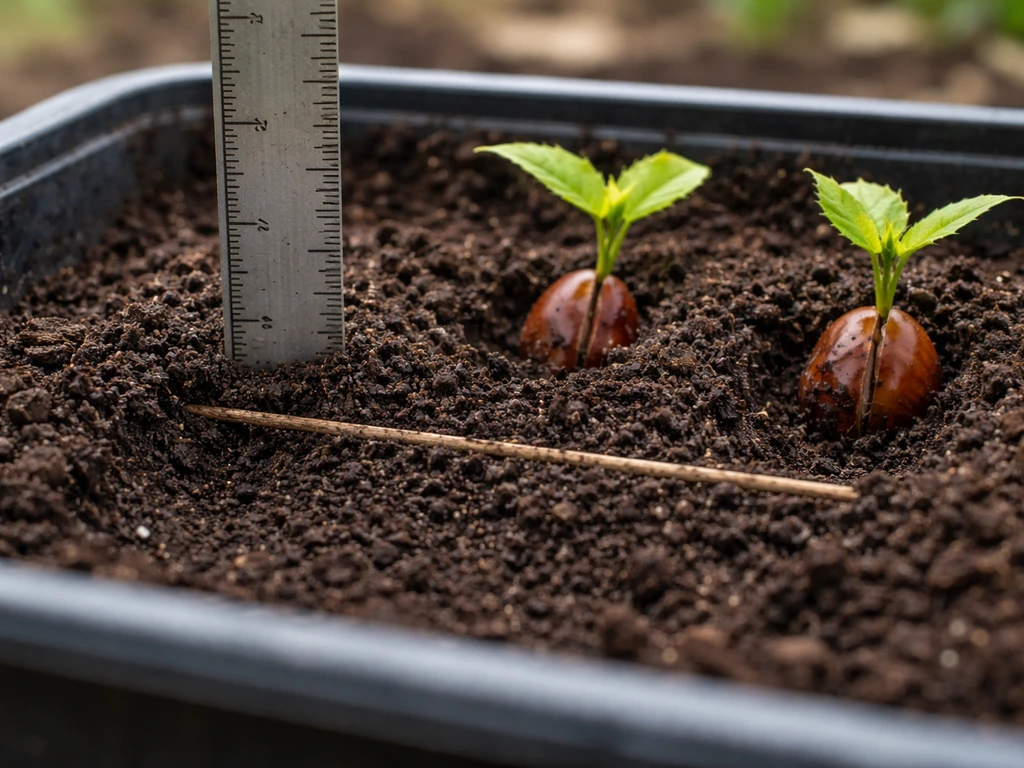
Timing your start date backward from your local last frost date is the most practical approach. The American Chestnut Foundation recommends starting chestnuts in pots about 2–3 months before your spring planting window, which aligns exactly with the 60–90 day stratification requirement. So if your last frost is around mid-April, you want to start cold stratification in late December or early January. That means collecting or sourcing fresh nuts in the fall and refrigerating them immediately after harvest.
Planting depth when you move seedlings outdoors is 2–3 inches in garden soil, slightly deeper than in pots. Burying too shallow leaves the nut exposed; too deep delays or prevents emergence. If you are direct-sowing into the ground rather than starting in pots (which works in mild climates), plant in fall and let winter provide natural stratification, protecting the planting spot from squirrels with wire mesh.
Where chestnuts actually thrive
Not every climate is suitable for chestnuts, and planting in the wrong region is a longer-term failure point that does not show up until your seedling is a year or two old. If you are wondering whether chestnuts can thrive in Canada, your best starting point is matching the right hardiness zone and winter conditions can you grow chestnuts in canada. Most cultivated chestnut species do best in USDA hardiness zones 4–8, though some Chinese chestnut varieties push into zone 9 with enough summer water. They need a genuine winter with cold temperatures to set dormancy properly, and they struggle in climates with mild, wet winters that encourage fungal disease.
If you are in the eastern United States, you are in prime chestnut territory. Where chestnuts grow in the US spans a broad arc from the Mid-Atlantic through the Midwest and into parts of the South. The Pacific coast is more complicated: chestnuts in California can succeed in foothill and mountain areas that get cold winters, but coastal regions are too mild and too wet.
Growers in northern regions should also know that growing chestnuts in Canada is viable in southern Ontario and parts of British Columbia, where the climate matches zones 5–6. Across the Atlantic, chestnuts in the UK are grown widely, particularly in the south of England, where sweet chestnut (Castanea sativa) has been naturalized for centuries.
Soil, sunlight, moisture, and spacing
Chestnuts are particular about soil in one important way: they hate waterlogged roots and they strongly prefer acidic conditions. Get these wrong and even a healthy seedling will languish or die within a few seasons.
| Site Factor | What Chestnuts Need | Common Mistake |
|---|---|---|
| Soil pH | 5.5–6.5 (acidic) | Planting in alkaline or limestone soils causes iron chlorosis and poor growth |
| Drainage | Well-drained; no standing water | Heavy clay or low spots cause root rot — a common killer of young trees |
| Sunlight | Full sun (6+ hours daily) | Partial shade slows growth significantly and reduces nut production |
| Soil type | Sandy loam or loamy soil preferred | Compacted soils restrict root development and stunt trees |
| Moisture | Regular watering for first 2 years; drought-tolerant once established | Letting young trees dry out in summer kills them fast |
| Spacing | At least 20–30 feet between trees (40+ feet for large cultivars) | Crowding causes disease pressure and poor nut yield; also most chestnuts need a second tree for pollination |
The spacing point is worth emphasizing: most chestnut species are not self-fertile. You will need at least two genetically distinct trees for cross-pollination and nut production. Growing two or three trees from nuts (rather than clones from a single parent) usually provides enough genetic diversity. Plant them within 100 feet of each other for reliable pollination.
It is also worth knowing a bit about what is happening underground before you get excited about nut production. Chestnuts do grow on trees, but those trees need years to mature, typically 3–7 years from a seedling before you see your first nuts, and longer for heavy production. The tree is doing most of its work building a root system and canopy in the early years.
After sprouting: care, common failures, and what to do about them
The first growing season
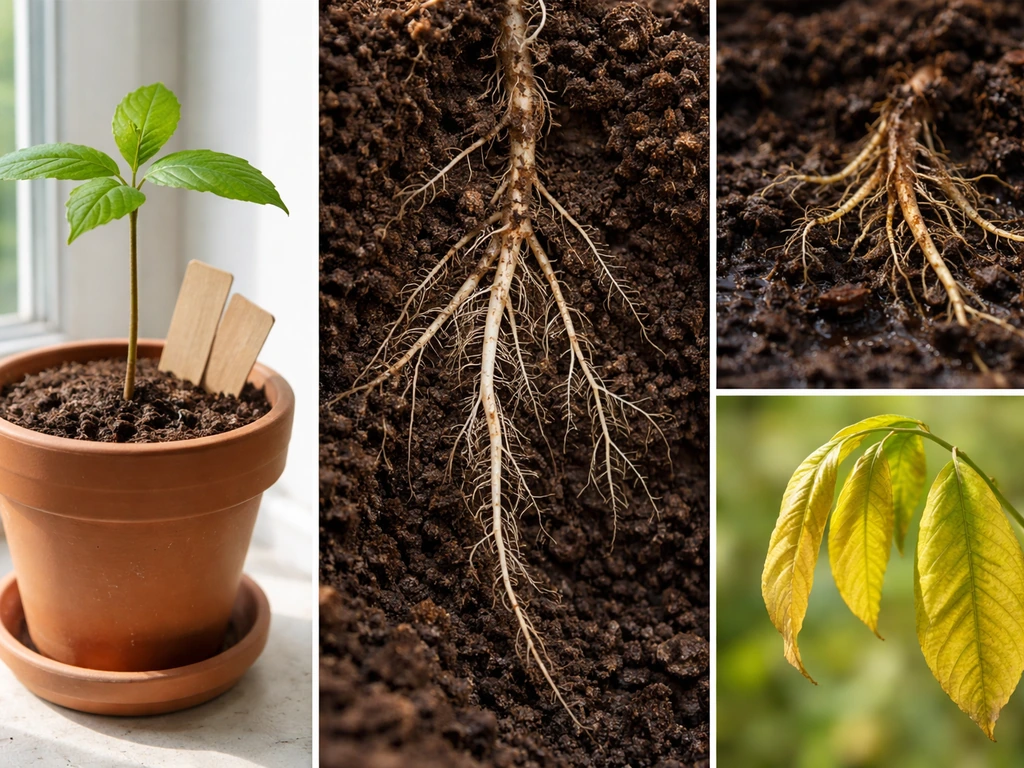
Once your seedling is 4–6 inches tall and has a few true leaves, it is ready to harden off and eventually transplant outdoors. Harden off over 1–2 weeks by setting pots outside in a sheltered spot for increasing hours each day before planting out. When you transplant, disturb the taproot as little as possible, chestnuts develop a deep taproot early and it is fragile. The Connecticut DEEP/CAES fact sheet also emphasizes handling chestnuts carefully after germination because they develop deep roots early that can be easily disturbed chestnuts develop a deep, fragile taproot early. Use a deep pot or paper pot that you can plant directly into the ground to minimize root disturbance.
No germination? Here is why
- Nuts were not fresh or were heat-treated — the most common reason. Nothing will fix this.
- Stratification temperature was too warm (above 45°F): the nuts experienced insufficient cold to break dormancy.
- Stratification medium was too wet and the embryo rotted before you could see external damage.
- Germination environment was too cool: if your house is under 60°F, sprouts will be very slow or stalled.
Mold, rot, and weak seedlings
Mold during stratification is a real problem in humid refrigerators. If you see mold on the medium but the nuts still feel firm, wipe the nuts gently with a damp cloth and replace the medium with fresh, barely-moist coir or peat. If the nut itself is soft or smells off, it is gone. Weak, leggy seedlings after germination usually mean insufficient light. Move them to a sunny windowsill or under grow lights immediately, chestnut seedlings grow fast when they have enough light and slow to a crawl when they do not.
Pests and diseases to watch for
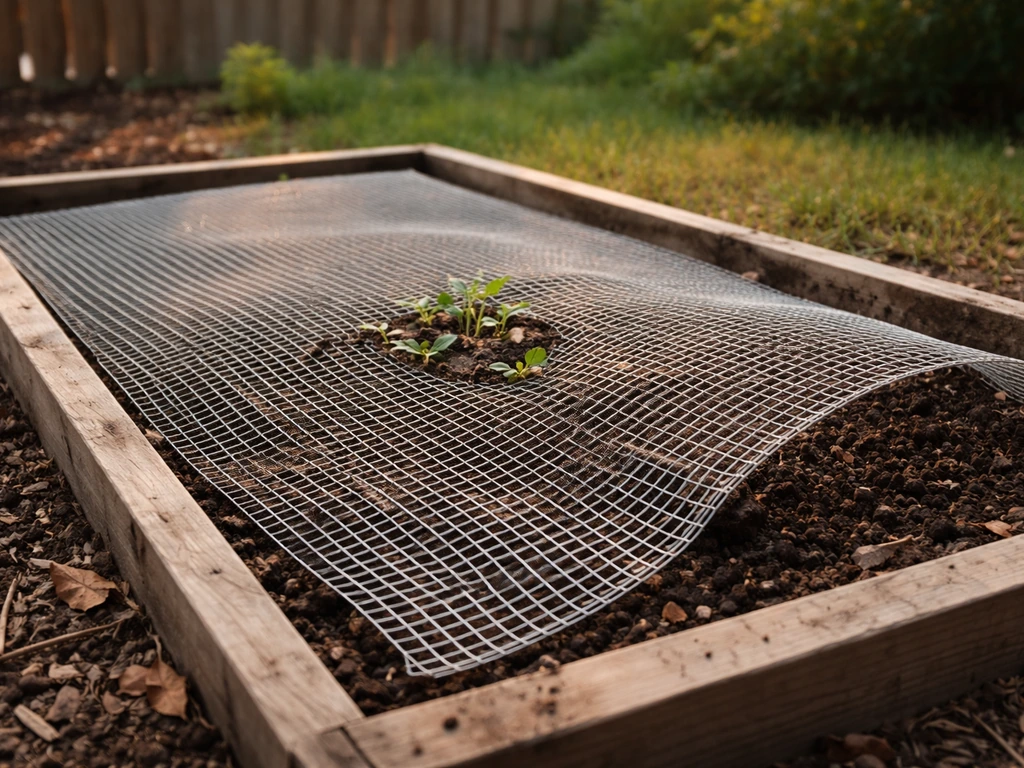
- Squirrels and rodents: they will dig up and eat your planted nuts within days. Use wire mesh cloches or hardware cloth laid flat over planting sites.
- Chestnut blight (Cryphonectria parasitica): a devastating fungal disease that wiped out the American chestnut in the 20th century. American chestnut seedlings are highly susceptible. Chinese chestnut is largely resistant and is the better choice for home growers.
- Phytophthora root rot: caused by poor drainage. Prevention is everything here — fix your soil drainage before planting.
- Weevils: chestnut weevil larvae can be inside nuts at harvest time. A brief hot-water soak (about 120°F / 49°C for 45 minutes) kills weevil larvae without harming viability if done carefully, but err on the side of fresh nuts from a reliable source.
What to expect over time
Chestnut trees grown from seed are not a quick payoff. In year one, you are looking at a small seedling that puts most of its energy into root development. By year two or three, it may reach 3–6 feet depending on conditions and species. Chinese chestnut tends to be faster-growing and more manageable in size than American chestnut. First nut production typically happens between years 3 and 7 for Chinese chestnut, later for American chestnut. The upside is that well-sited chestnut trees are long-lived and increasingly productive once established, often yielding for decades. That slow start is worth the patience if you have the right site.
FAQ
How can I tell if my chestnuts are still alive before I start stratification?
Check freshness first, if they were frozen, roasted, or stored for many months they often fail. During sorting, firm nuts with no cracks and a dry, normal smell are the best candidates. After stratification begins, discard any nut that turns soft, collapses, or smells sour or “rotten,” even if the husk still looks intact.
Do I need to soak chestnuts before stratifying them?
Usually no. Soaking can accelerate rot if the nut coat stays wet too long. If you do soak, limit it to a short rinse period, then dry briefly and move straight into the cold stratification medium that is only barely moist.
What stratification medium works best in a humid refrigerator?
Use a barely-moist medium that you can squeeze without dripping (coir or peat are common). If your fridge is very humid and you keep seeing mold, switch to fresh medium, keep nuts spaced so they do not touch, and consider adding a light dusting of horticultural-grade fungicide to the medium before sealing (follow the product label).
Can I plant chestnuts directly outdoors instead of using pots?
Yes in mild climates where winter cold is reliable. In colder or critter-prone areas, direct sowing often fails due to animals digging and winter soil swings. If you direct sow, plant in fall and protect the spot with wire mesh and mulch, then leave it undisturbed until spring.
How deep should I plant chestnuts in pots, and does depth matter long-term?
When you pot them, plant at about the same depth you plan to keep during stratification, typically around 1.5 to 2 inches. After moving outdoors, follow the 2 to 3 inch range mentioned in the guide. Consistent depth helps emergence, later survival depends more on avoiding waterlogged soil than on minor depth differences.
Should I remove mold during stratification?
If the nut itself is still firm and only the medium shows fuzzy growth, you can wipe the nut gently and refresh the medium. If the nut feels soft, has a hollow sound, or smells bad, remove it immediately because it can contaminate neighboring nuts.
Will one chestnut tree from seed self-pollinate?
Usually not. Most chestnut species require a genetically different neighbor for reliable nut set. Planting multiple seedlings from nuts is helpful because they are genetically diverse, but if space is limited you may still need at least two trees within roughly 100 feet for best results.
Can I grow an edible chestnut from an acorn-like chestnut, or is every “chestnut” edible?
No. Horse chestnuts (conkers) are a different species and are not the edible chestnuts you want for eating. Also, some imported or ornamentals may not produce the same edible quality. Only use true chestnuts (Castanea species) if your goal is edible nuts.
When is it safe to harden off a chestnut seedling?
Harden off once it has sturdy growth, typically a few true leaves and several inches tall, and after nights are consistently above freezing. Move gradually over 1 to 2 weeks, sheltered at first, then increase sun exposure. Sudden full sun on day one is a common reason seedlings scorch.
My seedlings are leggy, what should I do besides adding light?
Increase light immediately and also check spacing. Crowded seedlings compete and stretch. If stems are very thin, transplant into individual deeper containers so the taproot can grow downward without spiraling, and keep the soil evenly moist but never soggy.
Why are my nuts sprouting but not growing into strong plants?
The two biggest causes are insufficient light after germination and waterlogged or overly alkaline soil. Chestnuts prefer acidic conditions and dislike standing water around roots. If your containers drain poorly, repot into a faster-draining mix and ensure good airflow around foliage.
How long will it take before I see nuts, and will seed-grown trees be smaller?
Expect a first nut crop roughly between year 3 and year 7 for Chinese chestnut, later for American chestnut, sometimes longer depending on vigor and variety. Seed-grown trees can vary in size and productivity compared with the parent, so you may not get identical traits, but good sites usually lead to gradually increasing yields.
What’s the best way to transplant without damaging the taproot?
Use deep containers (or paper pots you can plant directly) so roots do not become tightly coiled. Transplant when the weather is mild, keep soil around the root system intact, and water in well after planting. Avoid twisting or pulling the stem, and handle the root zone gently.
Can I start with nuts from the store or local parks?
Only if they are fresh, raw, and meant for propagation. Many store nuts are roasted or otherwise processed, and those will not germinate. If you collect from the ground, nuts may already have rotted or dried, so collect nuts directly when possible and start stratification promptly.