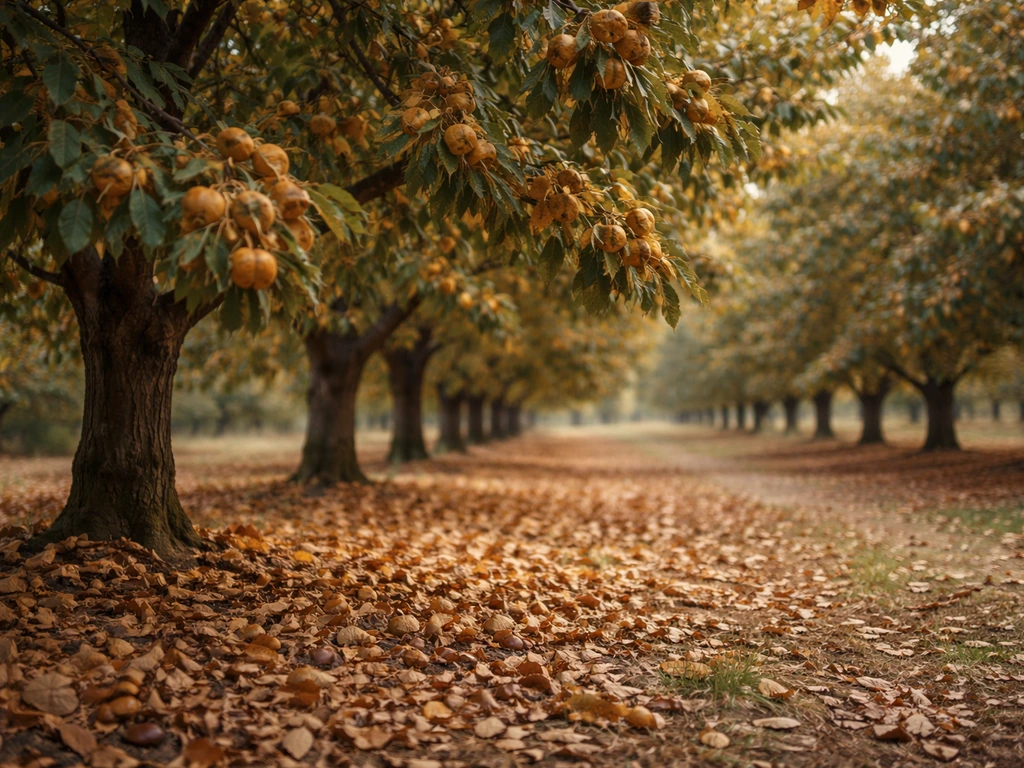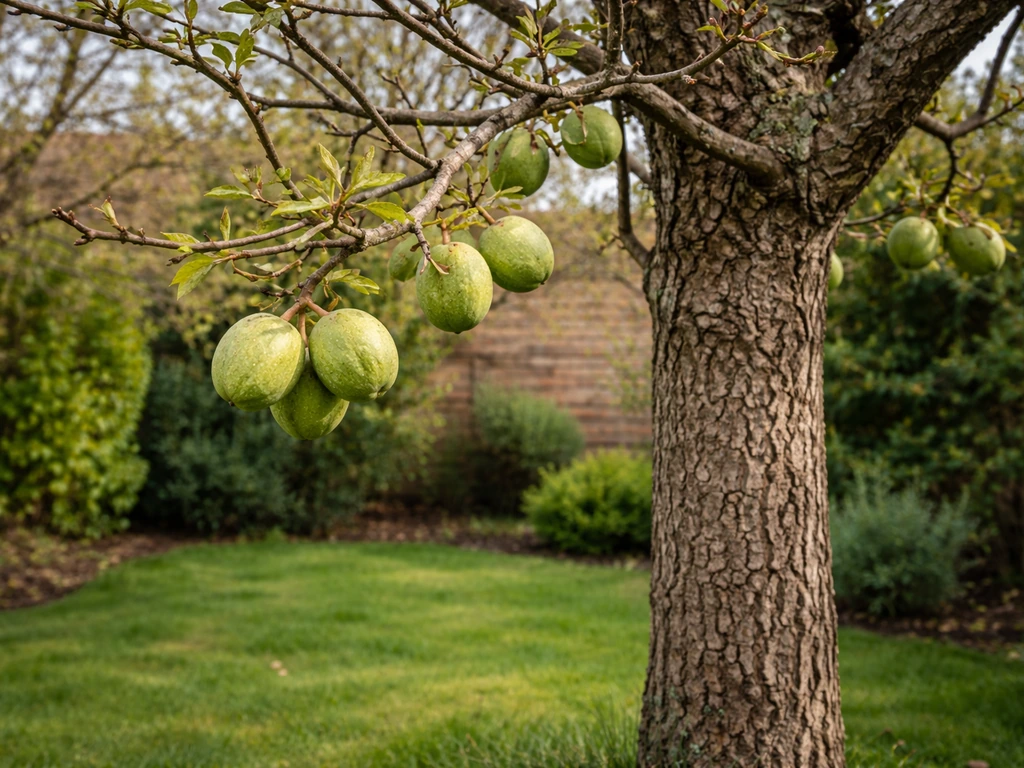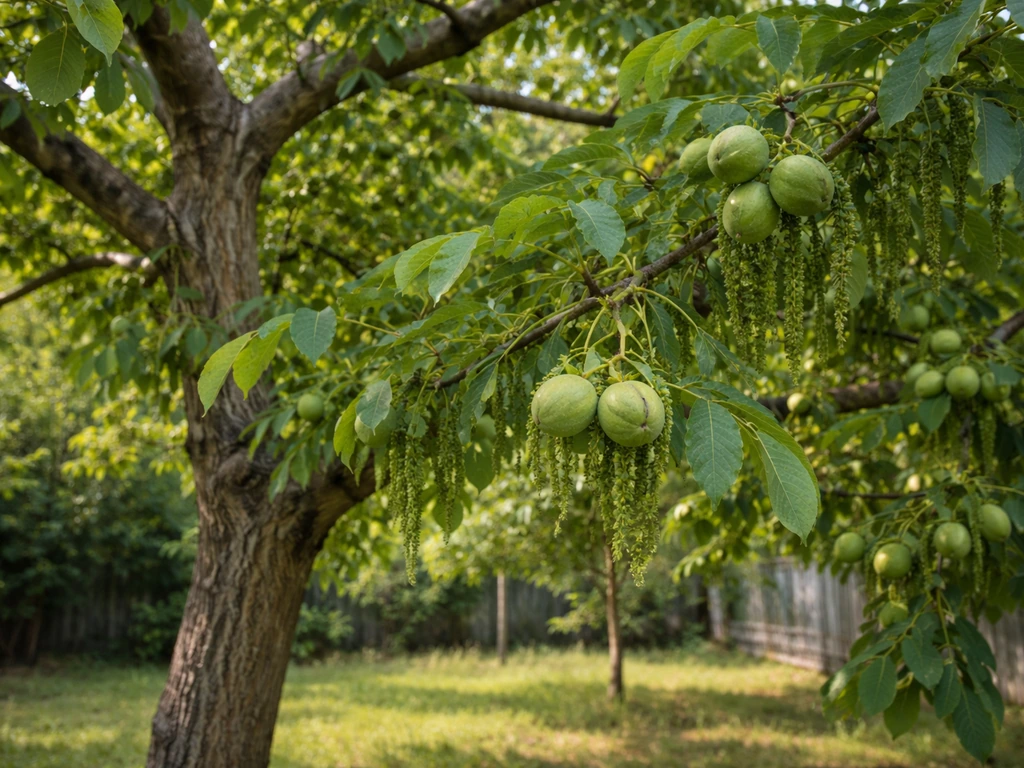
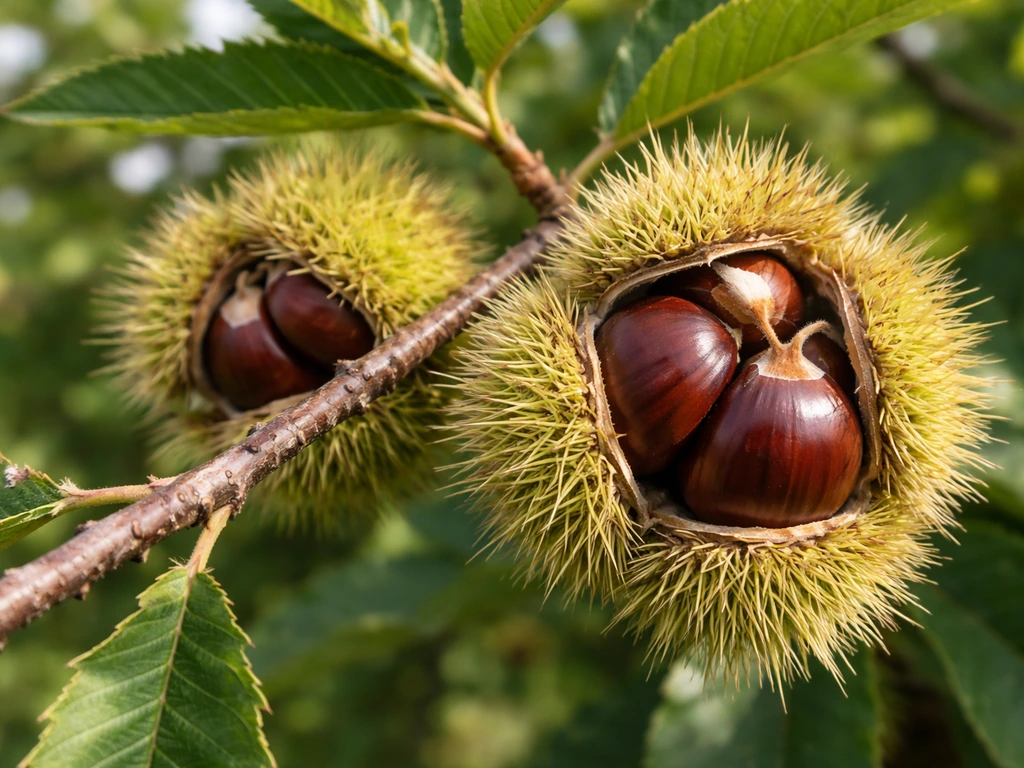
Yes, chestnuts grow on trees, and specifically on the branches and shoots of those trees, not on the trunk. That second part matters more than people realize, because a surprisingly common question is whether chestnuts emerge directly from the bark of the trunk, like some kind of trunk-fruiting oddity. They don't. If you're standing under a tree trying to figure out what you're looking at, look up at the branch tips and current-year shoots, not down at the bark. That's where the action is.
Do Chestnuts Grow on Trees? How to Identify the Real Ones
Marcus Hendricks
8 Apr 2026
Chestnuts grow on trees, but not on trunks
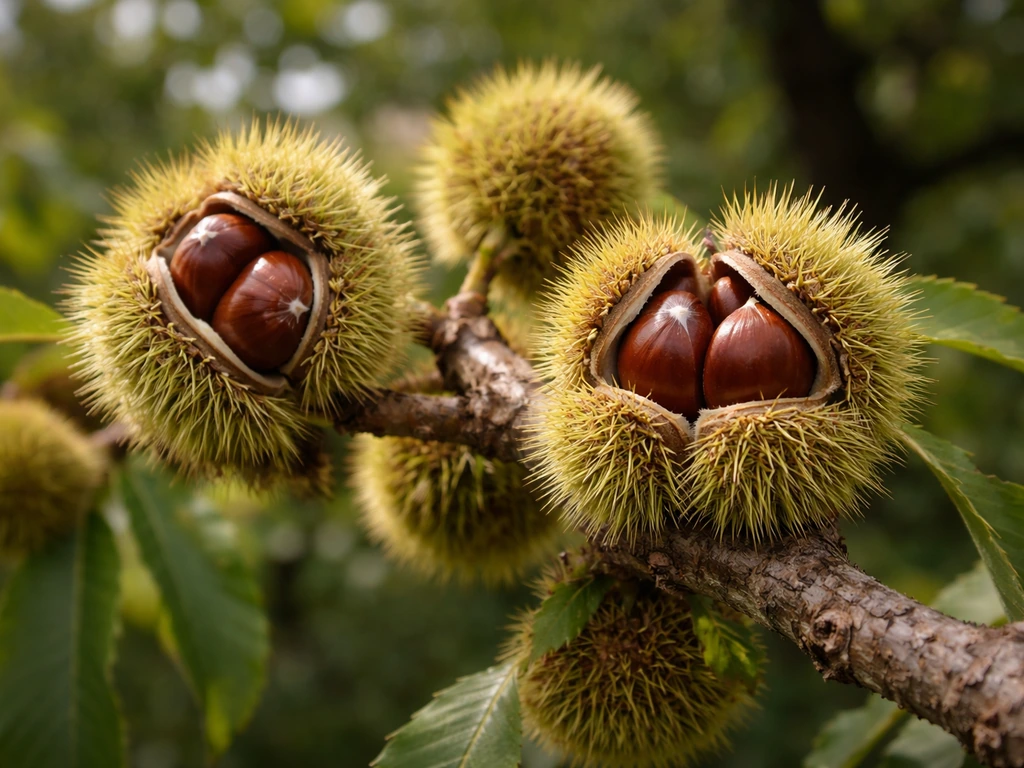
To be completely clear: edible chestnuts (Castanea species) are produced by trees, and the nuts develop inside spiny, hedgehog-like structures called burs or cupules. Those burs form on the current season's new shoot growth, out along the branches, not embedded in or emerging from the main trunk bark. The trunk is just the woody skeleton. The fruit-bearing work happens at the tips and along the younger wood.
This matters practically because if you're trying to identify a chestnut tree by its fruit, you need to be looking at the canopy, especially the younger growth from the current year. People sometimes confuse galls, fungi, or other bark growths on tree trunks with fruit structures, so knowing chestnuts develop out on the shoots eliminates a lot of confusion right away.
How chestnuts actually form on the tree
The process starts with flowers in early to midsummer. In Castanea sativa (sweet chestnut), male flowers appear as long, pale catkins growing from the leaf axils of current-season shoots. Female flowers, which are the ones that actually become nuts, develop near the terminal end of those same shoots, typically near the base of bisexual catkins. So the whole reproductive process is tied to new growth from that same season, not older wood or the trunk.
Once pollinated, the female flowers develop into the familiar spiny burs. At maturity, each bur typically contains up to three nuts, though the number varies by species and growing conditions. The burs ripen through late summer and into autumn, with the nuts dropping during October in most Northern Hemisphere locations. So if you're checking a tree in midsummer, you might see developing green burs on the shoot tips. By October, those same burs should be splitting open and dropping onto the ground. To understand how chestnuts grow from flower to ripe nut, it helps to track one shoot through the whole season, you'll see exactly how the bur develops from what started as a small cluster of female flowers.
Edible chestnuts vs horse chestnuts: a critical distinction
Here's where a lot of people go wrong. The word "chestnut" gets used for two completely different types of trees, and mixing them up has real consequences, one is edible, the other is not.
Edible chestnuts belong to the genus Castanea (family Fagaceae). These are the ones you roast, eat, and cultivate for food. Horse chestnuts belong to the genus Aesculus (family Sapindaceae), and while their shiny brown seeds look superficially similar, they are toxic to humans. Poison Control also notes that all parts of horse chestnut trees are toxic, with the greatest concern for the seeds horse chestnut seeds look superficially similar, they are toxic to humans. Both trees produce spiny husks containing shiny brown seeds and both drop those seeds in autumn, which is the root of the confusion. But once you know what to look for, they're actually pretty easy to tell apart.
How to tell them apart at a glance
The most reliable quick check is the leaves. Horse chestnut (Aesculus hippocastanum) has large, palmately compound leaves, meaning each leaf is actually made up of 5 to 7 leaflets fanning out from a single point, like fingers on a hand. Sweet chestnut (Castanea sativa) and American chestnut (Castanea dentata) have simple leaves, one blade per leaf, with a toothed margin that looks almost serrated. If you pull a single leaf off the tree and it's made of multiple leaflets joined at a central point, you're looking at a horse chestnut.
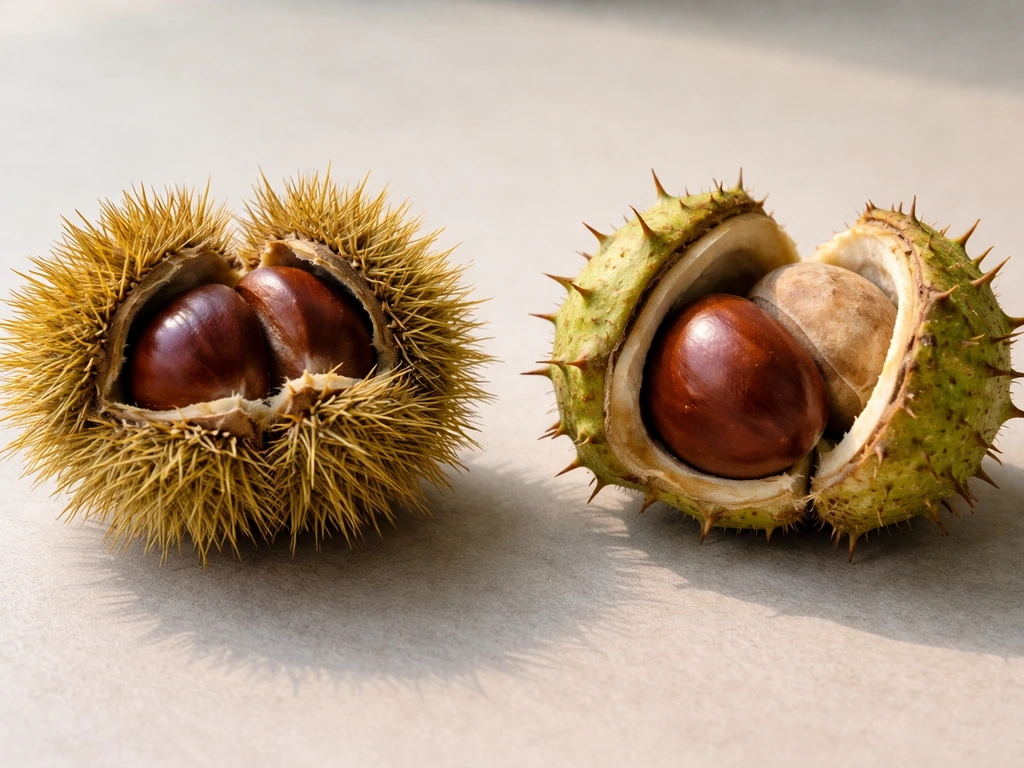
The burs themselves are also different. Sweet chestnut burs are densely covered in long, needle-like spines and split open into quarters when ripe, revealing the nuts inside. Horse chestnut capsules are rounder, covered in shorter, stubbier spines or warts, and split open to reveal one or two glossy seeds (conkers). The horse chestnut husk is noticeably less ferociously spiny than a sweet chestnut bur. The RHS puts it well: horse chestnuts have conkers in stiffly spiny husks, whereas sweet chestnuts produce edible nuts in much more densely spined burs.
| Feature | Sweet Chestnut (Castanea) | Horse Chestnut (Aesculus) |
|---|---|---|
| Edibility | Edible (roast, cook) | Toxic to humans |
| Leaf type | Simple, toothed, lance-shaped | Palmately compound, 5-7 leaflets |
| Bur/capsule spines | Dense, long needle-like spines | Shorter, stubbier spines or warts |
| Seeds per bur | 1-3 nuts | Usually 1-2 conkers |
| Bur splits | Into 4 sections when ripe | Into 2-3 sections when ripe |
| Family | Fagaceae | Sapindaceae |
| Typical fruit drop | October | Late summer into autumn |
What people usually mean when they say "chestnut"
In everyday conversation, "chestnut" almost always refers to the edible Castanea species: sweet chestnut (Castanea sativa) in Europe, American chestnut (Castanea dentata) in North America, Chinese chestnut (Castanea mollissima), and Japanese chestnut (Castanea crenata). These are the ones sold roasted on street corners and baked into stuffing. When someone asks "do chestnuts grow on trees," they almost certainly mean one of these.
Horse chestnuts are more of an ornamental tree. You'll find them in parks and along streets across Europe and North America, valued for their showy spring flowers and their autumn conkers, which kids have played games with for generations. They're culturally prominent, especially in the UK, but they're not a food crop.
The naming overlap is genuinely a public health issue: French public health agencies like ANSES have specifically warned people about confusing the two because both produce spiny cases with shiny brown seeds. French public health agency ANSES has warned that horse chestnuts (Aesculus) are often confused with sweet chestnuts (Castanea), creating a poisoning risk public health issue.
If you're ever in doubt about whether something is safe to eat, don't eat it.
How to identify which tree you actually have
If you're standing in front of a tree right now trying to figure out what it is, here's a practical sequence. Start with the leaves: pull one and count the leaf blades. Multiple leaflets joined at one point means horse chestnut. A single blade with a toothed edge means Castanea. If it's autumn and there are burs or capsules on the ground, pick one up. If it's a dense ball of long, needle-sharp spines that's hard to even hold, it's almost certainly sweet chestnut. If the spines are shorter and the husk is smaller, it's likely horse chestnut.
Also check where the burs are forming on the tree. As explained above, both types of fruit form on branches rather than on the trunk, but you'll notice that horse chestnut capsules tend to hang on the ends of branches in clusters, while sweet chestnut burs are attached along current-year shoots. The bark on mature sweet chestnut trees develops a distinctive spiral-ridged texture, which can also be a useful secondary clue once you know what you're looking for.
If you're in the UK and trying to settle this question for your garden or a local tree, the guide on whether chestnuts grow in the UK covers the regional context and which species you're most likely to encounter there.
And if someone has handed you a conker and told you it's a horse chestnut that can be grown on, just know there's a separate process involved. How to grow horse chestnut trees from conkers is genuinely different from growing edible chestnuts, so make sure you're following the right guidance for the right species.
Where chestnuts thrive and what climate they need
Edible chestnuts are broadly adaptable but they do have preferences. American chestnut (Castanea dentata) is hardy across USDA zones 4 through 8, which covers a huge swath of the eastern United States and into Canada. Sweet chestnut (Castanea sativa) carries an RHS hardiness rating of H6, meaning it can handle temperatures down to around -20°C (-4°F), making it viable across most of the UK and much of northern Europe. Chinese chestnut (Castanea mollissima) is widely used in cultivation as a blight-resistant alternative, particularly in the US.
All Castanea species prefer well-drained, slightly acidic soil. They don't do well in waterlogged conditions or in heavy clay without amendment. Sweet chestnut in particular is comparatively drought tolerant once established, though young trees benefit from good weed control and frost protection in their first few years. If you're looking at the landscape-level picture of where chestnuts grow in the US, you'll find them concentrated in the Appalachian region, the Midwest, and parts of the Pacific Northwest, with regional variation depending on the species.
California is a case worth mentioning specifically because the climate varies so dramatically within the state. Whether chestnuts grow in California depends almost entirely on which part of the state you're in: the cooler, wetter northern coastal and foothill zones are far more suitable than the hot, dry Central Valley or the desert south.
For growers farther north, there's real potential too. Growing chestnuts in Canada is feasible in the right zones, particularly in southern Ontario and parts of British Columbia, where the climate aligns with the hardiness requirements of Castanea dentata and some Chinese chestnut varieties.
Growing your own chestnut tree: what to expect
If you want to grow a chestnut tree from a nut, the most important thing to know is that fresh chestnut seeds need cold stratification to germinate properly. The American Chestnut Foundation recommends stratifying seeds at 34 to 40°F for 60 to 90 days, and germination can actually begin during that cold storage period. Skip the stratification and you'll likely get poor or no germination. Whether you can grow a chestnut tree from a nut is a practical question worth digging into before you start, because the answer involves some specific timing and storage requirements that catch people off guard.
If you'd rather skip the seed-starting process, grafted trees are the faster route. Whip grafting onto chestnut seedlings in late spring is a standard propagation method, and grafted trees tend to produce fruit sooner and with more predictable characteristics than seedling-grown trees. Chinese chestnut (Castanea mollissima) seeds typically take about 6 to 8 weeks to germinate after appropriate stratification, which is useful for planning your timeline.
One thing to set realistic expectations around: chestnut trees don't fruit quickly. Young orchards typically start producing a meaningful harvest about five years after planting. That's not unusual for nut trees, but it means you're committing to a long-term project, not a quick win. Factor that in before you decide between growing from seed versus buying an established sapling.
In the US, chestnut blight (caused by the fungus Cryphonectria parasitica) is a serious concern for anyone growing American chestnut or thinking about it. Penn State Extension covers chestnut diseases including blight and cankers in detail, and it's worth understanding what you're dealing with before you plant. Chinese chestnut and hybrid varieties offer much better blight resistance and are usually the practical recommendation for US growers. For a deeper look at the full process from sapling to harvest, the guide on how chestnuts grow is a good place to continue.
Quick reference: what to check on your tree today
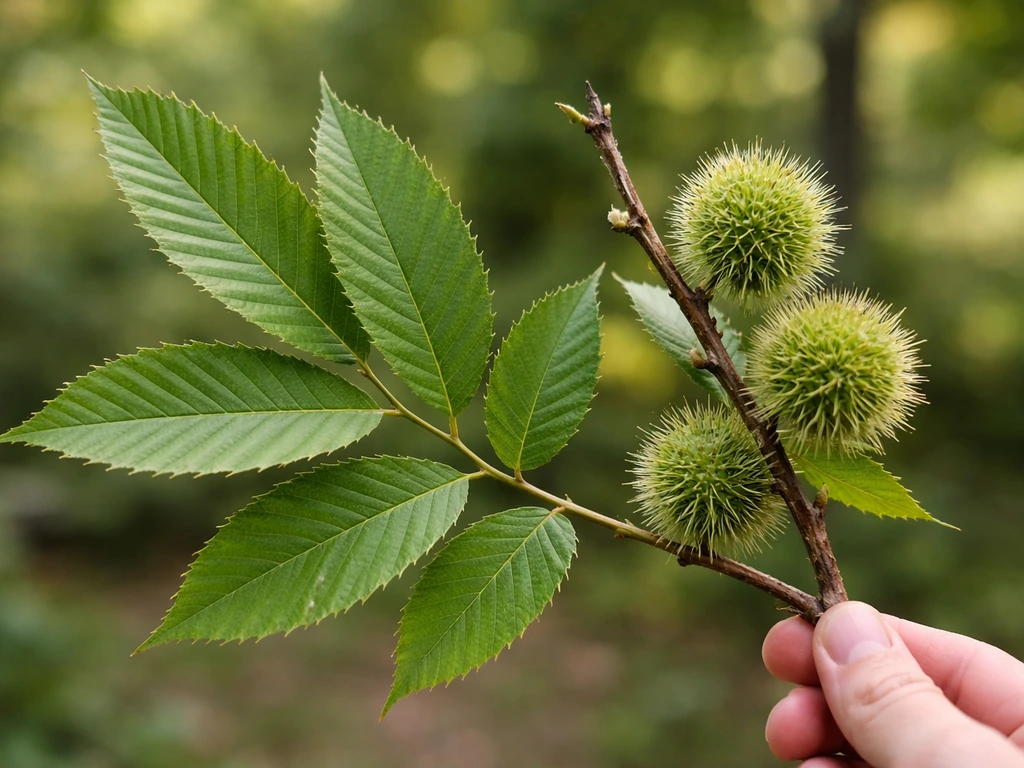
- Look at the leaves: simple and toothed means Castanea (edible); palmately compound with 5-7 leaflets means Aesculus (horse chestnut, not edible).
- Look on the branch tips and current-year shoots, not the trunk, for burs or developing fruit structures.
- In summer (June-July), check for developing green burs on new shoot growth.
- In autumn (September-October), look for spiny burs splitting open and dropping nuts to the ground.
- Pick up a fallen bur: dense, long needle-like spines mean sweet chestnut. Shorter, stubbier spines on a rounder capsule mean horse chestnut.
- If you're not sure about edibility, don't eat it. Confirm species identification first.
FAQ
If chestnuts grow on the branches, why do some people think they come out of the trunk bark?
Some trees form woody knots, cankers, or fungal growths on the trunk that look like they are emerging from the bark. Chestnut burs, however, originate on current-year shoots near the branch tips, so the quickest check is to look for developing spiny burs on the younger twig ends rather than on older bark patches.
Are the burs always easy to see in summer, or can I miss them?
You can miss them if you check only the canopy height or only the main branches. On sweet chestnuts, the most reliable place to spot early burs is along the newer shoots from that same growing season, often near the terminal area where female flowers formed.
Do all chestnut species produce spiny burs with nuts inside?
Most edible chestnuts in the Castanea genus do, but the appearance and “spikiness” can vary by species and age of the growth. If you are identifying a tree for eating, don’t rely on burs alone, confirm leaf type and also compare the overall husk shape against known edible Castanea versus horse chestnut.
Can I eat chestnuts if I only identify the tree by the nuts on the ground?
It’s risky, because the dropped shells are similar in everyday appearance between edible Castanea and toxic Aesculus seeds. Ground nuts or conkers are not enough for confident identification, use leaf shape first (simple, toothed leaf blade for Castanea versus palmately divided leaflets for horse chestnut), then confirm husk/bur traits.
What leaf differences should I look for if the tree has mixed growth or young leaves?
Horse chestnut leaflets typically form from a single point and look like hand fingers (5 to 7 leaflets are common). Castanea leaves are one blade with a toothed margin, even if the leaf is partly shaded or slightly curled, the key is whether it is clearly a single blade versus multiple leaflets joined at one point.
How can I tell the burs apart when I only have one husk in hand?
Sweet chestnut burs tend to be densely covered with long needle-like spines and often split open more dramatically to reveal the nuts. Horse chestnut capsules usually look rounder, have shorter, stubbier spines or warts, and often reveal one or two shiny seeds. If the husk is easy to hold without the “needle-ball” feel, it leans horse chestnut.
Do chestnut trees fruit every year?
Many chestnut trees can be alternate bearers, meaning yields vary by year due to weather and resource allocation. If you are tracking a single shoot through the season, expect that some years may produce fewer visible burs even when the tree looks healthy.
Is it possible to grow a chestnut tree without stratifying seeds?
Yes, but not from untreated fresh seeds in most cases. For Castanea species, cold stratification is usually essential for reliable germination, and skipping it often leads to poor or no sprouting. If you want to avoid stratification, consider buying grafted stock rather than seed-starting.
How do I know whether my chestnut seed is Castanea (edible) or something else?
Nuts alone are not enough to guarantee safety. Use a matching identification of the parent tree first, especially leaf type. If the nuts are from a known local edible source or properly labeled cultivar, then you can proceed, otherwise assume uncertainty and do not eat.
If I’m seeing spiny husks on a neighbor’s tree, what’s the safest next step?
Do not test by tasting. First identify the tree by leaf structure, then compare the husk and the location of fruit on the branches. If you still cannot confirm, treat it as horse chestnut and keep any seeds away from children and pets.
When does fruit drop, and does it depend on where I live?
Yes, timing shifts with climate. In many Northern Hemisphere locations, sweet chestnut burs ripen late summer into autumn, and nuts typically drop around October, but earlier or later conditions can move that window by several weeks.
What should I expect if I plant a nut, how long until harvest?
Expect a long wait. Even when germination succeeds, young orchards typically begin meaningful production around five years after planting, and sometimes longer depending on vigor, pollination conditions, and whether you grew true-to-type seedlings.