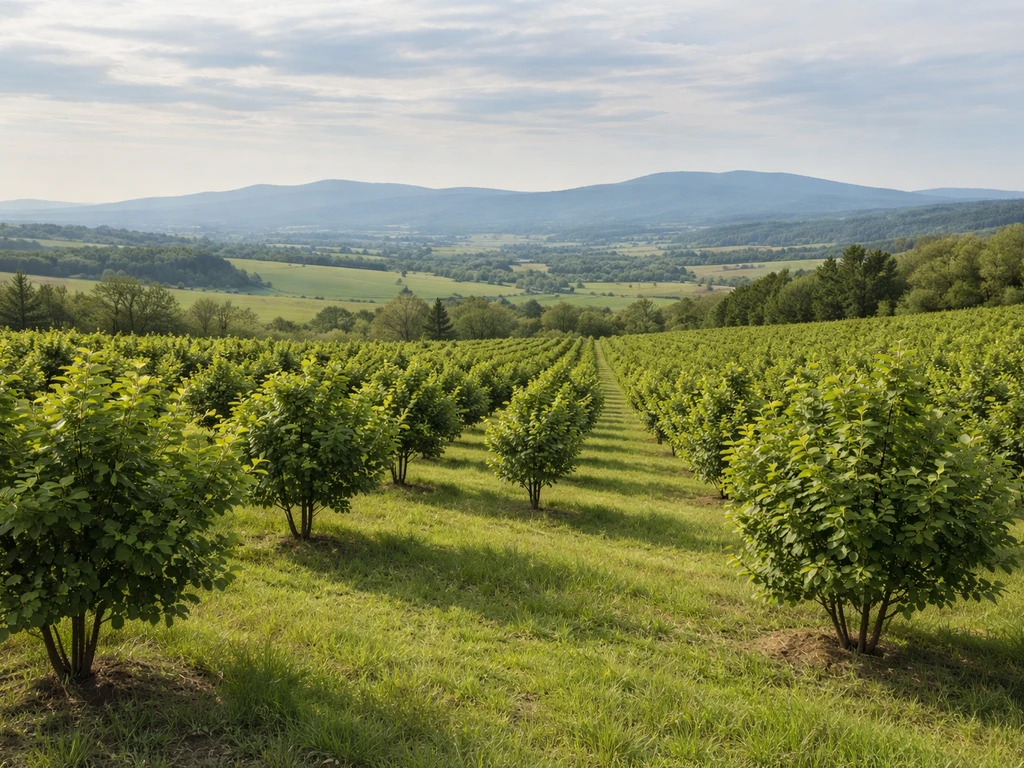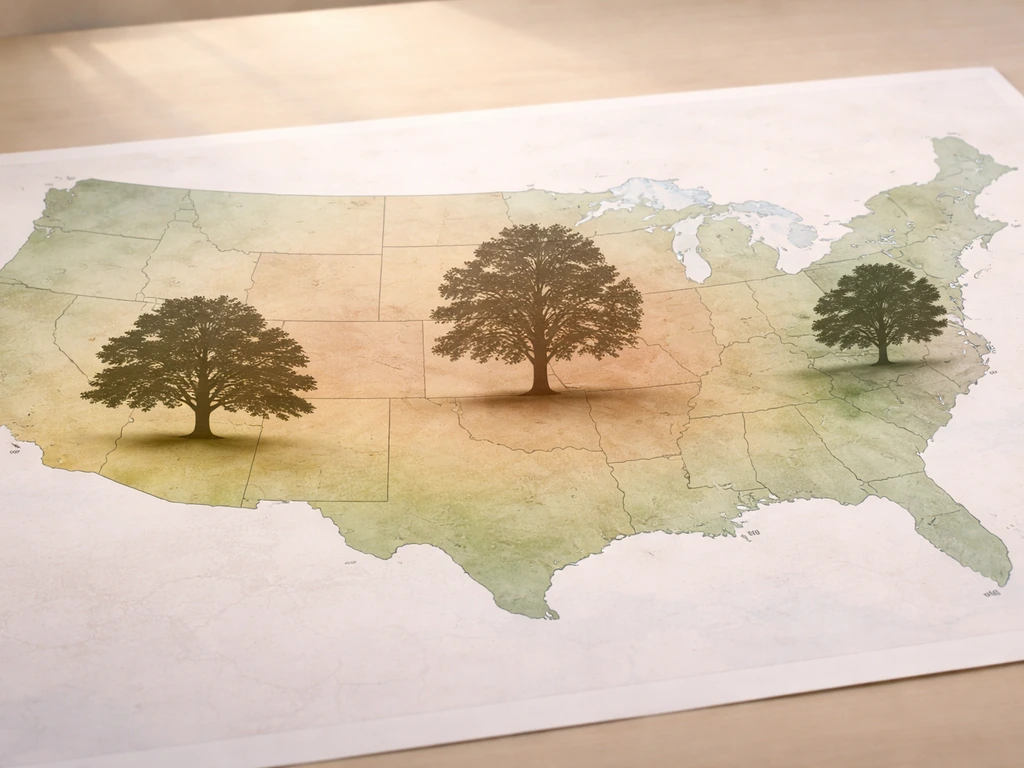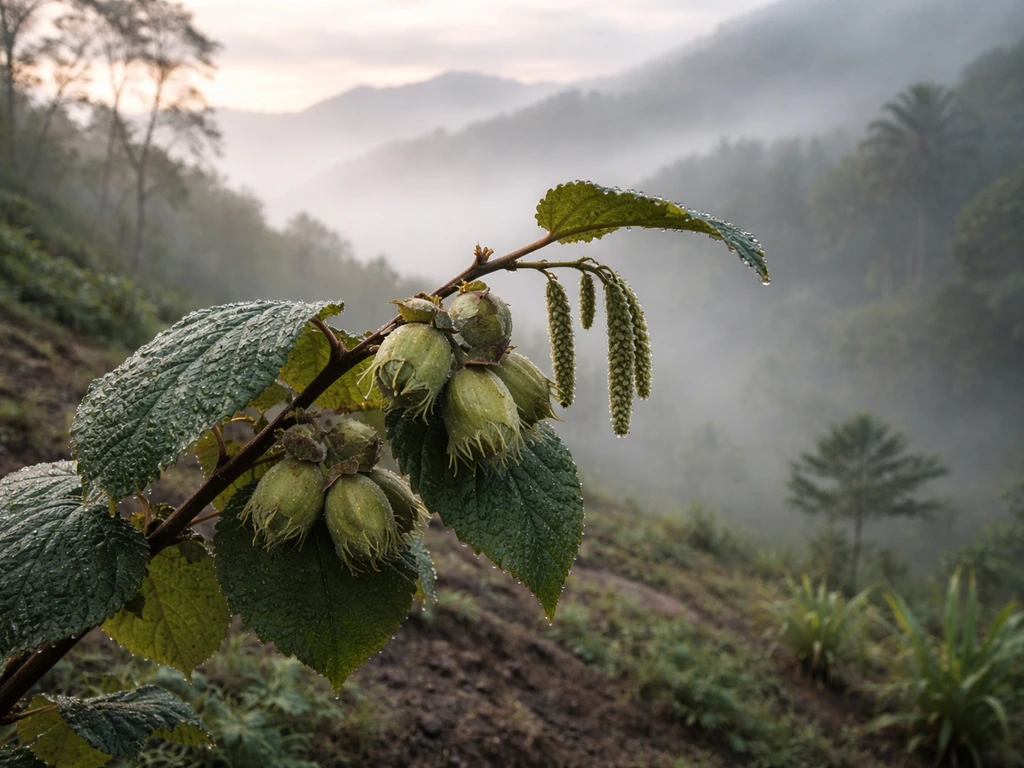
Hazelnuts grow best in a cool-temperate climate with mild winters, reliable winter chill, and moderate summers. To figure out where hazelnut trees grow, you also need to match their chill needs, frost risk, and summer heat tolerance to your local climate Hazelnuts grow best. They need enough cold to satisfy dormancy requirements, a late-winter to early-spring pollination window that stays above about 15°F (-9.4°C), and summers that are warm but not brutally hot or dry. USDA Hardiness Zones 4 through 8 cover most viable hazelnut climates, though the sweet spot for commercial-quality crops is narrower than that range suggests.
What Climate Do Hazelnuts Grow In? Zones and Tips
Marcus Hendricks
14 May 2026
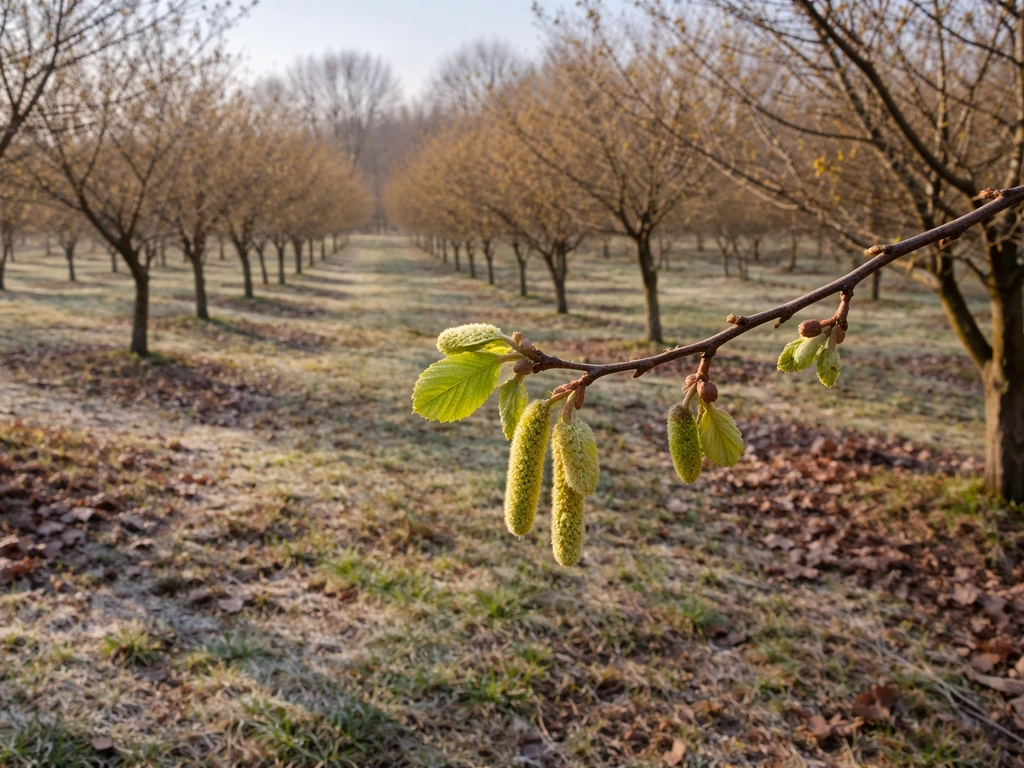
What hazelnuts actually need from their climate
Before getting into zones and regions, it helps to understand what's actually happening biologically. Hazelnuts are wind-pollinated in late winter, which means their reproductive tissues are exposed to the harshest weather of the year. Catkins (the pollen-producing structures) open and elongate well before the last frost in most climates. Female flowers receive pollen around the same window. If a cold snap hits at the wrong moment, pollination fails and nut yield collapses for that entire season. That single vulnerability drives most of the climate selectivity you'll see with hazelnuts.
Temperature requirements: chill hours, cold hardiness, and heat tolerance
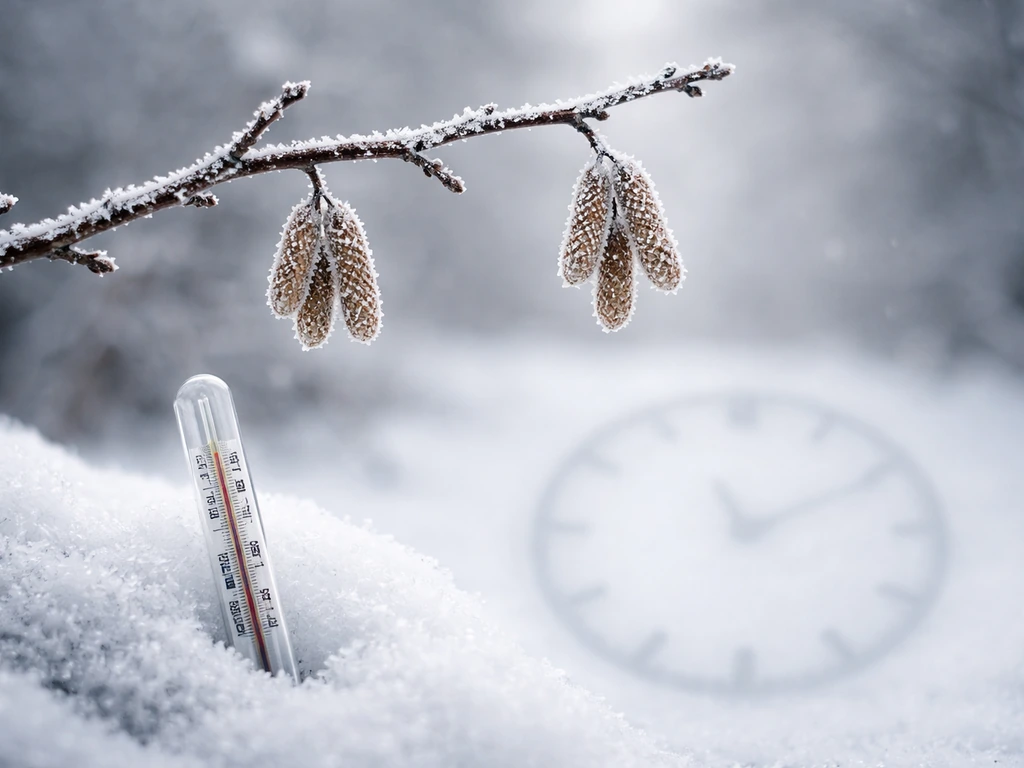
Hazelnuts need a meaningful block of winter chilling to break dormancy properly and trigger flowering. Without sufficient chill hours (typically measured as hours below 45°F/7°C), catkin development gets erratic and pollination timing falls apart. This rules out most subtropical and tropical climates right away. The tree itself handles cold reasonably well: European hazelnut (Corylus avellana) is hardy to about Zone 4, meaning it can survive winters that dip to -30°F (-34°C) in dormancy. American hazelnut (Corylus americana) pushes that slightly further, surviving reliably in Zones 3 to 4.
The catch is that the tree being alive and the tree producing nuts are two different things. Catkins become progressively less cold-hardy as they elongate. By the time they're fully extended, they can freeze and die at just 15°F (-9.4°C). That's a much narrower window than the tree's dormant cold hardiness, and it's the number that actually matters for yield. A Zone 5 grower whose catkins open in February and then catch a -5°F night has lost that year's crop even though the tree itself survives just fine.
On the warm end, hazelnuts don't love sustained summer heat. OSU Extension’s Willamette Valley hazelnut guidance notes that warm, dry, or excessively hot summers can limit production blank" rel="noopener noreferrer">On the warm end, hazelnuts don't love sustained summer heat.. The Willamette Valley of Oregon, which produces the vast majority of US commercial hazelnuts, has an ocean-temperate influence that keeps summers mild. When summers get genuinely hot and dry, hazelnuts need irrigation to compensate, and nut quality can still suffer. This limits reliable production in much of the American South and Southwest even if winters seem acceptable on paper.
Frost risk: when spring cold can ruin flowering
This is the climate factor that catches the most growers off guard. A severe frost in February or March doesn't kill a hazelnut tree, but it can wipe out a full season of nuts by damaging catkins mid-pollination. Female flowers are similarly vulnerable once they're receptive. The USDA RMA identifies this late-winter/early-spring cold exposure as one of the primary production risks for hazelnuts precisely because flowering coincides with erratic weather patterns.
Frost pockets make this worse. Cold air is heavier than warm air and drains downhill, pooling in low-lying areas. A late April frost that's barely noticeable at mid-slope can be devastating in a hollow or at the base of a hill. OSU Extension specifically flags this mechanism: late-April frosts in low-lying areas frequently damage cluster buds and succulent new shoots even in Oregon's generally favorable climate. If you're evaluating a site, think about cold-air drainage first.
To evaluate your spring frost risk practically, look up the average last frost date for your area, then check historical records for late-season frost outliers. If you regularly see temps below 15°F after your catkins would normally start elongating (often January to March depending on your region and variety), you're in a high-risk situation for inconsistent yields, even if the trees themselves survive.
Rainfall, humidity, and summer dryness
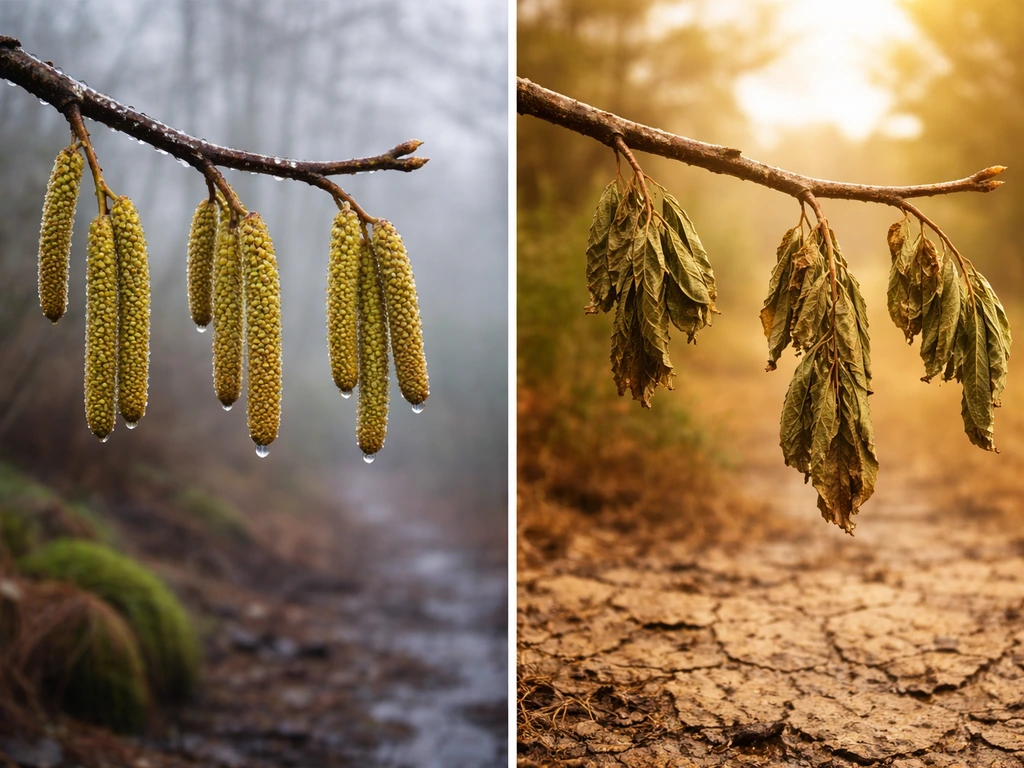
Moisture matters at two different stages: during pollination in winter and spring, and during nut development through summer. For pollination, hazelnut pollen releases best under warmer, lower-humidity conditions. Persistent wet, cold weather during the pollination window can reduce pollen shed and limit nut set even without a hard freeze. This is worth knowing if you're in a reliably foggy or perpetually damp climate.
Summer water demand is real and often underestimated. Research using lysimeter measurements found that hazelnut trees in a drip-irrigated orchard with no rainfall needed roughly 35 liters per tree per day from June through September, peaking at around 50 liters per day in July and August. The crop coefficient (a measure of water demand relative to baseline evaporation) rises from about 0.4 to 0.5 in spring to 0.65 to 0.8 in summer for mature trees. In practice, that means a dry summer without irrigation will stress your trees and reduce nut size and fill.
The good news is that irrigation compensates well if your climate is otherwise suitable. Oregon's commercial hazelnut industry relies on irrigation throughout the summer, with water management typically wrapping up before the nuts begin to drop in fall. If you're in a region with warm, dry summers but acceptable winters and springs, irrigation is a realistic path forward, not a workaround for a fundamentally bad climate.
Best hardiness zones and regions: where hazelnuts thrive (and where they don't)
Oregon's Willamette Valley is the benchmark climate for commercial hazelnut production in North America. It has mild, wet winters that provide reliable chill hours, springs that are cool enough to delay early catkin elongation and reduce frost exposure risk, and summers moderated by Pacific Ocean influence. Western Washington and coastal British Columbia are close analogs. These regions collectively produce essentially all commercially significant US hazelnut output.
Beyond that Pacific Northwest core, hazelnuts are grown successfully as home-orchard or small-scale crops across a much wider band. Much of the northeastern US, the Great Lakes region, and comparable climates in central and northern Europe (particularly Turkey, Italy, Spain, and France) support hazelnut production at varying scales. The key shared traits are: meaningful winter chill, springs that aren't brutally cold after catkin elongation starts, and summers that don't bake the trees for months.
| Region / Zone | Suitability | Main limitation |
|---|---|---|
| Zones 6–8, Pacific Northwest coast | Excellent for commercial + home production | Minimal; some summer irrigation needed |
| Zones 5–7, Northeast US / Great Lakes | Good for home orchards; some years frost-limited | Late-winter frost risk on catkins |
| Zones 4–5, Upper Midwest / New England | Marginal for European hazelnut; better with American hazelnut or hybrids | Cold snaps during pollination; short season |
| Zones 3–4, Northern Plains / Canada | American hazelnut survives; nut yield inconsistent | Extreme cold + short frost-free window |
| Zones 7–9, Southeast US | Generally poor for commercial yield | Insufficient winter chill; summer heat |
| Zones 9–13, Subtropical / Tropical | Not suitable | No winter chill; year-round heat |
If you're in Europe, the hazelnut climate map follows a similar logic. Turkey's Black Sea coast, northern Italy, and parts of Spain's Atlantic coast hit the same sweet spot of mild winters, moderate springs, and summers that don't go to extremes. Regions in central Europe with continental climates face the same catkin-frost risk as the upper Midwest in the US.
Choosing the right hazelnut type for your climate
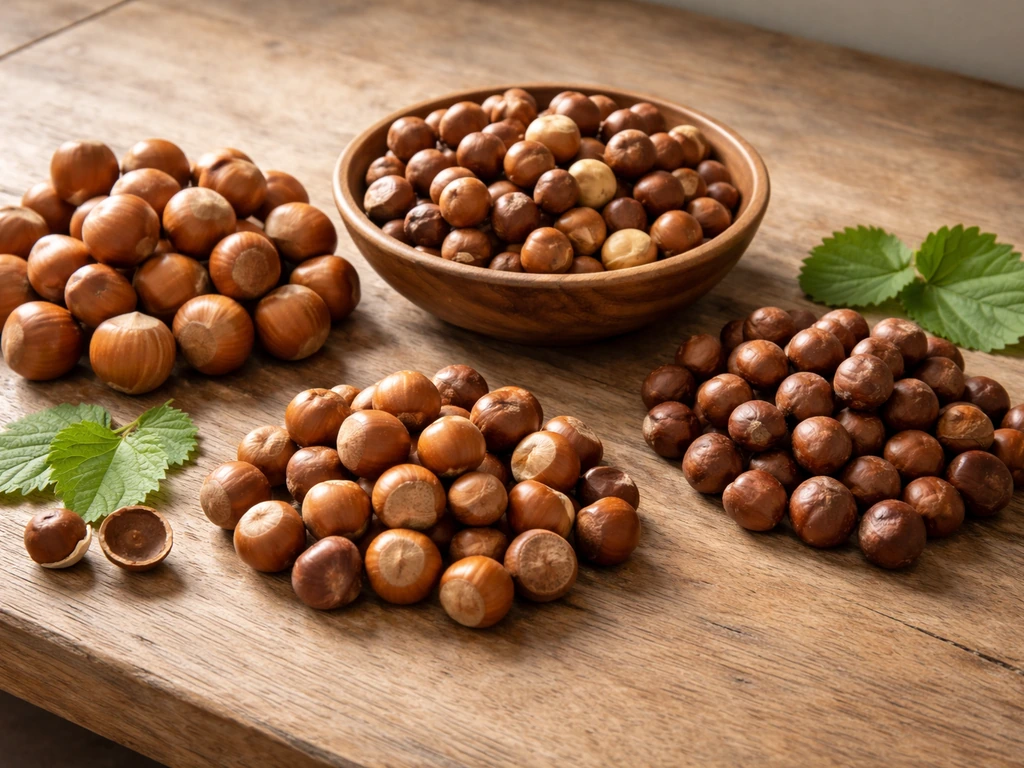
Not all hazelnuts have the same climate requirements, and matching species or variety to your local conditions is probably the most practical decision you can make. European hazelnut (Corylus avellana) produces the large, commercially valuable nuts but has the narrowest climate tolerance. American hazelnut (Corylus americana) is smaller-fruited but genuinely cold-hardy into Zone 3, making it viable in climates where European types consistently fail. Hybrids between the two species (often called American hazelnut hybrids or Corylus x) can combine improved cold hardiness with larger nut size.
| Type | Cold Hardiness | Nut Size / Quality | Best Climate Fit |
|---|---|---|---|
| European hazelnut (C. avellana) | Zone 4 minimum | Large; commercially valuable | Mild-temperate; Zones 5–8 with frost protection |
| American hazelnut (C. americana) | Zone 3–4 | Small to medium; good flavor | Cold-continental; Zones 3–7 |
| American hazelnut hybrids | Zone 4–5 typically | Medium; varies by cultivar | Transitional climates; Zones 4–7 |
| Turkish hazelnut (C. colurna) | Zone 4–5 | Small; mostly ornamental | Wider drought tolerance; less common for fruit |
Within European hazelnut varieties, there's meaningful variation in catkin elongation timing and cold tolerance at the reproductive stage. Some cultivars open catkins earlier, increasing frost exposure risk. If you're in Zone 5 or 6 with unpredictable late-winter frosts, choosing a later-flowering variety or a variety specifically bred for cold resilience (several OSU-released cultivars, for example, were developed with eastern US conditions in mind) can meaningfully improve your odds of a good crop.
One thing that often gets overlooked: hazelnuts need compatible pollinizer varieties. Because they're wind-pollinated and largely self-incompatible, you need at least two genetically different varieties whose catkin shed timing overlaps with female flower receptivity. If you're planting for nut production rather than just the ornamental value, plan for at least two varieties from the start. Getting that timing right matters more in marginal climates where the pollination window is already compressed by cold weather.
How to check your site today
Start with your USDA Hardiness Zone, but don't stop there. The zone tells you about average minimum winter temperatures, not about spring frost timing or cold-air drainage, which are the variables that actually determine whether you get a consistent nut crop. Here's a practical checklist for evaluating your site:
- Look up your average last frost date and check historical frost records for the past 10 to 20 years. Note whether you've seen sub-15°F temperatures in February or March in any of those years.
- Walk your land on a cold, still night. Low spots where frost settles first, or areas where cold air pools at the base of a slope, are high-risk sites for catkin damage. Elevated or gently sloping ground with good cold-air drainage is significantly better.
- Check your summer rainfall data or irrigation access. If you get less than about 20 to 25 inches of rain distributed through the growing season, plan for drip irrigation capacity during June through September.
- Assess your chill hours. If you're in a region where winter temperatures rarely drop below 45°F for sustained periods (common in the Deep South and mild coastal areas south of Zone 8), hazelnut dormancy requirements won't be met reliably.
- Look at your prevailing wind patterns during winter and early spring. Hazelnuts need wind for pollination, so sites with good air movement are an advantage. But cold, desiccating winds during pollination can also reduce pollen viability, so some shelter on the windward side without complete wind blockage is ideal.
- Check soil drainage. Hazelnuts don't tolerate waterlogged roots, and sites with heavy clay or poor drainage create rooting-zone problems that compound stress during dry summers. Well-drained loam is the target.
If your site checks most of those boxes, you're in a reasonable position. If you're on the edge, for example in Zone 5 with variable late-winter cold or in Zone 8 with marginal chill hours, the best move is to lean toward cold-tolerant or chill-flexible varieties and plant on your best-drained, best-elevated ground. Hazelnuts are not a forgiving crop in climates that are genuinely unsuitable, but they're also not as narrowly restricted as some sources suggest. The Pacific Northwest gets most of the attention, but growers across Europe and eastern North America have been producing hazelnuts for centuries in climates that don't look anything like Oregon.
If you want to dig further into specific geographies, the picture changes quite a bit depending on where you are. The climate picture looks different for growers in the eastern US compared to those on the West Coast, and it's different again for regions like Australia or India where the hazelnut tradition is newer and the climate fit is less well established. To narrow it down for your location, start with Australia’s specific cold and frost patterns and then match the right hazelnut varieties to where they grow best regions like Australia. You can apply the same chill, frost, and winter-to-spring timing logic to see whether conditions in India are a good match for hazelnut production Australia or India.
FAQ
How do I know if my climate has enough winter chill for hazelnuts, not just the right hardiness zone?
Use chill-hour estimates for your location, focusing on hours below about 45°F (7°C). Then compare that to your expected flowering timing, because insufficient chill shows up as erratic or delayed catkin elongation, which can shift pollination into a higher-frost-risk window.
What is a “late frost” for hazelnuts, and how late is too late?
For hazelnuts, “late frost” is any cold event after catkins begin to elongate and before pollination and nut set are completed. Because catkins can become cold-sensitive as they extend, cold snaps after your normal catkin start period are the ones most likely to reduce yield, even if tree survival would be fine.
If my site is in a good zone but has frost pockets, can I still grow hazelnuts successfully?
Often yes, but you must site carefully. Choose areas with cold-air drainage (gentle slope, not a bowl), avoid low spots where air pools, and consider wind exposure that can reduce stagnant cold. If you cannot change elevation, picking later-flowering varieties can reduce overlap between peak receptivity and frost events.
Can hazelnuts still set nuts if there is no hard freeze but the weather is wet and foggy during pollination?
Yes, but wet, persistent cool conditions can reduce pollen shed and limit nut set even without a damaging minimum temperature. If your spring is frequently damp or foggy during the catkin release window, expect more variability unless you manage orchard conditions to improve airflow.
Do hazelnuts need irrigation everywhere with warm summers?
Not in every warm-summer climate, but you need to assess rainfall distribution. Hazelnuts can require tens of liters per tree per day during June to September in dry years, and the peak demand often falls in July and August. A humid, rain-fed summer can work, but a “warm with low summer rain” pattern usually leads to smaller nuts without supplemental water.
Will frost-proofing strategies help, or is it mostly a climate-fit issue?
Climate fit is the foundation, but you can sometimes reduce losses during specific nights. For orchard-scale hazelnuts, methods like wind machines or orchard heaters are more feasible when you have a predictable risk window, and their effectiveness depends on temperature inversion conditions. They are usually not enough if your area regularly has severe late-winter cold that repeatedly hits catkins.
How many hazelnut varieties do I need for nut production, and what if I only want two trees?
If the goal is nuts, plan for at least two genetically different varieties with overlapping pollen shed and female flower receptivity. With only two trees, timing overlap becomes the entire problem, so you should select cultivars known to match your expected flowering dates, not just “different variety” names.
Are European hazelnuts always harder to grow than American hazelnuts in borderline climates?
European hazelnuts generally have narrower tolerance at the reproductive stage, especially around catkin cold sensitivity and chill reliability. American hazelnuts can be viable in colder zones, but they may produce smaller nuts, so you may prefer hybrids if you want a balance of cold resilience and commercial nut size.
If my winters are mild, can I still grow hazelnuts by choosing later-flowering or different cultivars?
Sometimes, but if chill hours are truly low, changing cultivars may not fix the underlying dormancy problem. Low chill typically causes irregular catkin development and inconsistent timing, which can make frost exposure and pollination overlap unpredictable.
What should I check first when choosing a planting site, soil or microclimate?
Microclimate should come first for hazelnuts because spring frost exposure and cold-air drainage drive yield. After you choose a safer slope or drained location, then evaluate soil drainage and water-holding capacity, since summer stress and root health can still limit nut size and kernel fill.