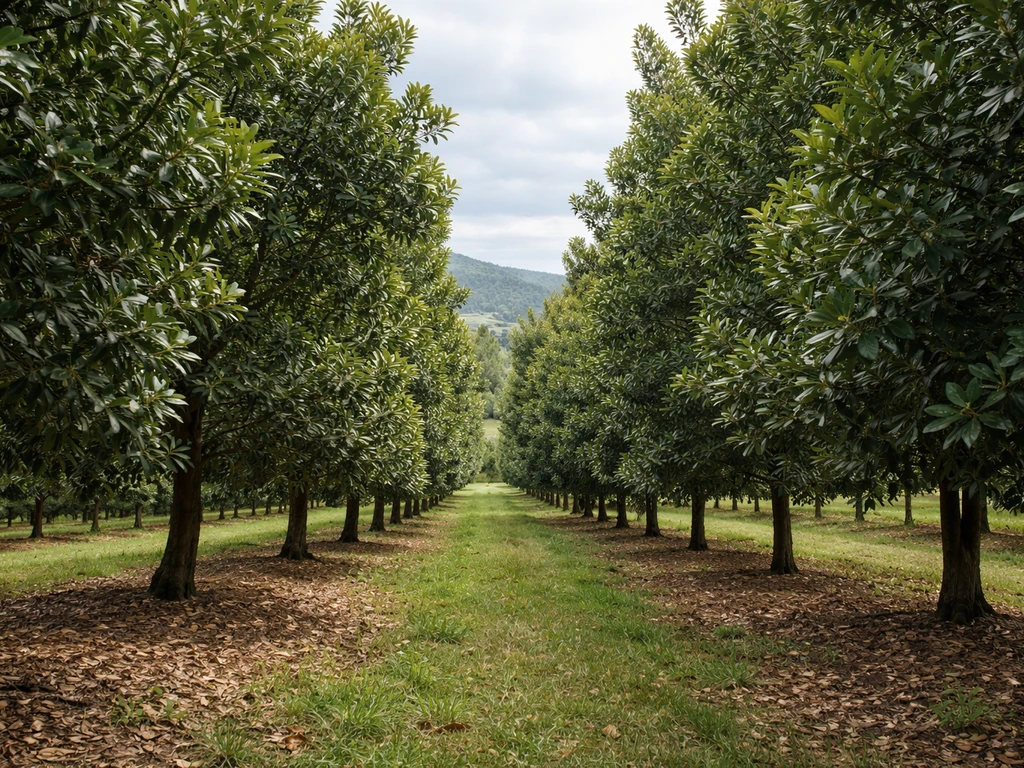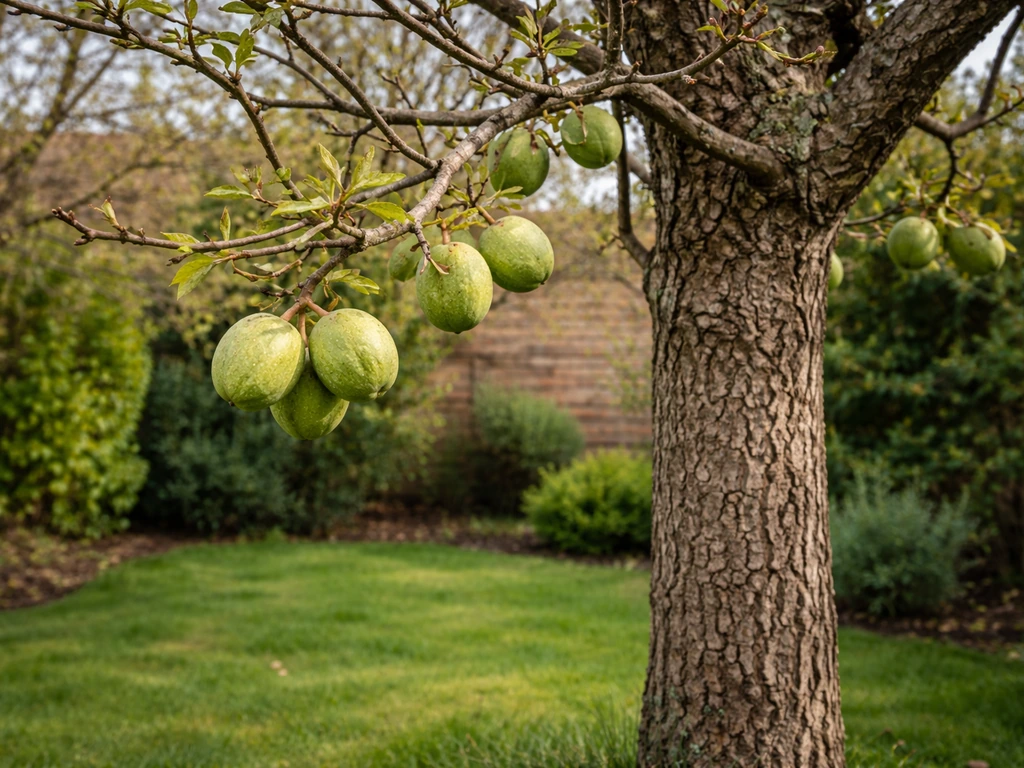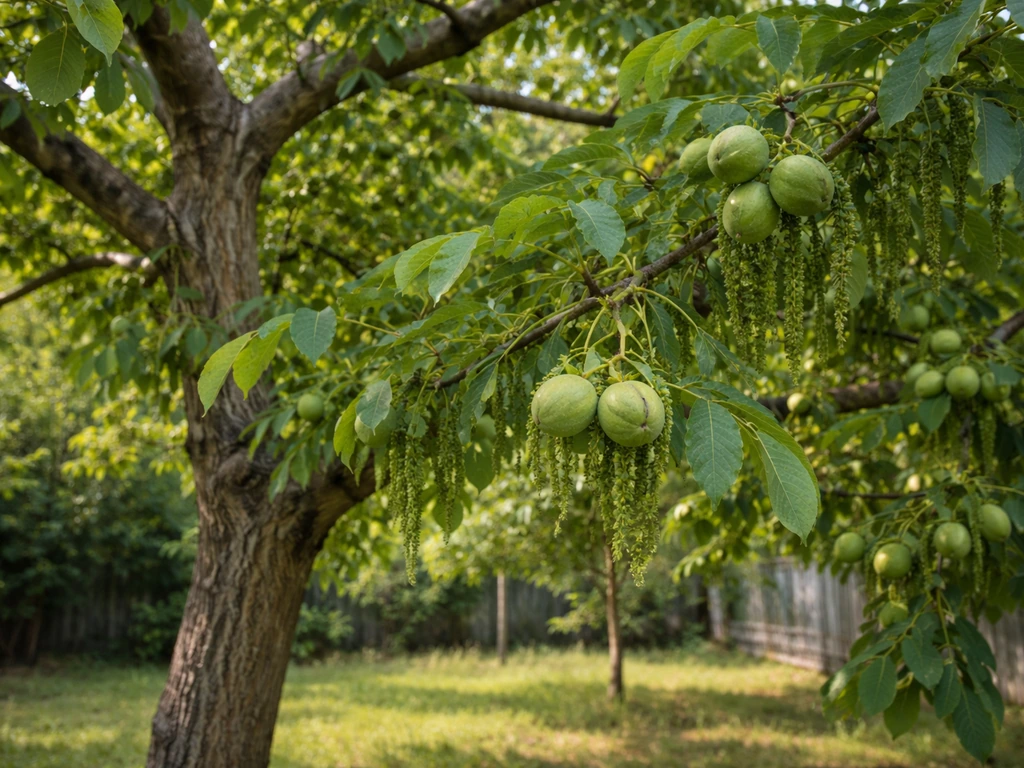
Yes, macadamia nuts grow in Hawaii, and not just as backyard curiosities. Hawaii is home to a genuine commercial macadamia industry with over 600 farmers, organized crop insurance programs, and a dedicated industry association. The Big Island (Hawaii Island) dominates production to the point where commercial output is essentially concentrated there entirely, but the crop has been trialed and grown on Maui, Oahu, and Kaua'i as well. Western Oregon / USDA ARS “Tellus” reports that macadamia production in Hawaii is about a $49 million industry, with roughly 1.2 million trees grown on around 17,000 acres, spread across Oahu, Hawai‘i, Maui, and Molokai a $49 million industry with about 1.2 million trees on 17,000 acres. If you're trying to figure out whether macadamias will work in your specific spot in Hawaii, the answer depends heavily on rainfall, elevation, drainage, and which side of the mountain you're on.
Do Macadamia Nuts Grow in Hawaii? Where and Why
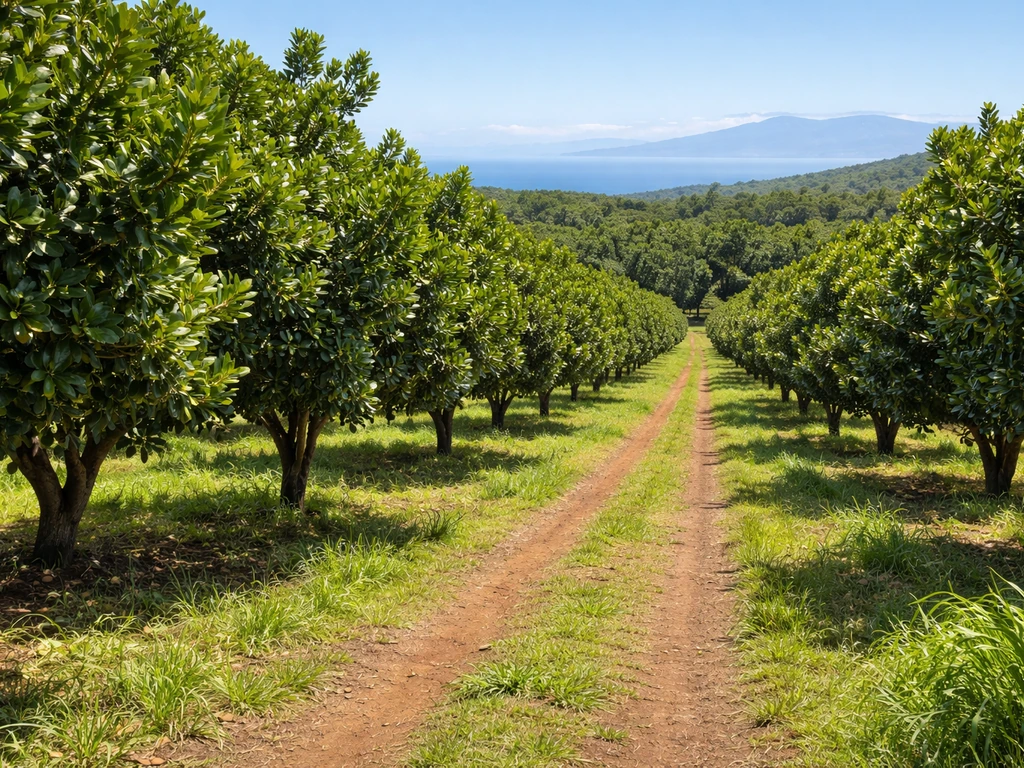
Where in Hawaii macadamias are actually grown
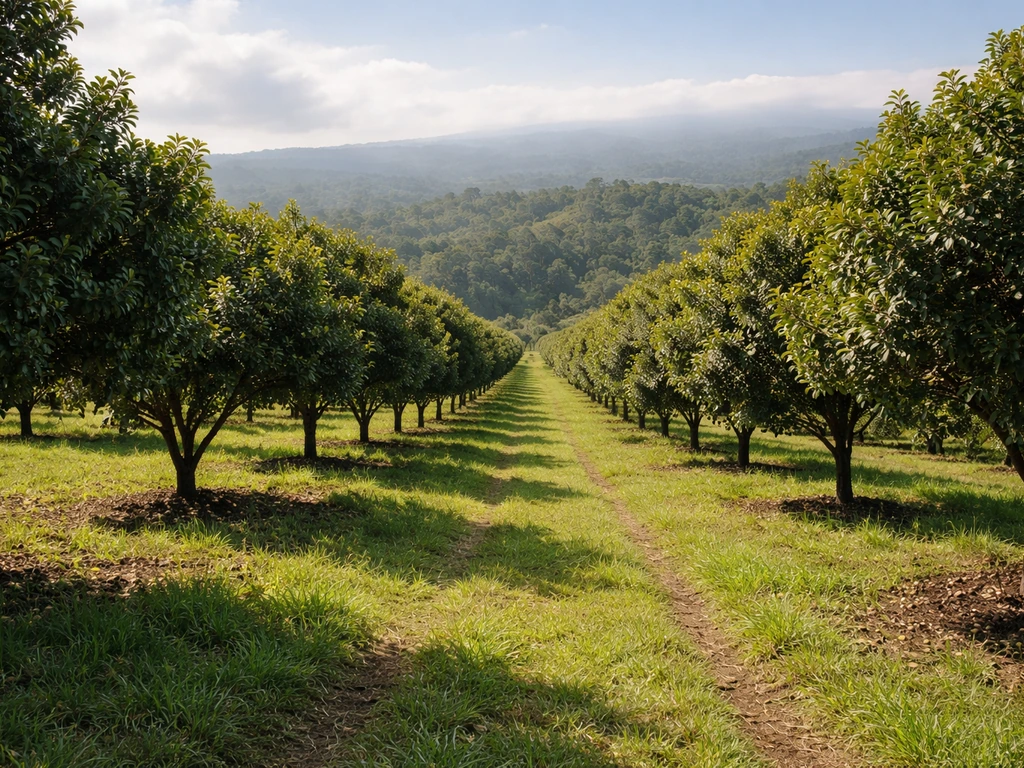
The commercial heart of Hawaii's macadamia industry is the Big Island, particularly in districts like Kona, Ka'u, and the Hilo side. The University of Hawaii's College of Tropical Agriculture and Human Resources (CTAHR) uses research stations in places like Kona and Honomalino as benchmark locations for cultivar studies, which tells you a lot about where serious production happens. If you're looking at where macadamia nuts grow globally, Hawaii slots in alongside Australia, South Africa, and Kenya, but within the U.S., the Big Island is essentially the only game in town for commercial-scale production.
Historical records from CTAHR show orchards were established on multiple islands during the industry's development phase, including Maui, Oahu, and Kaua'i. Commercial momentum, however, consolidated on the Big Island where conditions are most consistently favorable across large tracts of land. If you're on another island, that doesn't mean you can't grow macadamias, but it does mean you're working outside the commercial core and need to be more careful about site selection.
The conditions macadamias actually need in Hawaii
Macadamias in Hawaii need rainfall in the range of 60 to 120 inches per year. That's a wide band, but it's not unlimited: too dry and the trees struggle to set and fill nuts, too wet and you run into disease pressure and soil saturation problems. Elevation matters too. CTAHR puts the workable ceiling at around 2,500 feet. Above that, temperatures get too cool and growth slows enough to hurt production. Below that, you've got a wide range of viable sites, provided the other boxes are checked.
Soil is non-negotiable. Macadamias need deep, well-drained soil with a pH between 5.0 and 6.5. Hawaii's volcanic geology helps here in a specific way: well-weathered a'a lava, which breaks down into a coarse, free-draining medium, can actually work well for macadamias once it's sufficiently decomposed. What won't work is anywhere with standing water, compacted subsoil, or poor drainage, regardless of how good the rainfall numbers look on paper. Waterlogged roots will kill a macadamia tree just as effectively as drought.
Windward vs leeward: this distinction matters more than you might think
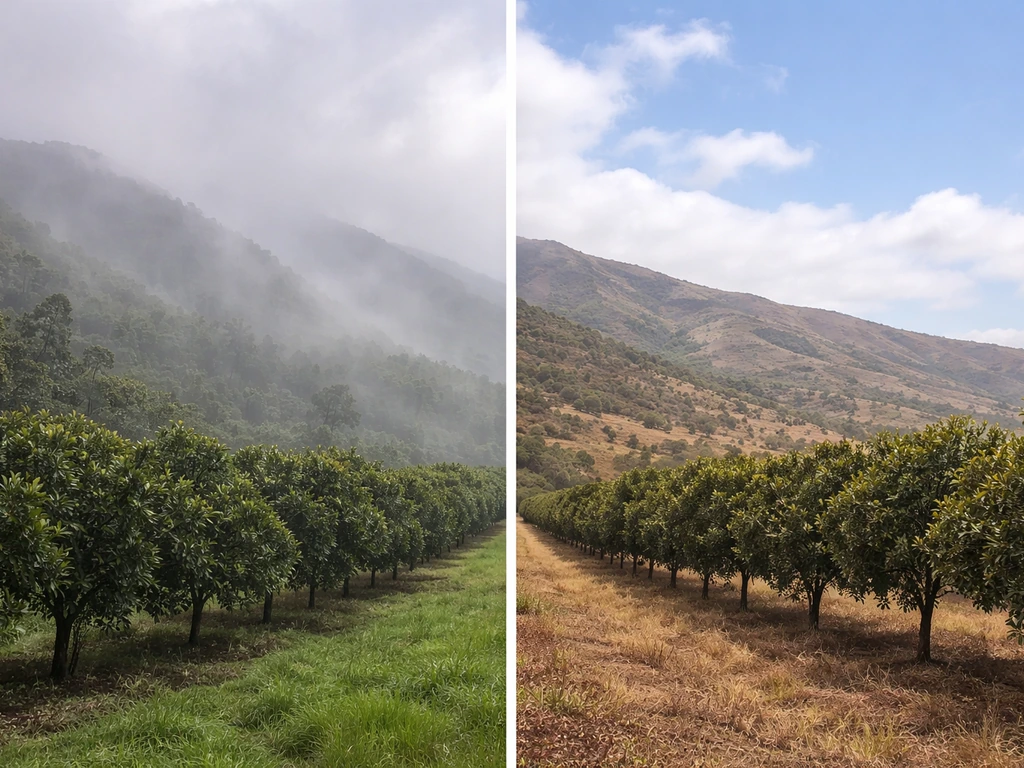
Hawaii's trade winds hit the windward (northeast-facing) slopes first, drop their moisture as they rise, and then descend on the leeward side as dry, warming air. NOAA describes this rain shadow effect in straightforward terms: moisture condenses and falls on windward slopes, and the air that crests the ridge warms and dries on the way down. The difference in effective water delivery between the two sides isn't trivial. USGS studies on Maui have measured cloud water flux of over 3,000 mm per year on the windward side versus around 130 mm on the leeward side. Even accounting for tree canopy interception, you're looking at a fundamentally different water environment.
For macadamia growers, this creates a real tension. Windward sites can get the rainfall numbers you need, but they also get the extreme rain events that cause problems. A 2019 report from Hawaii Public Radio directly linked heavy windward rainfall to macadamia harvest losses: nuts that fall prematurely from wind and saturated soil, or that rot before they can be collected. Leeward sites are often drier and sunnier, which is great for harvest operations and fruit quality, but may require irrigation to stay within that 60–120 inch equivalent annual moisture target. The sweet spot in Hawaii tends to be sites with reliable but not excessive rainfall, good air circulation, and protection from the worst storm exposure.
Microclimates matter enormously at the farm scale. Two properties five miles apart on the Big Island can receive dramatically different annual rainfall depending on elevation, orientation, and local topography. If you're evaluating a site, don't rely solely on regional averages. Talk to growers in the immediate area and check whether nearby farms are producing well.
Which macadamia species and cultivars Hawaii growers actually use
Both major macadamia species are present in Hawaii, but commercial production overwhelmingly uses Macadamia integrifolia (smooth-shelled) and some hybrids with Macadamia tetraphylla (rough-shelled). The cultivar selection is more specific than most people realize. CTAHR's recommended commercial cultivar list for Hawaii includes 'Purvis' (294), 'Kau' (344), 'Kakea' (508), 'Keaau' (660), 'Mauka' (741), 'Pahala' (788), and 'Makai' (800). These aren't arbitrary choices. Each has been evaluated for yield performance, nut quality, and how well it handles Hawaii's specific climate conditions.
Yield data from long-term trials in Hawaii shows 'Kau' averaging around 47.4 kg per tree (in-shell) over a seven-year production period, which is strong performance. Other cultivars like 'Keauhou,' 'Kakea,' and 'Keaau' also performed well in multi-year studies. Importantly, CTAHR's research shows that the same cultivar can have different harvest and flowering windows depending on the district it's grown in. 'Keauhou' and 'Kau,' for example, show distinct timing profiles at Kona Research Station versus Honomalino. This is why matching cultivar to location, not just species to climate zone, is part of good site planning.
If you're thinking about whether you can grow macadamia nuts at your specific site, the cultivar question is one you'll want to work through with local extension resources rather than just picking whatever's available at a nursery.
Windward vs leeward growing conditions at a glance
| Factor | Windward Sites | Leeward Sites |
|---|---|---|
| Annual rainfall | Often exceeds 120 inches in exposed areas | Can fall below 60 inches; irrigation may be needed |
| Storm/wind exposure | Higher; nut drop and crop losses more likely | Lower; more predictable harvest conditions |
| Sun exposure | More cloud cover; less direct sun | More consistent sunshine; better for nut fill |
| Drainage demand | Critical; soils saturate faster | Less urgent, but still required |
| Disease pressure | Higher in wet years | Lower in drier conditions |
| Best for | Growers with good drainage and storm protection | Growers who can irrigate and want reliable harvests |
How to check if your specific spot will work
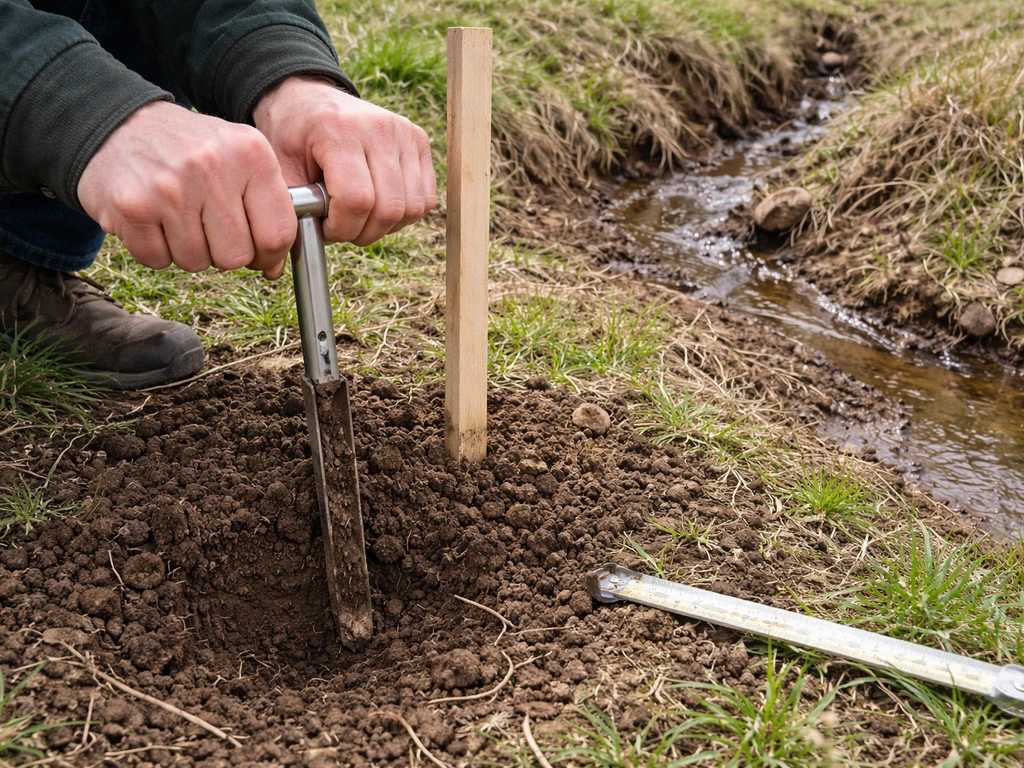
Before planting, run through these site criteria honestly. There's no point spending a decade waiting for a tree that was doomed from day one.
- Confirm annual rainfall at your site is between 60 and 120 inches. Use local weather station data, not island-wide averages. Your county extension office or the USDA's Rainfall Atlas of Hawaii can help pin this down.
- Check your elevation. If you're above 2,500 feet, the temperature is likely too cool for reliable nut production. Below that, you're in range.
- Test your soil drainage. Dig a 12-inch hole, fill it with water, and see how quickly it drains. Slow drainage (more than a few hours to empty) is a red flag. Macadamias will not tolerate waterlogged roots.
- Check your soil pH. Target 5.0 to 6.5. A basic soil test from your local extension lab will give you this number and flag any amendment needs.
- Assess your wind and storm exposure. If you're on a windward-facing slope with no natural windbreak, factor in the harvest loss risk from heavy rainfall events and consider whether a shelter belt is feasible.
- Talk to a grower nearby. If other macadamia trees within a mile or two of your site are producing well, that's the strongest possible signal that your location can work.
- Choose a regionally appropriate cultivar. Contact UH-CTAHR's extension program for current cultivar guidance specific to your district on the Big Island or your island more broadly.
What to expect from planting to your first real harvest
This is where a lot of people get caught off guard. Macadamia trees are a long-term investment. SEC filings from macadamia orchard partnerships describe the point at which trees begin producing nuts at a commercially acceptable level as generally around nine years of age. The Hawaii Farm Bureau puts it plainly: new plantings take the better part of a decade to mature. You may get some early nuts before that, but don't plan your finances around them.
Once trees are producing, the harvest cycle is drawn out by macadamia's prolonged flowering biology. Because the flowering period is extended, nut fall can stretch over more than six months for some cultivars. Most growers in Hawaii harvest from the ground (nuts fall when mature) at intervals of six to twelve weeks, depending on the cultivar and orchard conditions. The main harvest window in Hawaii typically runs from around August through January, though the exact timing shifts by cultivar and location. This extended harvest schedule is actually one of the practical challenges of growing macadamias at scale: you need consistent monitoring and labor across a long season, not a single concentrated pick.
For anyone growing on the Big Island and wondering how the macadamia situation compares to other nuts in the region, it's worth knowing that what nuts grow in Hawaii is actually a broader story than just macadamias. But macadamia is the one with genuine commercial infrastructure and proven regional cultivars, which gives new growers a real knowledge base to draw from.
How Hawaii compares to other macadamia-growing regions
Hawaii's macadamia industry was among the earliest established outside Australia, and it remains a model for how the crop can work at commercial scale in a subtropical island environment. That said, the conditions that make the Big Island work (volcanic soil, reliable trade-wind rainfall in mid-elevation zones, year-round warmth) aren't easily replicated elsewhere in the U.S. If you're curious about whether you can grow macadamia nuts in Florida, the short answer is that while it's been attempted, Florida lacks the consistent drainage and temperature stability that Hawaii's volcanic terrain provides.
Globally, the crop has spread well beyond its Australian origin. Which countries grow macadamia nuts today includes South Africa, Kenya, China, and parts of Latin America, all of which have expanded significantly in recent decades. New Zealand is another subtropical-adjacent region where nut production is explored. If you're wondering about that comparison, the details of what nuts grow in New Zealand show a different climate profile than Hawaii and a different set of viable crops.
One question that comes up often for home growers in Hawaii is whether you can start a tree from a nut rather than buying a grafted sapling. It's possible, but there are real tradeoffs. Understanding whether you can grow a macadamia tree from a nut matters here because seedling trees take even longer to produce and won't have the consistent characteristics of grafted cultivars. For commercial planting, grafted stock of a proven cultivar is always the better starting point.
The bottom line for Hawaii growers
Macadamias absolutely grow in Hawaii and produce commercially viable crops. The Big Island is where the serious production happens, concentrated in mid-elevation zones with reliable rainfall and well-drained volcanic soils. Your success on any given site comes down to getting the drainage right, staying within the rainfall and elevation windows, picking a cultivar matched to your district, and accepting that you're committing to a multi-year establishment timeline before the trees start paying back. If those conditions fit your situation, Hawaii is one of the best places in the world to grow macadamias.
FAQ
If macadamia nuts grow in Hawaii, can I plant the nut itself and still get reliable results?
In most cases, macadamias in Hawaii are planted using grafted cultivars rather than seed, because seed-grown trees can vary in nut quality and harvest timing and will usually add extra uncertainty to how your orchard performs. Seedlings can still work for experimentation, but if your goal is reliable production, start with grafted plants of a cultivar known for your district.
What if my property is on the leeward side of a mountain, can I still grow macadamias?
A leeward or drier site is not automatically disqualified, but you should expect to manage irrigation to stay within the practical moisture range and to avoid root stress during dry spells. Before committing, verify you have a dependable water source, because macadamias fail more from sustained drainage and root moisture problems than from short dips in rainfall.
Can I grow macadamias if my site gets the right rainfall but has occasional flooding?
Yes, but only if you can prevent waterlogging. The key constraint is not rainfall alone, it is how quickly water moves through the root zone. If your soil has any tendency toward standing water after storms, you will likely need drainage improvements before planting, otherwise the tree can decline even when total rainfall numbers look “in range.”
How do harvest timing and nut fall work in Hawaii, is it really a multi-month harvest?
Macadamias need regular monitoring over a long season, because nut fall can stretch for many months and harvest intervals typically run every six to twelve weeks. If you are thinking of a small operation, plan labor and equipment around that prolonged schedule, not a one-time harvest, and consider how you will collect nuts reliably after windy or heavy-rain events.
How can I estimate whether my exact spot in Hawaii is suitable for macadamias when neighborhoods can differ?
Avoid relying only on a nearby weather station average, since microclimates can shift rainfall substantially over short distances. A practical approach is to talk with growers and observe conditions on neighboring farms (storm patterns, drainage behavior, and whether nuts are dropping cleanly) rather than using regional averages as your main decision tool.
What should I do if my land is near or above the elevation limit for macadamias in Hawaii?
If you are above the workable elevation ceiling discussed by extension guidance, you should assume cooler temperatures will slow growth and may reduce production even if soils and rainfall are ideal. The decision aid is simple: do not “wing it” beyond the typical temperature range, instead consult local trials or extension guidance for your elevation and exposure.
What is the biggest drainage-related mistake people make when trying to plant macadamias in Hawaii?
The most common mistake is planting into soil that is deep enough on paper but has compacted layers or poor drainage below the root zone. Even well-weathered volcanic material can underperform if subsoil is compacted or if the profile retains water after rains, so inspect drainage and consider soil testing and a percolation-focused evaluation.
When do macadamia trees start producing enough for the investment to make sense?
If your goal is to start producing at the lowest possible financial risk, the safer plan is to budget for delayed returns, since commercial maturity is typically around nine years for meaningful output. You can still harvest earlier, but do not build your budget around early yields, especially during the first few production years when patterns can be uneven.