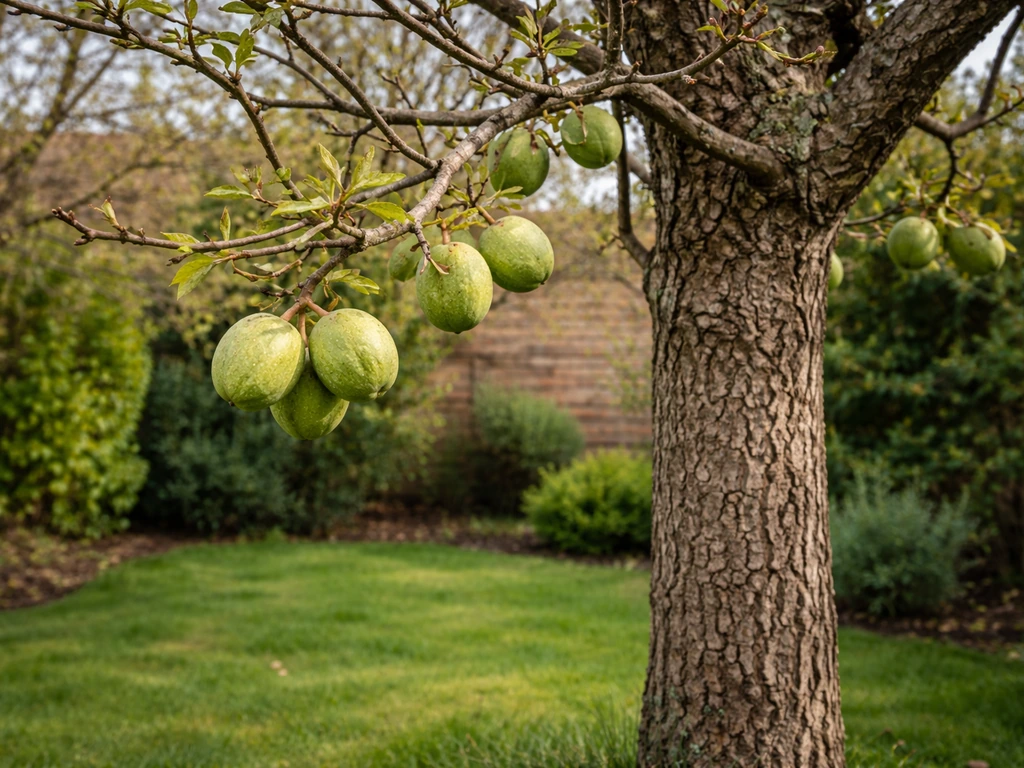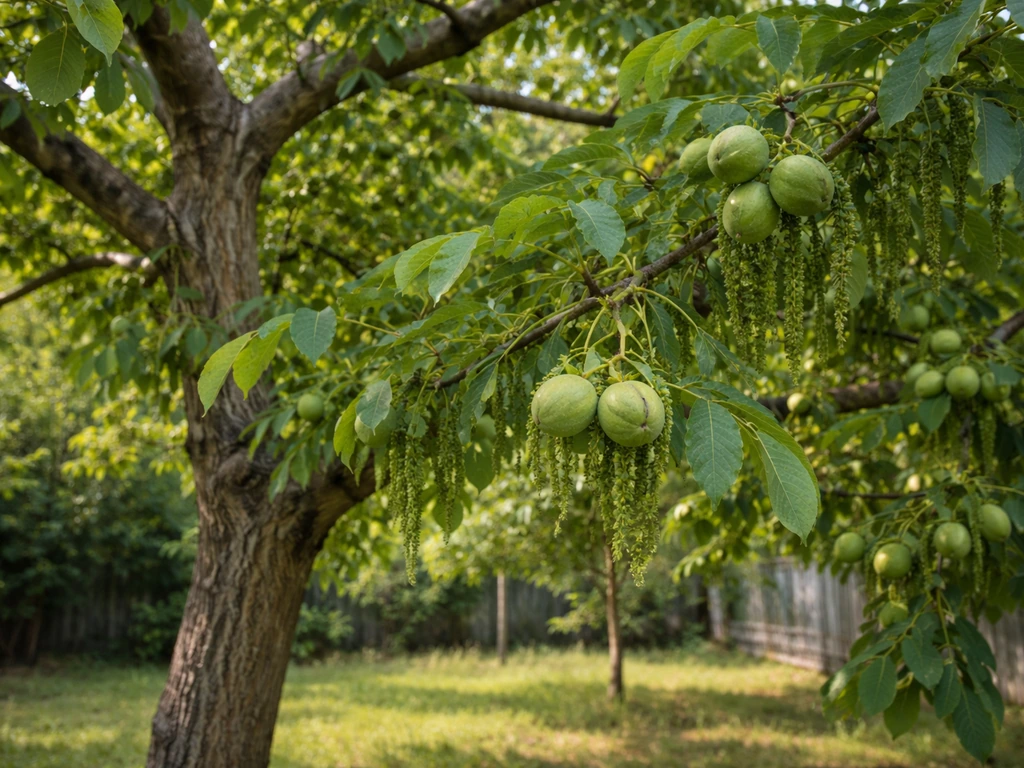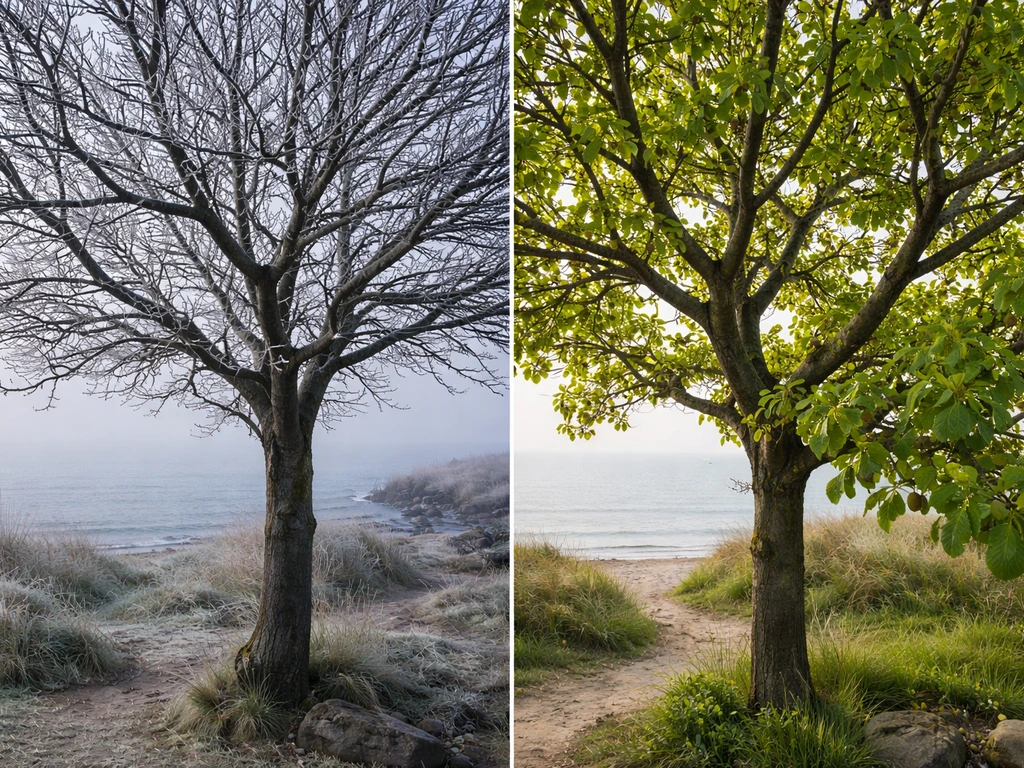
Macadamia nuts grow on trees, specifically large evergreen trees in the genus Macadamia, which belongs to the plant family Proteaceae. They are native to Australia and now cultivated commercially across several tropical and subtropical regions worldwide. If you are trying to figure out whether you can grow one where you live, or just want to understand the geography of where these trees actually thrive, this guide covers both angles directly.
Where Macadamia Nuts Grow: Regions, Trees, and How to Grow
Marcus Hendricks
2 Apr 2026
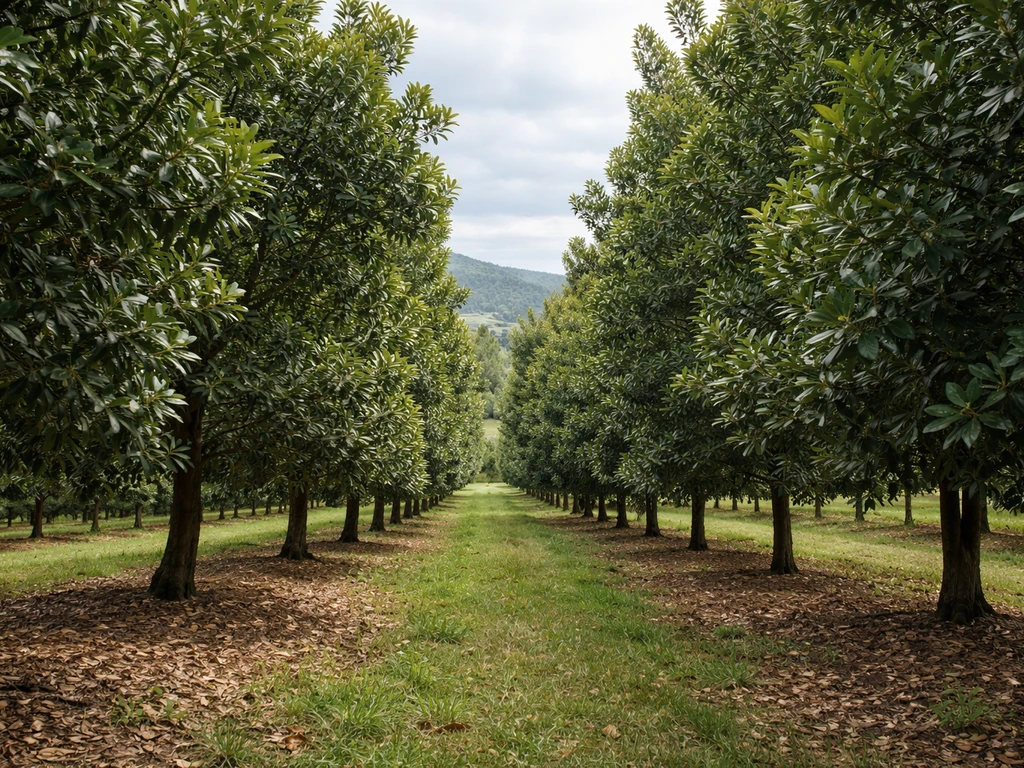
What macadamias actually are
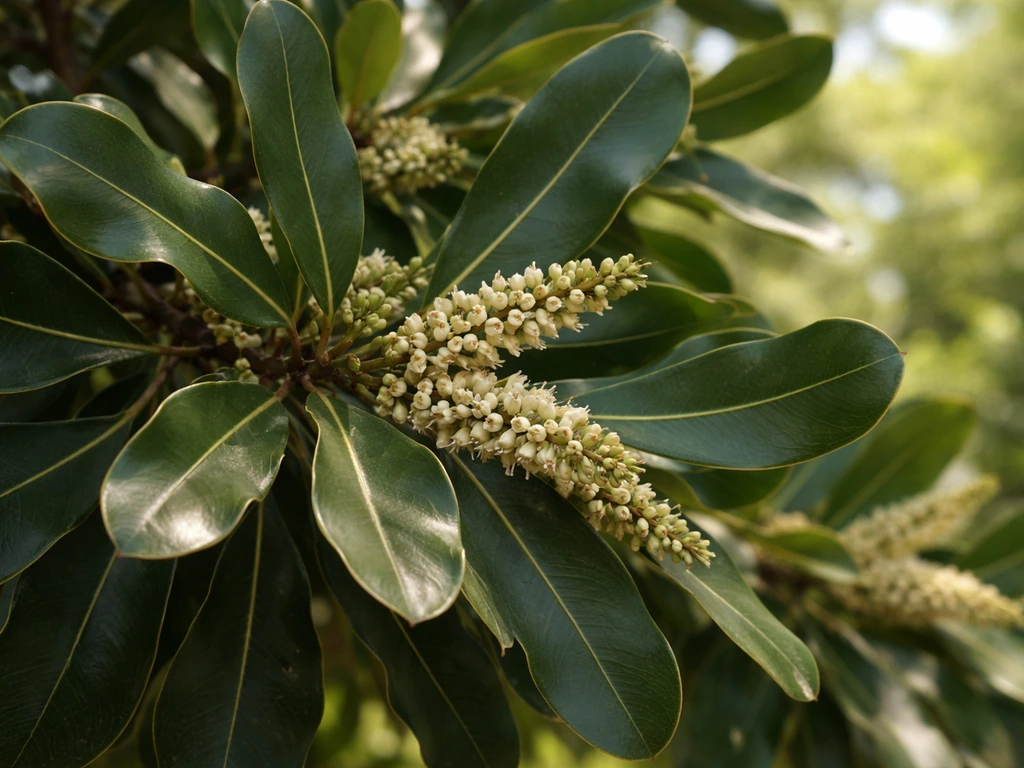
The macadamia tree is an evergreen, which means it holds its leaves year-round. It belongs to the Proteaceae family, the same botanical family as proteas and banksias. There are four Macadamia species in total, but only two of them are used commercially for nut production: Macadamia integrifolia (smooth shell) and Macadamia tetraphylla (rough shell). Of these two, M. integrifolia is the commercially dominant species, and it is the one you will see in most orchards and home plantings globally.
What you buy in a store labeled a macadamia nut is technically the kernel, the creamy white embryo inside the hard brown shell. The whole fruit actually has three layers: a green leathery outer husk on the outside, the hard shell underneath it, and then the edible kernel at the center. When the fruit ripens, that outer green husk loosens and eventually splits. The kernel itself is what gets processed and eaten, and it is notably high in fat content, which gives it that rich, buttery flavor. Understanding this structure matters if you ever plan to harvest your own, because you are working with all three layers in sequence.
Macadamia nuts grow on trees, here is how
Macadamia nuts do not grow on bushes or shrubs. They grow on trees that can reach up to around 20 meters tall and 10 meters wide at maturity, which is something to keep in mind if you are thinking about planting one in a backyard. These are substantial trees, not ornamental shrubs you can casually tuck into a corner.
The tree produces its flowers in long, drooping clusters called racemes. In Australia, flowering typically begins around August and September. Bees are the primary pollinators, and pollination can actually be a limiting factor for nut set, especially in isolated plantings with poor bee activity. After a flower is successfully pollinated, the fruit begins developing. From flowering to mature nuts on the tree takes roughly 5 to 6 months. After the nuts are ready, harvesting is not a one-day event. Nut fall can extend over more than 6 months for some cultivars, so orchards run a rolling harvest that stretches across a long portion of the year. For home growers, this means periodic collection rather than a single annual harvest.
Where macadamia nuts originate and grow naturally
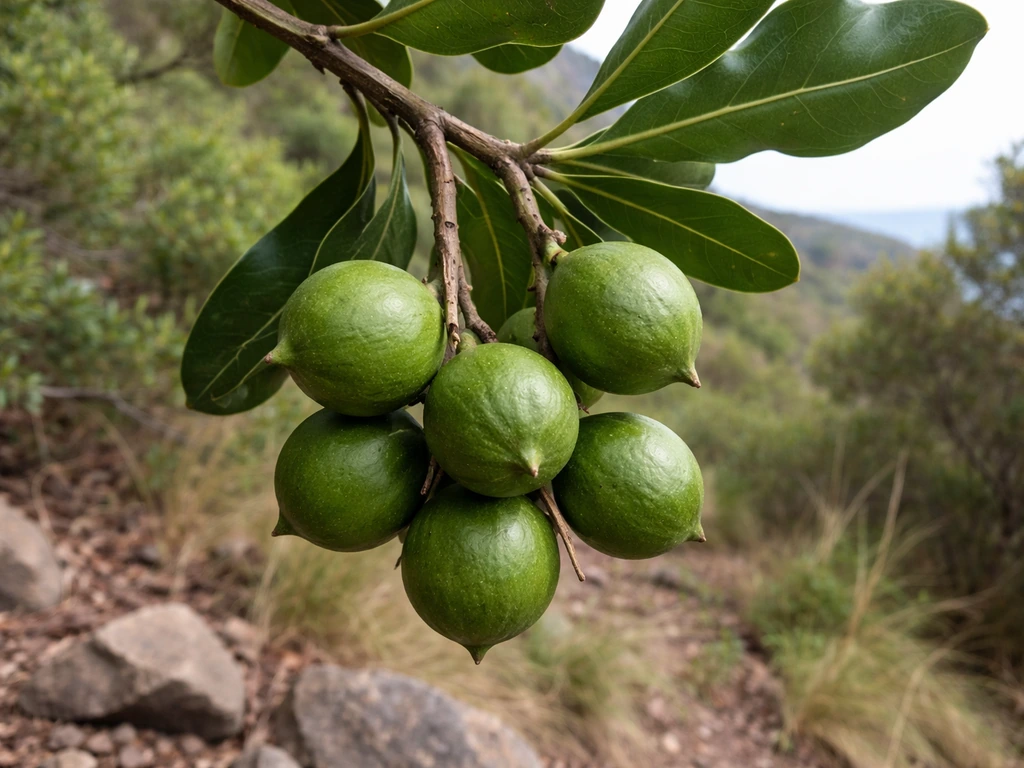
Macadamia is the only widely grown food plant that is native to Australia, and its natural wild habitat is relatively restricted. Wild macadamia trees occur in the coastal ranges of south-eastern Queensland and northern New South Wales, where they grow in subtropical rainforest environments. A peer-reviewed open-access study also maps wild macadamia distributions within subtropical rainforest from south-east Queensland to north-east New South Wales, including M. integrifolia and M.
ternifolia in south-east Queensland and M. tetraphylla mainly in northern New South Wales with some extension into south-east Queensland [south-eastern Queensland to north-east New South Wales](https://pmc. ncbi. nlm.
nih. gov/articles/PMC7355489/). The terrain tends to be hilly or mountainous, with high rainfall, humidity, and well-drained forest soils. That native range is actually quite narrow geographically, which tells you something important about what the tree wants: a warm, humid, subtropical climate with no hard frosts and consistent moisture.
From that original Australian base, macadamia cultivation has spread to other subtropical and tropical regions around the world wherever the climate is a close enough match. If you want to dig deeper into exactly which countries grow macadamia nuts commercially today, the list is longer than most people expect, spanning Africa, Latin America, and Asia in addition to the US and Australia.
Where macadamias grow by country and region
Australia: the heartland of macadamia production
Australia is where macadamia cultivation is most concentrated and most mature. The industry is centered in northern New South Wales and south-eastern Queensland, with the Northern Rivers region of NSW producing a large share of the national crop. Other significant growing areas include the Bundaberg region and the Clarence Valley, where plantings have expanded in recent years. Temperature is cited by Australian industry sources as the single most important factor for macadamia growth and productivity. The trees thrive with daytime temperatures in the range of roughly 20 to 35 degrees Celsius and need essentially frost-free conditions, especially during flowering and early fruit set.
Hawaii: the US center of macadamia growing
Within the United States, Hawaii is the dominant macadamia-growing state by a wide margin, and it has been since commercial production began there in the early 20th century. The Big Island accounts for most of Hawaii's output. The climate there is close to ideal: no frost risk, consistent warmth, and adequate rainfall or irrigation capacity. For productive macadamia growing in Hawaii, the practical thresholds are maximum temperatures below about 90 degrees Fahrenheit and minimum temperatures staying above 55 degrees Fahrenheit.
The USDA NASS Hawaii office even maintains dedicated macadamia production reporting, reflecting how established the crop is there. USDA NASS’s dedicated Hawaii “Fruits and Nuts” macadamia report put 2023 utilized production at 36. 8 million pounds, down 2% from the prior year [USDA NASS Hawaii office even maintains dedicated macadamia production reporting](https://data. nass.
usda. gov/StatisticsbyState/Hawaii/Publications/FruitsandNuts/FTNTHI052024. pdf). If you want a detailed look at whether macadamia nuts grow in Hawaii specifically, including the regional variation across the islands, there is more detail worth reading.
Florida and the US mainland
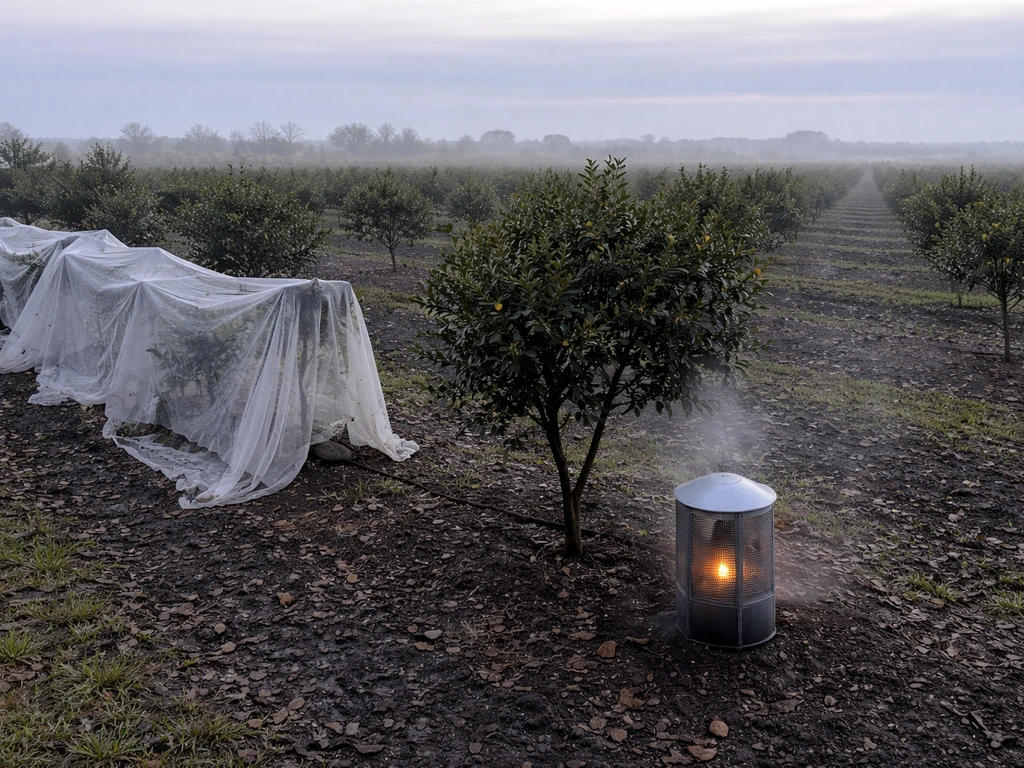
On the US mainland, Florida is the most realistic candidate for macadamia growing, particularly in the southern part of the state. The challenge is frost. Even in South Florida, late cold events can injure flowers or young developing fruit even when the mature tree itself survives the winter. Variety selection matters here because some cultivars handle marginal conditions better than others, but it is still a risk-managed situation rather than a reliable one. Anyone seriously considering growing macadamia nuts in Florida should go in knowing that nut production is not guaranteed every year in borderline climate zones.
A quick regional comparison
| Region | Climate Suitability | Key Risk | Commercial Production? |
|---|---|---|---|
| Northern NSW / SE Queensland, Australia | Excellent | Drought in some years | Yes, major industry |
| Hawaii (Big Island) | Excellent | Very few; elevation matters | Yes, established industry |
| South Florida, USA | Marginal to moderate | Late frost injury to flowers/fruit | Limited, dooryard scale |
| Southern California (coastal) | Marginal | Dry heat and frost at some sites | Very limited |
| New Zealand (northern) | Marginal | Cold winters limit productivity | Experimental only |
It is worth noting that Hawaii's macadamia success also illustrates what other Pacific-climate islands can offer. What nuts grow in Hawaii beyond macadamias is an interesting question too, since the islands support several other nut species that thrive under similar conditions.
The macadamia growing timeline: patience is non-negotiable
This is where a lot of enthusiastic home growers get a reality check. Macadamia trees do not nut quickly. After planting, you are typically looking at 4 to 5 years before the tree bears any nuts at all. From there, production builds gradually as the tree matures and the canopy fills out. Full productive capacity usually takes considerably longer than that first fruiting.
Once the tree is bearing, the annual cycle runs roughly like this: flowering begins (August to September in Australia, timing varies in Hawaii and other regions), pollination occurs over several weeks, then fruit development takes 5 to 6 months to reach maturity on the tree, followed by a nut-fall harvest window that can stretch more than 6 months for some varieties. That extended harvest window is not a problem, it is actually how the tree works, and growers simply collect fallen nuts periodically throughout the season.
One more timing note: most commercial and backyard macadamia trees are propagated by grafting rather than grown from seed. Grafted trees generally begin bearing sooner and produce predictable fruit quality. Growing a macadamia tree from a nut is possible but results in highly variable trees that often take much longer to fruit, so it is not the recommended approach if you want reliable production.
Where you can actually grow macadamias: site and zone basics
The honest answer is: you can grow macadamias anywhere that does not freeze hard in winter and stays reliably warm through the growing season. In USDA hardiness zone terms, you are generally looking at zones 9b through 11 as the practical range, with zone 10 and above being the most reliable for consistent nut production. Zone 9 is possible but carries meaningful frost risk, especially for flowering and young fruit.
Within a viable climate zone, site selection still matters quite a bit. The key factors are:
- Frost-free location: even a single hard frost can wipe out a year's flowers or young fruit, so avoid frost pockets, low-lying areas, and sites with cold air drainage
- Soil pH between about 5.0 and 6.5 (acidic to slightly acidic): macadamias need this range for proper nutrient uptake, and planting in alkaline soil causes chronic deficiency problems
- Good drainage: roots do not tolerate waterlogging, so heavy clay or low-lying wet areas are a problem
- Adequate water: these trees need consistent moisture, either from rainfall or irrigation, especially during flowering and fruit development
- Space: a mature tree can reach 20 meters tall and 10 meters wide, so a small urban backyard may simply not be practical without a serious commitment to ongoing pruning
If you are outside of Hawaii or coastal subtropical Australia, the southern tip of Florida is really the only part of the continental US where this works reasonably well. Parts of coastal Southern California can support macadamia trees, but nut production there is inconsistent. New Zealand's northernmost regions, around Northland and Auckland, sit at the cool edge of viability. There are actually several nuts that grow in New Zealand that handle cooler climates more reliably than macadamias do.
How to grow a macadamia nut tree: practical steps
Before anything else, be honest with yourself about whether your climate is actually suitable. If you are in a marginal zone, you are signing up for a tree that may survive but not produce reliably. That said, if your conditions genuinely support it, here is how to approach it practically.
- Start with a grafted tree from a reputable nursery, not a seed-grown seedling. Grafted trees come true to variety, bear sooner (4 to 5 years versus potentially 8 to 10 or more from seed), and have known performance characteristics for your region.
- Test your soil before planting. You are aiming for a pH of 5.0 to 6.5. If your soil is more alkaline than that, you will need to amend it or plan for ongoing acidification, not a one-time fix.
- Choose the right spot. Full sun, good air circulation, protection from frost, and room for a large canopy. Avoid low spots where cold air settles on clear nights.
- Water consistently, especially in the first two to three years while the root system establishes. Once established, macadamias are somewhat drought-tolerant, but they still need adequate moisture during flowering and fruit development to produce well.
- Fertilize with a fertilizer formulated for acidic-soil crops or specifically for macadamias. Follow soil-test results rather than generic schedules.
- Plan for bee activity during flowering. If you are in an area with limited pollinator activity, consider keeping bees nearby or at minimum avoiding any pesticide applications during the August to September (or local equivalent) flowering window.
- Be patient. The 4 to 5 year wait before first nuts is real. Do not expect shortcuts.
If you are genuinely wondering whether you can grow macadamia nuts in your specific situation, the most useful starting point is your local hardiness zone and your last frost date. Those two data points will tell you more than anything else whether you are in the game at all.
The bottom line on where macadamias grow
Macadamia nuts grow on large evergreen trees that are native to subtropical Australia and now cultivated commercially across Hawaii, Australia, South Africa, Kenya, and parts of Latin America. They need warm, essentially frost-free conditions, acidic well-drained soil, and a long growing season. Within the US, Hawaii is by far the most suitable location, with South Florida being the only realistic mainland option. In Australia, the northern New South Wales and south-eastern Queensland corridor is the commercial heartland.
Anywhere else, you are working in marginal conditions and need to go in with realistic expectations. The trees are slow to fruit, large at maturity, and genuinely rewarding when grown in the right place. If your climate fits, they are worth the wait. If it does not, no amount of effort or optimism changes the biology.
FAQ
Do macadamia nuts grow on bushes or only on trees?
In the wild and in commercial orchards, macadamias are tree crops, not hedge-like shrubs. If you see “macadamia bush” in a listing, it is usually referring to a young tree in a small container or a different nut species, because mature macadamias form a large evergreen canopy over time.
If my winters are mild, can macadamias still fail to produce nuts?
You can get the tree to survive in marginal climates, but reliable nut production usually fails when frost reaches flowering or early fruit. A common approach is to track both your last-frost date and your lowest winter night temperatures, because a single late cold snap can wipe out that season’s crop even if the mature tree looks fine.
How do you harvest macadamias, do you pick them all at once?
Yes, in most places the orchard focuses on collecting fallen nuts, not picking from branches. Fruit maturity happens on the tree, then the nuts naturally drop over an extended period, so look for a cultivars’ typical nut-fall window and plan several harvest passes.
What mistake causes poor kernel quality when harvesting macadamias at home?
Because the outer husk loosens as ripening progresses, harvesting too early can lead to hard-to-process nuts or inferior kernel quality. For home growers, it helps to harvest based on nut fall timing, then let the collected nuts dry before cracking, since freshly wet husk material can increase spoilage risk.
Why do my macadamia flowers appear but I get very few nuts?
Bees drive nut set, so if you plant a single tree or the area has low pollinator activity, you may get flowers with little or no production. If you do not have other macadamias nearby, plan for additional flowering macadamia trees or manage the site to support bees (for example, avoiding broad-spectrum insecticide sprays during bloom).
What part of the season is most sensitive to cold for macadamia production?
Macadamia fruit set is strongly tied to frost-free warmth during flowering and early development. Even where temperatures stay “above freezing,” short cold episodes below the practical warm range can reduce yield, so gardeners in borderline spots often rely on protective strategies such as wind protection and microclimate siting rather than expecting the tree to compensate.
Is growing a macadamia from a nut viable if I want quicker, consistent results?
Yes, but it is usually slower and less predictable. Grafted plants typically begin producing earlier and give more consistent kernel characteristics, while growing from seed often creates genetic variation in both fruit quality and how quickly the tree reaches bearing.
If I do not live in a tropical area, can irrigation make up for the climate?
Macadamias do not need tropical heat every hour of the year, but they do need a long, warm growing season and consistent moisture. If your rainfall is irregular, you can still grow them if you can provide irrigation that mimics a humid subtropical environment, especially from flowering through fruit development.