If you're in Texas and want to grow nut trees, pecan is almost always the right starting point. It's native, well-adapted across most of the state, and genuinely productive when you match the cultivar to your region. But it's not the only option, and for some Texas growers, a different species makes more sense depending on soil, space, and what part of the state you're in. This guide breaks it all down by region and tree type so you can make a decision today and actually get something in the ground.
Best Nut Trees to Grow in Texas: Top Picks by Region
Marcus Hendricks
16 Apr 2026
How to choose nut trees for your Texas site
Before you pick a species or cultivar, you need to be honest about three things: your soil, your chill hours, and how much space you actually have. Texas is enormous, and conditions in the Panhandle look nothing like conditions in the Rio Grande Valley or East Texas. Getting these basics right before you plant saves years of frustration.
Soil and drainage
Pecans are the dominant nut tree in Texas for a reason, but they are picky about drainage. Texas A&M AgriLife Extension is direct on this point: pecans planted on shallow soils with poor internal drainage never develop into large, productive trees. Waterlogged roots kill growth momentum early and permanently cap what the tree can become. The optimum soil pH for pecan is 5.5 to 6.5, and you want well-drained loam or sandy loam. If your site has hardpan, heavy clay, or seasonally floods, either amend aggressively before planting, choose a raised mound site, or consider a more shallow-rooted species like a hazelnut for smaller plots.
Chill hours and climate zones
Texas spans USDA hardiness zones 6a (northern Panhandle) through 10a (Lower Rio Grande Valley). Chill hours, the number of hours below 45°F during dormancy, vary just as dramatically. The good news for most Texas growers is that pecans are relatively undemanding on chill hours compared to many other temperate fruit and nut crops. Most standard pecan cultivars fit well within the chill accumulations available in central and east Texas. The challenge comes at the extremes: the Panhandle gets enough cold for almonds and even some walnuts, while the Valley and Gulf Coast barely accumulate enough chill for even the lowest-chill pecan varieties. If you're in a transitional zone and want a broader picture of what's possible, the nut trees suited to zone 6 overlap with the northern tier of Texas and give you a useful reference for cold-hardy options.
Space requirements
Standard pecan trees need 40 to 60 feet of spacing at maturity. That's a serious commitment for a suburban yard. If you have a large property or rural acreage, this is no problem. If you're on a quarter-acre lot, you might only fit one tree, which creates a pollination challenge (more on that below). Smaller-scale options like hazelnuts or Chinese chestnuts can work in tighter spaces and still give you real nut production within a few years of planting.
Best nut trees to grow in Texas by type
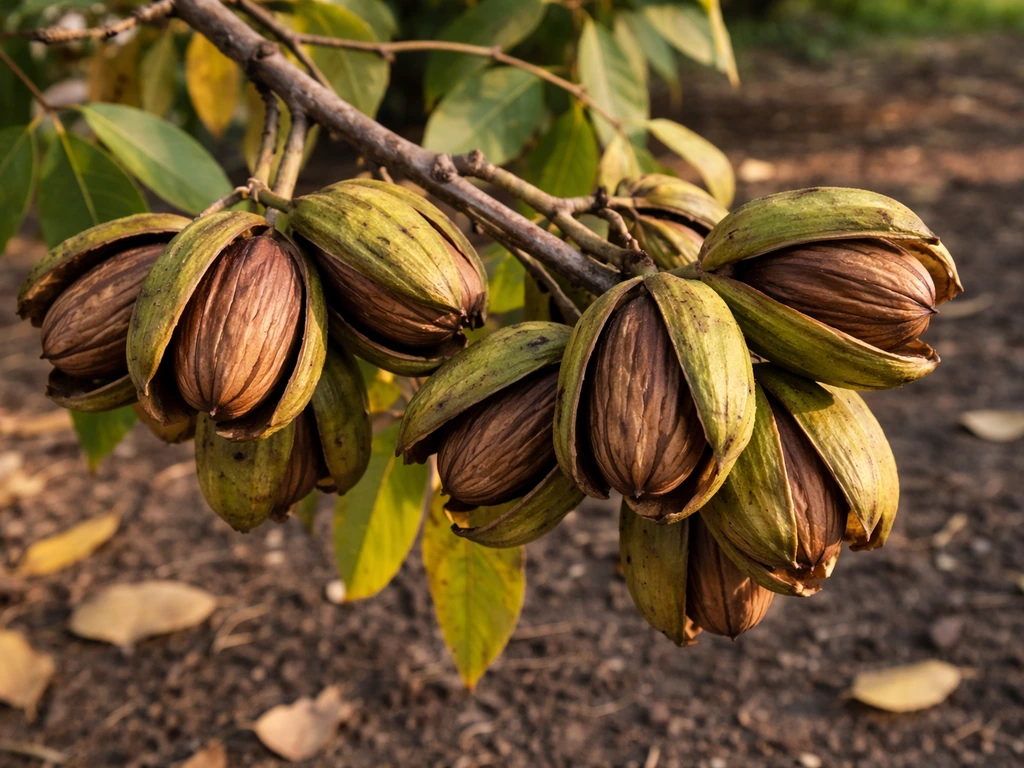
Pecans: the native champion
Pecan (Carya illinoinensis) is Texas's state tree and its most commercially important nut crop. It's native to river bottoms across much of the state, which tells you a lot about what it wants: deep, well-drained alluvial soil, full sun, and room to grow. For home growers, cultivar selection is the single most impactful decision you'll make. Texas A&M AgriLife categorizes recommendations by region: for East Texas, standouts include Desirable, Pawnee, Cheyenne, Cape Fear, Forkert, Caddo, and Oconee. For West Texas, Western, Wichita, and Cheyenne are the go-to choices. Wichita is specifically called out as the most productive cultivar for central and west Texas adaptation, and Pawnee is especially recommended for the Panhandle because it ripens early, beating the shorter growing season.
Hickories
Several hickory species (Carya spp.) are native to East Texas and can be grown elsewhere in the state with reasonable success. Shagbark hickory (Carya ovata) and shellbark hickory (Carya laciniosa) produce excellent-tasting nuts but are slow to bear, sometimes taking 10 or more years. They're better suited to East Texas and the piney woods region where rainfall is higher and soils are deeper. Hickories are extremely cold-hardy, making them worth considering for the northern tier of the state. They're not as commercially practical as pecan, but for a homestead or orchard with a long-term outlook, they add real diversity. You can also grow hicans, hybrid crosses between pecan and hickory, which sometimes split the difference in vigor and nut quality.
Chinese chestnut
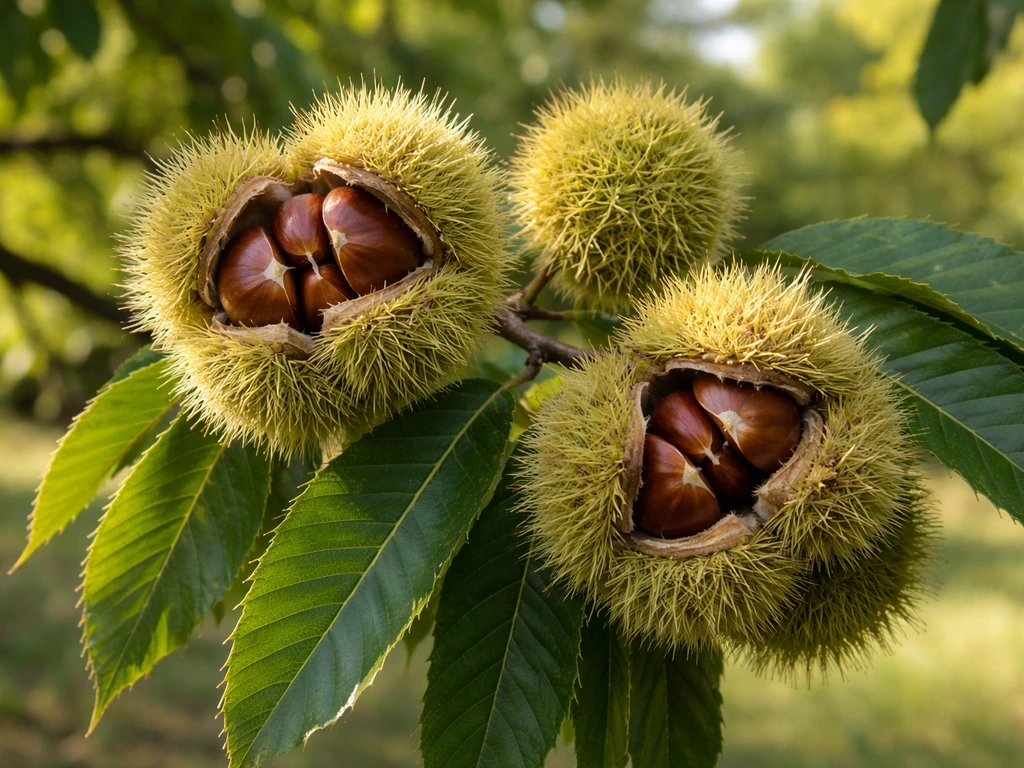
Chinese chestnut (Castanea mollissima) is arguably the most underused nut tree in Texas. It bears in 3 to 5 years, tolerates acidic soils common in East Texas, and produces a large, sweet nut. It's blight-resistant, unlike the American chestnut, and adapts well to zones 5 through 8, which covers most of the state outside South Texas. You need at least two trees for cross-pollination. In terms of site requirements, chestnuts want well-drained, slightly acidic soil (pH 4.5 to 6.5) and full sun. They're a genuinely productive option for East Texas growers who want faster results than pecan or hickory.
Almonds and other temperate options
Almonds are technically feasible in the drier, higher-elevation parts of West Texas and the Panhandle where you get the necessary chill hours (typically 200 to 400 hours depending on variety) and where late spring rainfall is low enough to limit fungal disease. The biggest challenge with almonds in Texas is spring frost timing: almonds bloom very early and a late freeze can wipe out an entire crop. Hall's Hardy almond is a commonly recommended low-chill variety that handles more cold and blooms slightly later. Hazelnuts (Corylus americana or American filbert) are another underappreciated option. They're shrub-like, tolerate partial shade, and work well in North and East Texas. They won't produce bushels of nuts, but they're productive, low-maintenance, and fit into smaller spaces where a full-size pecan would never work.
What nut trees actually grow across Texas's regions
Texas breaks into distinct growing regions for nut trees, and the differences matter more than most people expect.
| Region | Best Native/Adapted Options | Notes |
|---|---|---|
| East Texas (Zones 7b–8b) | Pecan (Desirable, Oconee, Caddo), Chinese chestnut, Hickory | Acidic soils, higher rainfall; good for chestnuts and hickories |
| Central Texas (Zones 7b–8b) | Pecan (Wichita, Cheyenne, Pawnee), Chinese chestnut | Alkaline soils common; watch drainage on limestone |
| West Texas / Trans-Pecos (Zones 6b–8a) | Pecan (Wichita, Western), Almond (with irrigation) | Dry climate; irrigation critical; lower humidity reduces disease |
| Texas Panhandle (Zones 6a–7a) | Pecan (Pawnee), Almond, Hazelnut, Hickory | Short growing season; early-ripening cultivars essential |
| South Texas / Gulf Coast (Zones 9a–10a) | Pecan (low-chill varieties), Macadamia (Zone 10 only) | Limited chill hours; narrow cultivar window; humidity increases disease pressure |
Native pecans grow wild along creek and river bottoms from the Red River down through the Hill Country and into South Texas, which reflects their deep regional rootedness. Introduced species like Chinese chestnut are most successful in the eastern third of the state. If you're curious how the East Texas nut-growing picture compares to a neighboring state, the guide on nut trees that grow in Tennessee shows how similar humid mid-South conditions handle the same species, which can be useful context. Similarly, growers in East Texas who look across the state line will find that nut trees suited to Georgia's climate share a lot of overlap with East Texas conditions.
Planting and establishment basics for Texas nut trees
When to plant
Bare-root pecan trees should go in the ground from late December through February while they're fully dormant. Container-grown trees have more flexibility but still benefit from late winter or early spring planting so they can establish roots before summer heat arrives. In South Texas, late fall planting works well since winters are mild. In the Panhandle, wait until the ground thaws in late February or early March. The goal is always to give the root system maximum time to establish before facing a Texas summer, which is genuinely brutal on young trees.
Spacing and site prep
Standard pecan trees need 40 to 60 feet between trees. If you're planting a small home orchard, you can start closer (30 feet) and plan to remove every other tree as canopies fill in, a practice called hedgerow thinning. Chinese chestnuts can be spaced 20 to 30 feet apart. Hazelnuts can go as close as 8 to 10 feet in a multi-stem planting. Before planting, dig a hole at least twice as wide as the root ball but no deeper than necessary so you don't set the tree too low. For bare-root pecans, prune any damaged roots cleanly and spread roots naturally in the hole without bending them. Backfill with native soil rather than amended potting mix, which can discourage roots from expanding outward.
Irrigation at establishment
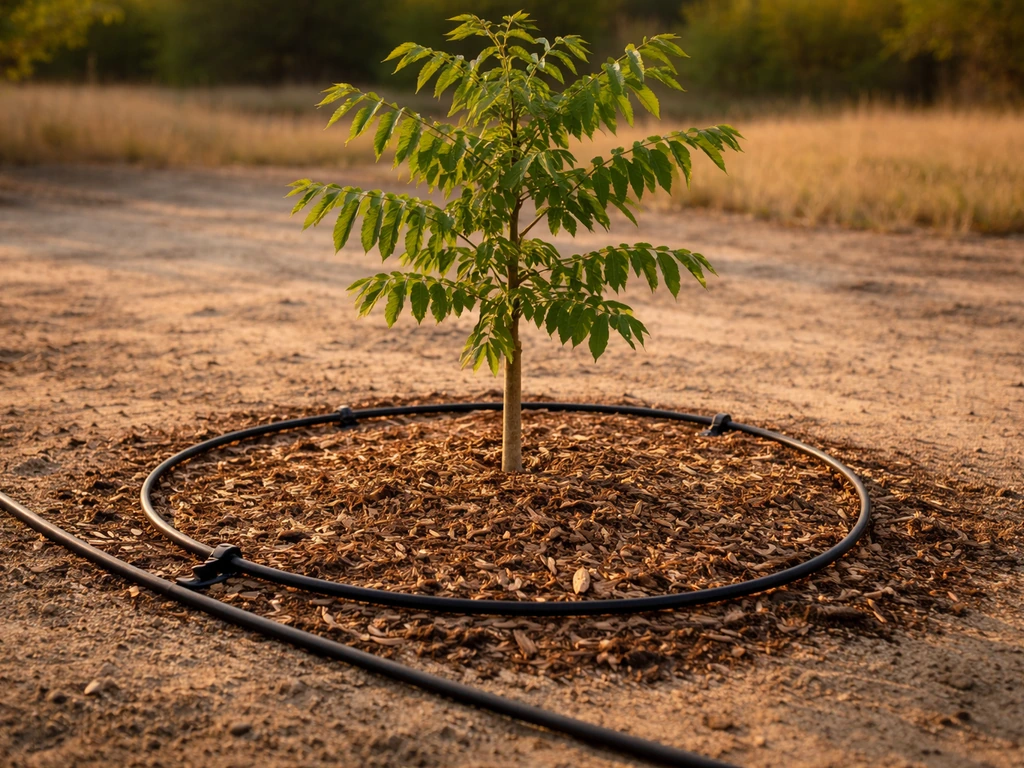
Texas heat means young trees can die in a single week without adequate water during their first summer. Set up a drip system or soaker hose and plan to water deeply (to at least 18 inches) once or twice a week during the hottest months. As roots extend over the first two to three years, you can gradually taper watering frequency. Established pecans on deep soils with access to groundwater can become surprisingly drought-tolerant, but that tolerance takes years to develop.
Pollination, flowering timing, and nut set
Pecan flowering happens from April through May. Pecans are wind-pollinated, meaning they rely on air movement to transfer pollen between flowers rather than insects. This sounds simple but there's a catch: pecans exhibit dichogamy, meaning the male (pollen-shedding) and female (stigma-receptive) flowers on a single tree don't open at the same time. This is actually a mechanism that encourages cross-pollination rather than self-pollination, which is good for genetic diversity but means a single-cultivar planting may produce far fewer nuts than expected.
Pecan cultivars fall into two dichogamy types: protandrous (pollen shed before stigma receptivity, as in Pawnee and Wichita) and protogynous (stigma receptive before pollen shed, as in Oconee). The USDA notes that some cultivars may have little to no overlap between pollen release and stigma receptivity, which makes planting multiple cultivars almost essential for reliable production. Research from the American Pomological Society reinforces this: bloom sequence can vary by year, so you shouldn't assume you'll get lucky with a single-cultivar planting. The practical rule is to plant at least one protandrous and one protogynous cultivar within 150 to 200 feet of each other. For a home grower with space for just two trees, Pawnee (protandrous) paired with Oconee (protogynous) is a well-documented combination.
Chinese chestnut also requires cross-pollination between two different cultivars. Almonds need cross-pollinators as well, though Hall's Hardy is partially self-fertile. Hazelnuts are wind-pollinated and need a second compatible cultivar nearby. The takeaway: almost every nut tree benefits from a companion, and most require one. Plan your spacing and cultivar selection accordingly before you buy anything.
Care and maintenance once your trees are established
Watering
Mature pecans in deep soil with good groundwater access can manage on rainfall in wetter parts of East Texas, but in central and west Texas, supplemental irrigation is the difference between a productive tree and a struggling one. During nut fill (late July through September), consistent moisture is especially critical. Water stress during this period directly causes premature nut drop and shriveled kernels. Aim to maintain soil moisture to at least 24 inches depth through the nut-fill period.
Fertilizing
Pecans are heavy nitrogen users. A common home-orchard recommendation is to apply 1 to 2 pounds of actual nitrogen per inch of trunk diameter per year, split across early spring and early summer applications. Zinc deficiency is also very common in Texas pecan orchards, particularly on alkaline soils. Symptoms include small, mottled leaves (called rosette) and poor shoot growth. Foliar zinc sprays applied in spring are the standard fix. Get a soil test before you add anything else; Texas soils vary so much that blanket fertilizer programs often miss what a specific site actually needs.
Pruning
Young pecan trees need training to develop a strong central leader with well-spaced scaffold branches. For the first three to four years, focus on removing competing leaders, crossing branches, and anything growing at a narrow angle to the trunk. Mature trees need less structural pruning but benefit from periodic thinning of the canopy to maintain light penetration and airflow, both of which reduce disease pressure. Avoid heavy pruning in late summer or fall, which can stimulate new growth that won't harden before winter.
Pests and diseases to know
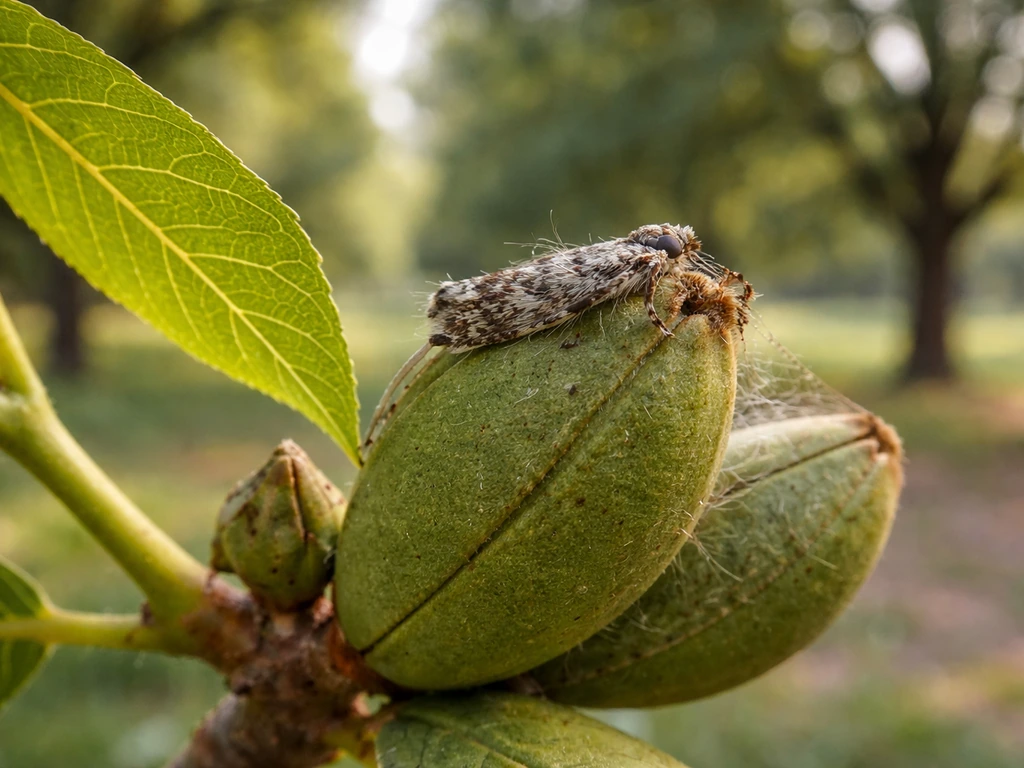
Pecan nut casebearer is the most economically damaging insect pest in Texas pecan orchards. Research published in the Journal of Integrated Pest Management found that economic losses from pecan nut casebearer exceeded losses from any other insect, disease, or vertebrate pest in Texas studies. The larvae tunnel into nutlets shortly after pollination, destroying the developing nut. Timing insecticide sprays to coincide with larval hatch is critical, and thorough coverage is essential since the larvae move quickly into the nut where sprays can't reach them. Texas A&M AgriLife extension resources on pecan nut casebearer management are worth reading before your first spring as a pecan grower.
Pecan weevil (Curculio caryae) is another serious pest, particularly in the later part of the season. The Texas Department of Agriculture has quarantine controls on moving plant material in areas where pecan weevil is present, which reflects how seriously it's treated. Adults emerge from the soil in late summer and puncture developing nuts to lay eggs; the larvae then feed inside the nut. Soil-applied or trunk-banded insecticides timed to adult emergence are the primary management tool.
Pecan scab, caused by the fungus Fusicladium effusum, is the dominant disease problem in East Texas and along the Gulf Coast, where humidity is high. It causes dark lesions on shucks and can result in total crop loss in wet years. Scab pressure is highly cultivar-dependent: some varieties (like Desirable) are notably susceptible while others (like Caddo) show better tolerance. Foliar fungicide applications on young trees can help prevent scab from getting established. AgriLife noted in 2025 that cooler, wetter conditions during the growing season can dramatically increase scab pressure even with good management in place, which is a reality check for East Texas growers in particular. Choosing scab-tolerant cultivars is the most durable long-term strategy.
Harvest, storage, and what to do when yields disappoint
Harvest timing
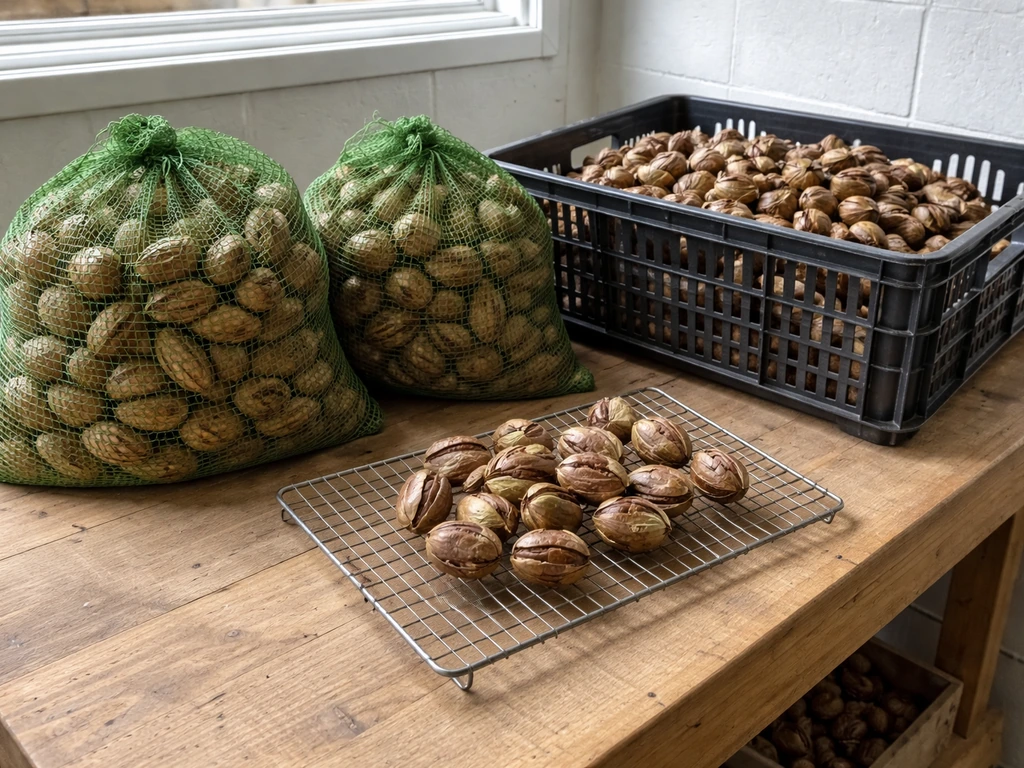
Pecans are ready to harvest when the shucks (outer husks) split open and begin to dry, typically from late September through November depending on cultivar and location. Pawnee is one of the earliest ripening cultivars, which is why it's recommended for the Panhandle where the season is shorter. Wichita and Desirable ripen later and need a longer season to fill out properly. For home growers, the easiest harvest method is to shake limbs or use a pole to knock nuts down, then pick up from the ground. Doing this in multiple passes over two to three weeks gets the most complete harvest.
Chinese chestnuts drop in burrs from September into October. Check daily once burrs begin opening since nuts left on the ground quickly mold or get eaten by wildlife. Almonds are ready when the outer hull splits and the shell inside is dry.
Storage
In-shell pecans store well at room temperature for a few weeks, but for longer storage, refrigerate them in mesh bags or vented containers for up to six months, or freeze them for up to two years. Shelled pecans go rancid faster due to their high oil content, so refrigerate or freeze them if you're not using them within a month. Chestnuts have high moisture content and don't store like other nuts: refrigerate them in a perforated plastic bag and use within two to three weeks, or peel and freeze for longer storage.
Troubleshooting low yields
Low yields in Texas pecan and other nut trees almost always trace back to one of a handful of causes. Work through this list before assuming something is permanently wrong with your tree:
- Poor pollination: If you only have one cultivar, or two cultivars of the same dichogamy type, nut set will be low or absent. Add a compatible cross-pollinator within 150 to 200 feet.
- Zinc deficiency: Rosette symptoms (small, mottled leaves, short internodes) directly reduce nut production. Apply foliar zinc in early spring and continue annually on alkaline soils.
- Water stress during nut fill: Irrigation deficits in August and September cause premature drop and shriveled kernels. Increase irrigation frequency during this window.
- Alternate bearing: Pecans naturally cycle between heavy and light crop years (biennial bearing). Heavy crops deplete the tree's carbohydrate reserves, leading to a lighter crop the following year. Thinning nuts early in a heavy year can reduce the swing.
- Pest damage: Pecan nut casebearer and pecan weevil can destroy crops if not managed. Review spray timing and coverage if you're losing nuts before harvest.
- Disease pressure: In wet years, scab can devastate yields on susceptible cultivars. If scab is recurring, consider replanting with a more tolerant variety long-term.
- Insufficient sunlight: Pecan trees shaded by buildings, fences, or other trees produce poorly. Full sun (at least 8 hours) is non-negotiable for meaningful yields.
If you're evaluating whether Texas nut growing compares to neighboring regions, it's worth knowing that many of the same species and challenges appear in the mid-Atlantic. The resource on nut trees grown in Maryland covers some of the same temperate species in a cooler context, and the guide on nut trees in the Northeast is useful if you're sourcing cold-hardy rootstocks or comparing dichogamy data across wider growing regions. For high-elevation and drier growing conditions, the guide on nut trees that grow in Colorado shares some relevant overlap with West Texas conditions, especially around almond and hazelnut suitability.
The bottom line for Texas: pecan is the right tree for most of the state, and matching the cultivar to your region and pairing it correctly for pollination will do more for your yields than almost anything else. Plant early in the dormant season, give the roots room and water, stay on top of casebearer timing in spring, and be patient. A well-sited pecan tree in Texas can produce for over a century. That's worth doing right.
FAQ
Can I plant just one nut tree and still get a good harvest in Texas?
Yes, but only if you address pollination and spacing. With most pecans, single-tree plantings often underperform because of dichogamy and limited pollen overlap, even if the tree is healthy. If your yard fits only one tree, consider either adding a compatible second cultivar within about 150 to 200 feet or switching to a smaller nut tree that needs less pairing (for example, hazelnuts still need compatibility, but you can sometimes fit two stems in a tighter multi-stem planting).
What should I decide first, the species or the soil and drainage plan?
More or less, but the “best” order is usually (1) match cultivar to your region, then (2) verify pollination partners, then (3) confirm soil drainage and pH. If drainage is poor, changing cultivars won’t fix root oxygen problems. For pecans specifically, heavy clay, hardpan, or seasonal flooding can cap tree size and productivity even with perfect nutrition, so site selection comes before variety shopping.
How much should I water a pecan in Texas, and how do I avoid overwatering?
Many growers make this mistake. Pecans need consistent moisture during nut fill, but they still require well-drained ground overall. If you irrigate in a way that keeps the root zone wet year-round, you can worsen disease pressure and stunt growth. A practical approach is to water deeply to reach roughly 24 inches during nut fill, then taper so the soil dries back between watering outside peak stress periods.
When is the best time to plant nut trees for cold winters like the Panhandle?
If you’re in the Panhandle or another cold-snap area, protect young trees rather than assuming they’ll self-establish through winter. Use mulch to moderate soil temperature and reduce frost heaving, but keep mulch pulled slightly away from the trunk to prevent rot. Also, prioritize planting after the ground thaws so roots start growing before summer stress, since planting too early can increase freeze injury.
Can I “fix” bad clay soil for pecans with amendments alone?
Yes, but it’s a targeted fix, not a blanket one. For pecans, hardpan and dense clay can prevent roots from expanding, which is why raised mounds or aggressive pre-plant amendment sometimes matter. However, if drainage is extremely poor, the more reliable decision is relocating the tree or building a mound designed for drainage rather than relying on compost or potting mix that can stay too wet for the long term.
What are the most common nutrient mistakes Texas growers make with pecans?
Start with a soil test, then adjust from there. Pecans are heavy nitrogen users, but overdoing nitrogen can push weak growth and increase pest and disease risk. If your soil is alkaline, zinc deficiency is common, and the symptom set (like mottled leaves) is easy to miss if you only look at nut counts. Foliar zinc in spring is often the practical correction, but only after you confirm likelihood with testing and observation.
Why do my sprays not seem to work even when I follow a schedule?
Yes, and the key is timing and coverage. For pecan nut casebearer, spraying only once or too early can miss the larval hatch window, and larvae that enter nutlets are effectively out of reach. Use the extension guidance for local timing and make sure your spray coverage reaches the developing canopy area, not just the outer limbs.
How close do nut trees need to be for cross-pollination in a small Texas yard?
Cross-pollination is the rule for most of these trees, but the partner needs to be both compatible and near enough. With pecans, dichogamy creates an additional timing requirement, so just planting two trees of the same cultivar often still disappoints. A more reliable pairing strategy is at least one cultivar from each dichogamy type placed within roughly 150 to 200 feet.
What’s the quickest way to harvest without losing nuts to spoilage or wildlife?
Harvest timing depends on how you want the nuts to taste and store. Pecans are typically best when shucks split and begin drying, then harvested over multiple passes to catch nuts as they loosen. Waiting too long can increase ground loss to wildlife or spoilage, and shaking too aggressively early can drop partially filled nuts. For chestnuts, check daily once burrs start opening because mold risk rises quickly.
How long should I wait for my Texas nut trees to start producing?
Nut trees in Texas can take longer than first-year expectations, but 3 to 5 years is realistic for Chinese chestnut, while pecans and hickories commonly take much longer to reach meaningful production. A common mistake is judging the site too early. If you’ve planted correctly, give structural establishment time, then evaluate again after the tree has had at least a couple growing seasons and nutrient and watering routines are stable.
Which nut tree is best for a small yard, and which is best for long-term production?
Choose by your space and your willingness to manage. If you want a true “small plot” option with quicker bearing, hazelnuts and Chinese chestnuts tend to fit tighter spacing plans than standard pecans. If you can accommodate 40 to 60 feet and irrigation during nut fill, pecan is often the best long-term payoff. For high-elevation areas and the Panhandle, almonds can work if frost timing and chill requirements align, but they are higher risk due to early bloom vulnerability.