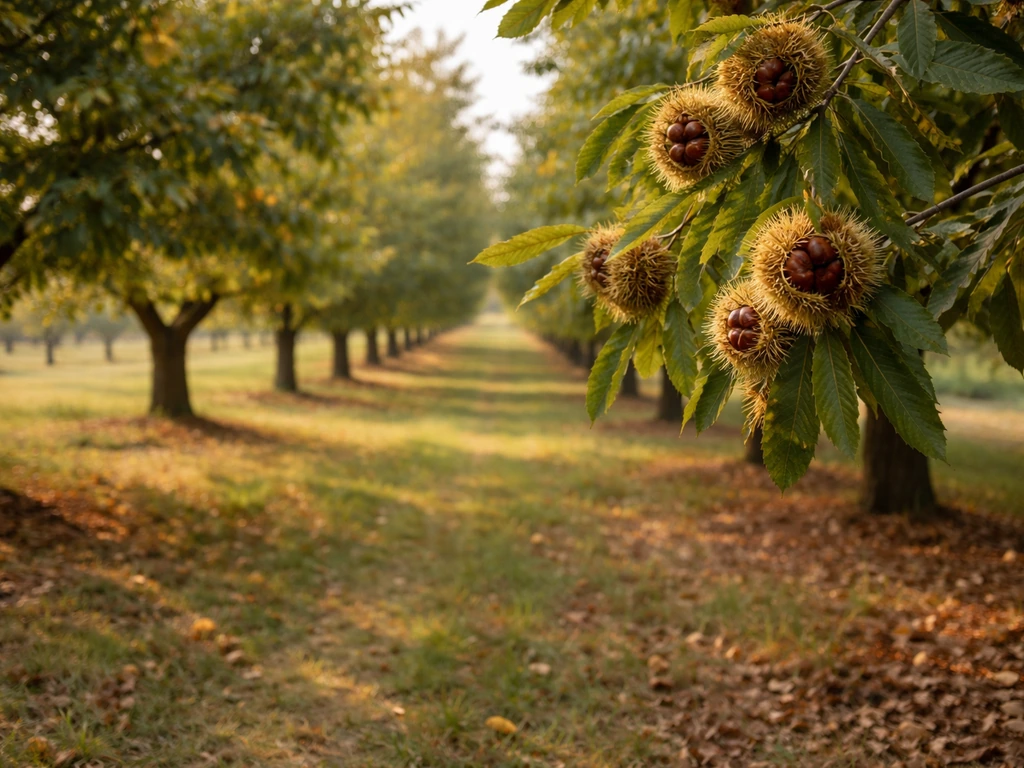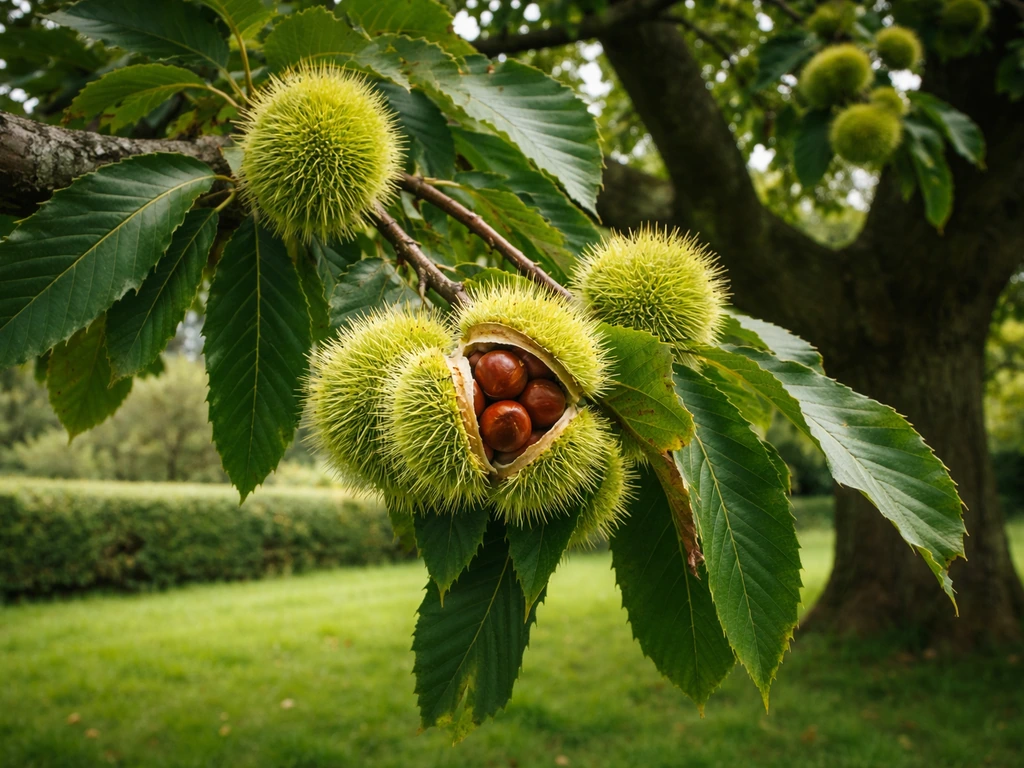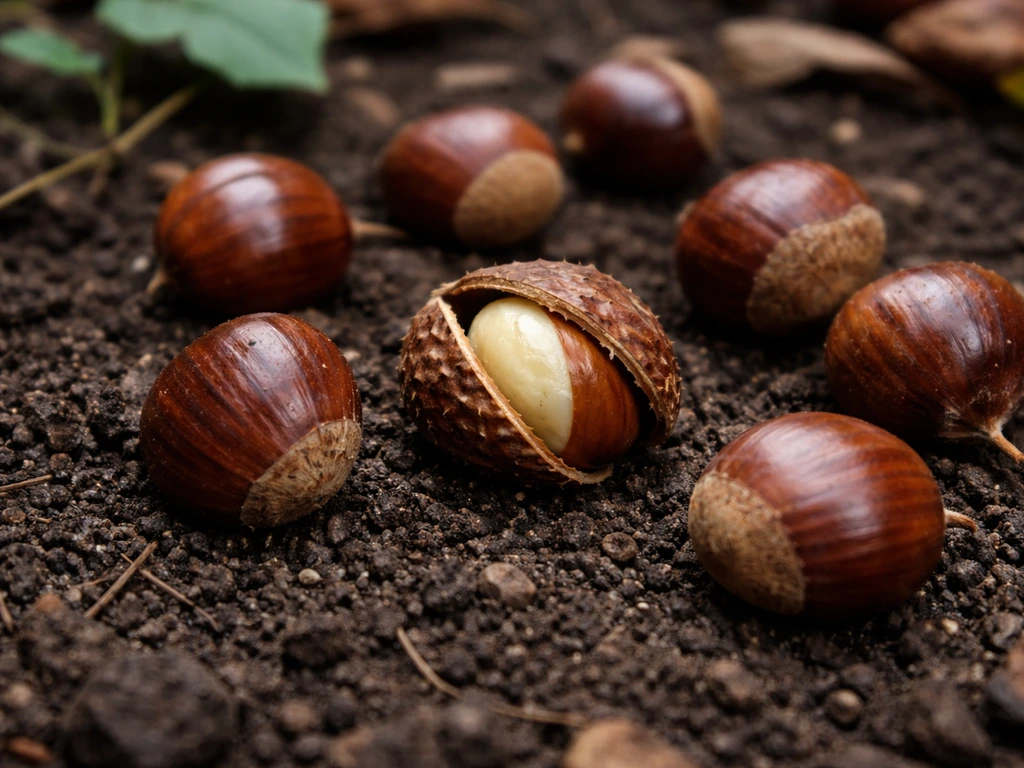
Yes, chestnuts grow in California, and they can produce edible nuts. But the honest answer is that success depends heavily on which species you plant, where in the state you're located, and how well you manage soil drainage. California's diverse climates mean that the Sierra Nevada foothills, North Coast, and parts of the Central Valley can all support chestnut trees, while low-elevation valley floors with heavy clay soils or alkaline water are a much harder road. Get the species and site right, and you'll be harvesting nuts. Get them wrong, and you'll be battling root rot inside a few years.
Do Chestnuts Grow in California? Varieties and Care Guide
Marcus Hendricks
31 May 2026
Which chestnut species actually work in California
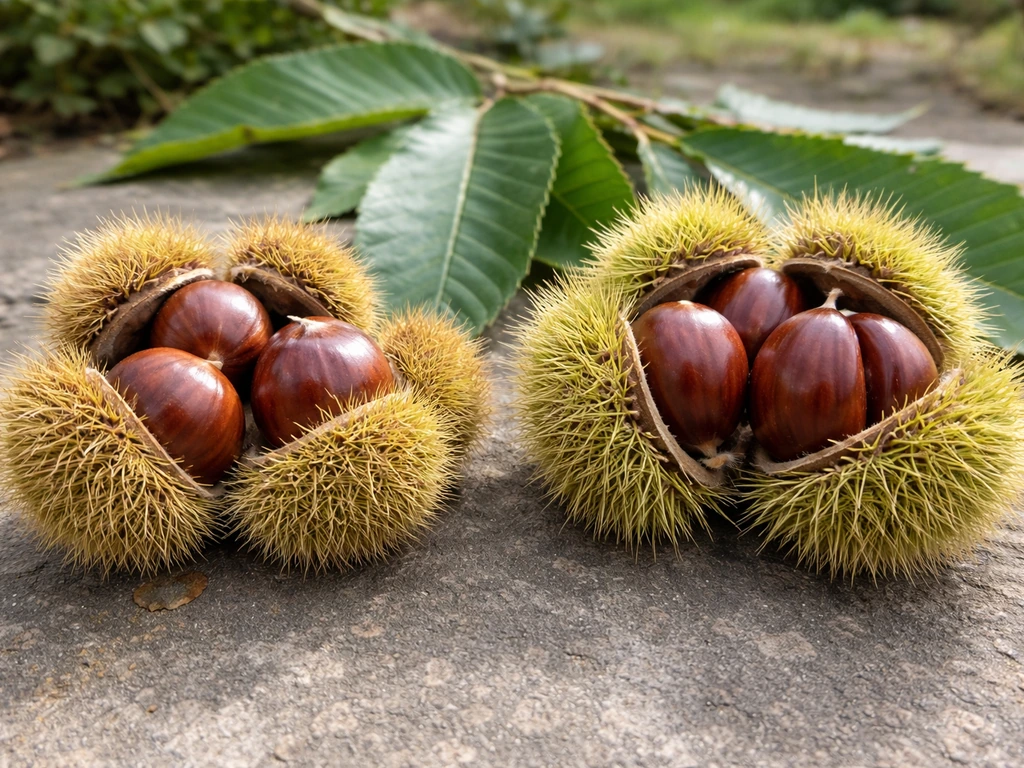
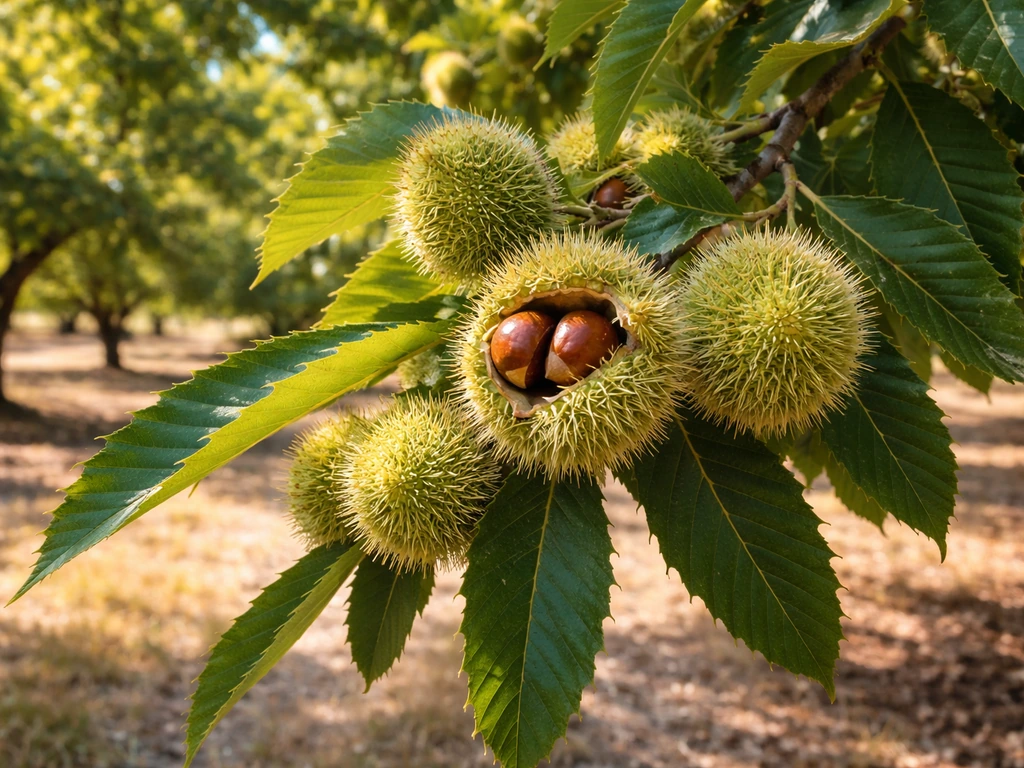
Two species are the practical choices for California growers: Chinese chestnut (Castanea mollissima) and Spanish chestnut (Castanea sativa, sometimes called European chestnut). Both are grown in western states and represent the most realistic options for edible nut production here.
Chinese chestnut is the more forgiving of the two. It's generally considered more adaptable to a range of conditions and has better natural resistance to some diseases. Spanish chestnut produces large, flavorful nuts that command premium prices and has a long history in Mediterranean-style climates similar to coastal California, but it's slightly more demanding about site conditions.
Hybrid cultivars are also worth knowing about. 'Colossal' is probably the most recognized hybrid grown commercially in California, producing large nuts and having well-documented harvest timing in both the Central Valley and North Coast. Cultivars like 'Fowler' and 'Montesol' are also being investigated for California production. If you're serious about yields rather than just a backyard tree, named cultivars that are grafted to rootstock will outperform seedling trees in both consistency and time to first harvest.
American chestnut (Castanea dentata) is largely absent from California growing discussions because of its extreme susceptibility to chestnut blight, the fungal disease that wiped out most wild American chestnuts in the eastern US. It's not a realistic choice for California production. California also has exterior quarantine regulations covering all Castanea species as potential carriers of chestnut blight and oak wilt, so any plant material you bring in from out of state needs to come with proper compliance certificates.
Where in California chestnuts actually thrive
The sweet spot in California is the Sierra Nevada foothills and mountain elevations between roughly 1,000 and 3,000 feet. The UCCE Central Sierra explicitly identifies this elevation range as productive chestnut territory. You get enough winter chill, decent rainfall, and typically well-drained granitic or loamy soils in these areas, which is exactly what chestnuts want.
The North Coast, including areas in and around Sonoma County, has a documented chestnut growing history and is specifically referenced in UC ANR research on California chestnut culture. The climate is cooler and harvest timing runs later: 'Colossal' burrs begin opening in mid-September in the Central Valley but don't start until early October on the North Coast, with nuts continuing to drop for three to five weeks. That's a real logistics difference if you're thinking about scale.
The Central Valley is possible in some locations but comes with more challenges. Alkaline irrigation water, clay soils, and extreme summer heat in the floor of the valley create compounding problems. If you're in a foothill transition zone with better drainage and access to quality water, you have a much better chance than someone on flat, irrigated valley ground.
Southern California is the toughest zone. Low winter chill hours and alkaline soils in many areas make chestnut culture genuinely difficult, not just challenging. Higher-elevation inland areas in the south have more potential, but you'd want to assess chill hours carefully before committing.
Planting basics: site, soil, spacing, and timing
Picking the right site
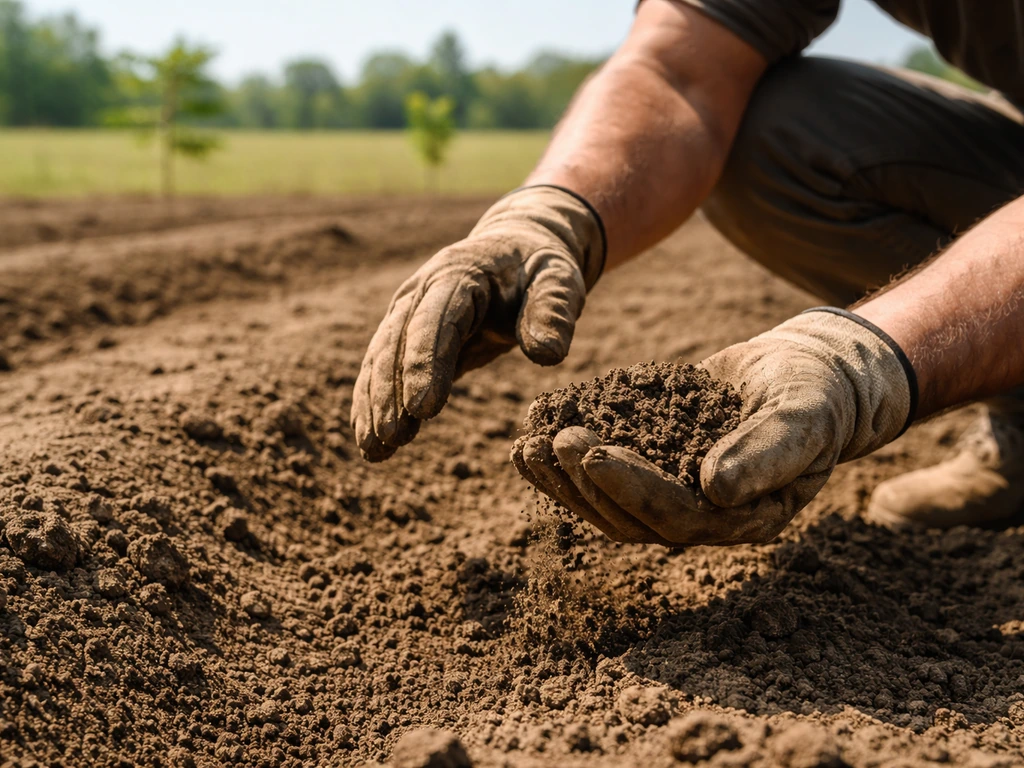
Full sun is non-negotiable. Chestnuts need it for both growth and nut production, and shaded lower branches simply die over time. Deep soils are important too: UC IPM recommends deep soils specifically, because the root system needs room to establish and access to moisture without waterlogging. Avoid any spot where water ponds, even briefly, after rain or irrigation.
If your site has compacted subsoil, rip it before you plant. UC ANR is direct on this: break up compaction layers so roots can penetrate and water can move through. If the drainage is marginal, plant on a berm or mound. This isn't just a nice-to-have tip; it's the primary prevention strategy against Phytophthora crown and root rot, which UC ANR identifies as the most common disease problem in California chestnuts.
Soil pH: this matters more than most people expect
Chestnuts tolerate acidic soils well, but they do not tolerate alkaline soils at all. Aim for a pH just below 7. 0. If your soil tests above neutral, you'll need to bring it down using sulfur or aluminum sulfate before planting.
If your soil is extremely acidic, below pH 5. 5, amend with lime to bring it up to around 6. 5. The key is to do your soil testing first, before the tree goes in the ground, checking for potassium, phosphorous, calcium, magnesium, and pH.
Trying to correct soil chemistry around an established tree is harder and slower. UC ANR also flags special cases involving high-magnesium or low-calcium soils and situations where gypsum may be needed to leach sodium salts. If your soil test results look unusual, get advice from your local UC Cooperative Extension office before planting.
Spacing
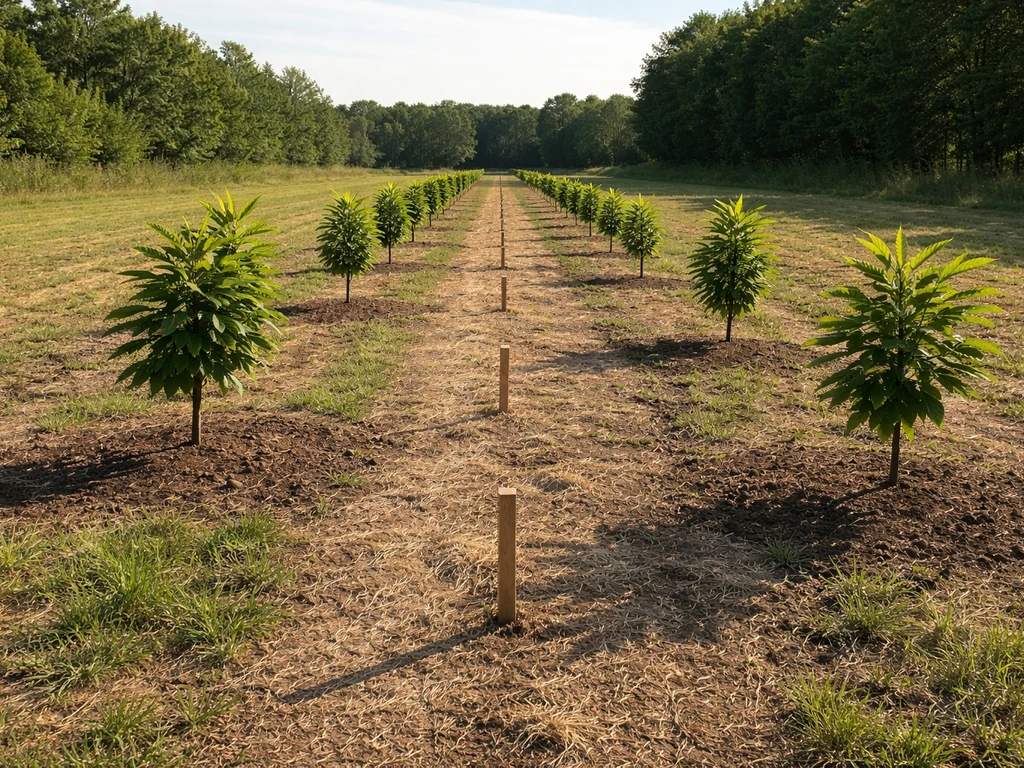
UC ANR recommends spacing trees 14 to 40 feet apart. The wide range reflects two different strategies: plant closer for faster canopy closure and plan to thin every other tree as they mature, or plant at the full 40-foot spacing from the start. Crowded, unthinned trees shade each other out and concentrate bearing only at the very top of the canopy, which kills lower branches and tanks your yield. If you're not committed to a thinning program down the road, give them the full space upfront.
Planting timing and early care
Plant bareroot trees in late winter to early spring while the tree is still dormant. From a nut, you can grow a chestnut tree, but success depends heavily on sourcing quality seed, stratification, and matching the right species and cultivar to your climate can you grow a chestnut tree from a nut. After planting, water thoroughly to settle soil around the roots, then plan on weekly irrigation once growth kicks off in spring.
Keeping soil consistently moist, not waterlogged, during that first growing season is critical for establishment. At planting time, cut the top back to 36 to 48 inches (90 to 120 cm) to compensate for root loss during nursery handling. UC ANR recommends training young trees to a modified central leader system to build the right scaffold for long-term nut production.
Pollination and nut production: what it takes to get chestnuts
Chestnuts are not self-fertile in any practical sense. You need at least two trees for cross-pollination, and they need to be compatible varieties. The UCCE Central Sierra framing is helpful here: any two varieties of the same type will cross-pollinate. So two Chinese chestnut cultivars will pollinate each other, two Spanish/European cultivars will work together, and so on. This means if you're planting a single-species block, variety pairing is straightforward. If you're mixing species or hybrids, confirm compatibility before you plant.
Plan for the reality that you'll need space for at least two trees to get any significant nut set. For a home garden situation, two trees of compatible varieties planted at appropriate spacing is the minimum starting point. For anything approaching orchard scale, UC ANR notes that a mature, well-managed orchard on a good site should yield around 1.5 tons per acre, which is a useful benchmark for whether the economics make sense for your goals.
Nut timing also varies by cultivar and region, which matters for harvest planning. In the Central Valley, 'Colossal' burrs begin to open in mid-September. On the North Coast, the same variety doesn't start until early October, and you can expect nuts to continue dropping over a three-to-five-week window. Build your harvest logistics around your region's timing, not the general calendar.
Pests, diseases, and managing them in California
The biggest threat: Phytophthora root and crown rot
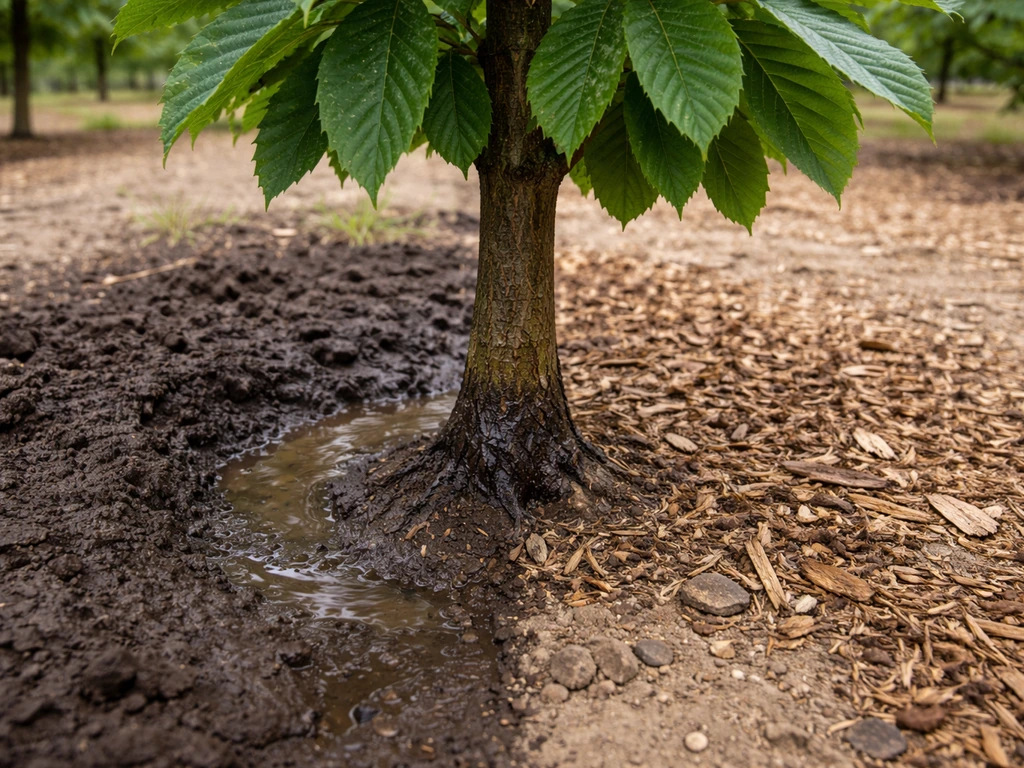
This is the disease that kills the most chestnut trees in California, and it's almost always tied to poor drainage or overwatering. Phytophthora thrives when soil around the base stays wet for extended periods or when a tree is planted too deep. The solution is almost entirely preventive: well-drained soil, bermed planting, careful irrigation management, and never letting water pool near the crown. Once a tree is severely infected, recovery is unlikely. Prevention is everything.
Insect pests
Filbert weevils and filbertworm are the main insect pests UC IPM flags for chestnuts in the home and landscape context. Both can damage nuts directly. A solid preharvest IPM program, combined with prompt collection of fallen nuts and keeping orchard-floor debris to a minimum, reduces pest pressure significantly. UC Davis postharvest research emphasizes that minimizing the time nuts spend on the orchard floor is one of the most effective practical steps a grower can take.
Fungal diseases and postharvest issues
Multiple fungi can infect chestnuts and cause postharvest losses, including Alternaria, Botrytis cinerea, Fusarium, Penicillium, and Phomopsis castanea. Canker diseases are also listed by UC IPM as a concern. The strategy across all of these is the same: strong cultural practices upfront (healthy trees, good drainage, appropriate nutrition), consistent preharvest IPM, and strict sanitation at harvest time. If you're growing for your own kitchen, prompt harvest and refrigeration handles most postharvest risk.
Oak root fungus
If your site has a history of oak trees, there's a real risk of Armillaria (oak root fungus) in the soil. UC ANR recommends soil fumigation or solarization if oak root fungus is known to be present before you plant. Don't skip this step if it applies to your site, because Armillaria can kill established trees.
How to check whether chestnuts fit your specific location today
Here's a practical decision path you can work through right now, before you spend money on trees: If you're wondering can you grow chestnuts in Canada, the same basics apply, but your local winter chill and disease risks will determine what species and varieties are realistic.
- Check your elevation and region: Are you in the Sierra foothills between 1,000 and 3,000 feet, on the North Coast, or in a foothill transition zone? If yes, you're in the most favorable California territory for chestnuts. If you're on flat valley floor or in low-elevation Southern California, be honest about the challenges ahead.
- Assess your drainage: Walk your site after a rain or after irrigation. Does water move off quickly, or does it sit? If it sits, plan to plant on a raised berm or seriously reconsider the location. Phytophthora will find any drainage weakness.
- Test your soil before you do anything else: Send a sample to a lab and check pH, phosphorous, potassium, calcium, and magnesium. If your pH is above 7.0, you'll need to acidify. If it's below 5.5, you'll need lime. Get your results, then amend. Don't guess.
- Count your chill hours: Chestnuts need adequate winter cold to produce well. If you're not sure of your local chill hours, contact your local UC Cooperative Extension office. They can tell you whether your specific location regularly hits the threshold chestnuts need.
- Plan for two trees minimum: Decide now whether you have space for at least two compatible varieties. No room for two trees means no nuts, so factor this into your site planning before you buy anything.
- Choose your species based on your goals: If you want the most adaptable option, start with Chinese chestnut cultivars. If you're on the North Coast with a Mediterranean-like site and you want premium flavor, Spanish chestnut or 'Colossal'-type hybrids are worth exploring. Either way, source grafted named cultivars, not seedlings, for production.
- Contact your local UCCE farm advisor: California's conditions vary enormously at the microclimate level. Your county's UC Cooperative Extension advisor will know which cultivars perform in your specific area and can point you to local trial data. This one step saves you years of trial and error.
Chestnuts are not the easiest nut tree to grow in California. UC ANR is candid that achieving competitive yields here requires more intensive management than in some other regions. But for gardeners and growers in the right California locations, with the right species and a clear-eyed approach to soil and drainage, chestnut trees absolutely do produce. If you mean horse chestnut rather than edible chestnuts, the way you grow it from conkers is different, and it helps to follow the right sowing steps growing horse chestnut trees from conkers. The question is just whether your specific site and goals line up with what these trees actually need.
If you're curious how chestnuts grow from the ground up, or whether you can start a tree from a nut you picked up yourself, those are worth understanding before you commit to a planting plan. The biology of how a chestnut tree develops and what it takes to go from a nut to a bearing tree shapes every practical decision covered above.
If you are also wondering do chestnuts grow in the UK, the same core idea applies: local climate and site conditions determine what species can succeed. If you are starting with the question can you grow a chestnut tree from a nut, the steps for germination and early care matter as much as choosing the right site.
If you want to grow your own horse chestnut trees, you can start by planting the conkers and keeping them consistently moist until they sprout from a nut to a bearing tree. Chestnuts are a type of nut tree, so when people ask do chestnuts grow on trees, they are really asking which trees produce edible chestnuts and what conditions they need.
FAQ
Can I plant store-bought chestnuts in California and expect trees that produce nuts?
You can try germinating nuts, but you should not expect consistent edible yields or nut size because seedlings vary widely. For reliable production, plant grafted cultivars on appropriate rootstock, and assume you still need two compatible trees for cross-pollination.
How far apart do two chestnut trees need to be for good pollination?
The key is compatibility and having overlapping bloom periods, not maximizing distance. For practicality, keep trees within your planned orchard spacing range (14 to 40 feet is commonly used). If one tree is isolated by landscape barriers or very different microclimates, you may get poor nut set even with two trees.
What happens if my soil test is slightly alkaline, just above pH 7.0?
Do not assume a small difference will be harmless. Chestnuts struggle in alkaline conditions and can develop chronic decline. Correct pH before planting using sulfur or aluminum sulfate as your soil test recommends, and recheck after amendments if your baseline is near the threshold.
Is drip irrigation safe for chestnuts, or can it still cause crown root rot?
Drip is fine, but it can still keep the root zone too wet if your scheduling and soil drainage are wrong. Avoid constant saturation, keep water from pooling near the crown, and adjust run time based on seasonal soil drying, especially in heavy soils or during cool, rainy stretches.
How do I tell if my planting depth is too deep for chestnuts?
If the crown area stays wet or you see slow establishment, dieback, or early root collar issues, planting depth may be a problem. Bareroot trees generally need the crown set at the correct level relative to the trunk flare, and the soil should not cover it deeper than intended. If you are unsure, correct depth before symptoms worsen.
Do chestnuts need fertilizer every year in California?
Not automatically. Use soil tests first, then target nutrients rather than applying routine high nitrogen. Excess nitrogen can push leafy growth at the expense of nut quality and can increase disease pressure if the tree becomes overly lush. Start with a conservative plan, then refine based on leaf and soil results.
What is the best way to manage fallen nuts and leaves to reduce pests and mold?
The practical approach is fast, repeated collection during the harvest window and keeping the orchard floor clear of dropped nuts. Leaving nuts to sit increases insect development and postharvest fungal risk. For backyard sites, remove nuts promptly after they fall and dispose of damaged or moldy material.
Can I grow Spanish chestnuts in a cooler North Coast microclimate, or is Chinese chestnut always safer?
Spanish chestnut can work, but it is more sensitive to site fit than Chinese chestnut. If your area is cooler with later harvest timing, you must align the cultivar with your frost and fall conditions and ensure excellent drainage. If your site is marginal, Chinese usually gives you more margin for error.
Should I prune for structure right after planting, and how aggressive should I be?
Yes, early training matters. After planting, top cut bareroot trees to compensate for root loss, then train to a modified central leader to build scaffold strength. Avoid heavy, late-season pruning that stimulates soft growth when winter weather is approaching.
How do I protect young chestnut trees from winter waterlogging and flooding in California?
Your main defense is site preparation, berming or mounding where needed, and ensuring water drains away from the crown. If you have intermittent ponding, address drainage before planting, because reworking the site after trees are established is slower and often less effective.
What should I do if I have oak trees nearby or oak history in the soil?
If the soil is known or suspected to carry oak root fungus, plan on pre-plant solarization or soil fumigation as recommended locally. Also consider timing and site selection, because Armillaria can kill established trees, and treating after decline is rarely successful.
Are there any California-specific rules about bringing chestnut trees in from other states?
Yes. California has exterior quarantine and compliance requirements for Castanea plant material due to disease risk, including chestnut blight and oak wilt. Before you buy or move trees, verify the required documentation and ensure the shipment is compliant, not just legally imported.
What minimum winter chill should I consider for Southern California planting?
Chestnuts still need sufficient winter chill for normal dormancy and reliable flowering, and Southern California often falls short in many locations. If you are in the south and want Spanish or hybrid cultivars, check local chill-hour data and microclimate records before committing, because low chill can mean weak bloom and poor nut set.