North Carolina grows a surprisingly strong lineup of nut trees, both natively and in cultivation. Black walnut, pecan, hickory, American hazelnut, chinquapin, and chestnut all have a legitimate place here, though which ones make sense for you depends heavily on what part of the state you're in. If you're in the eastern Coastal Plain, pecan is your best commercial bet. If you're in the Piedmont or mountains, chestnuts and black walnuts are the workhorses. And if you just want something low-maintenance and native, American hazelnut grows almost anywhere in the state. The key is matching the tree to your specific region, soil, and how patient you're willing to be. If you’re asking what nut trees grow in Arizona, the same regional approach applies, but your heat, winter lows, and rainfall patterns will steer you toward different species.
What Nut Trees Grow in North Carolina: Best Options
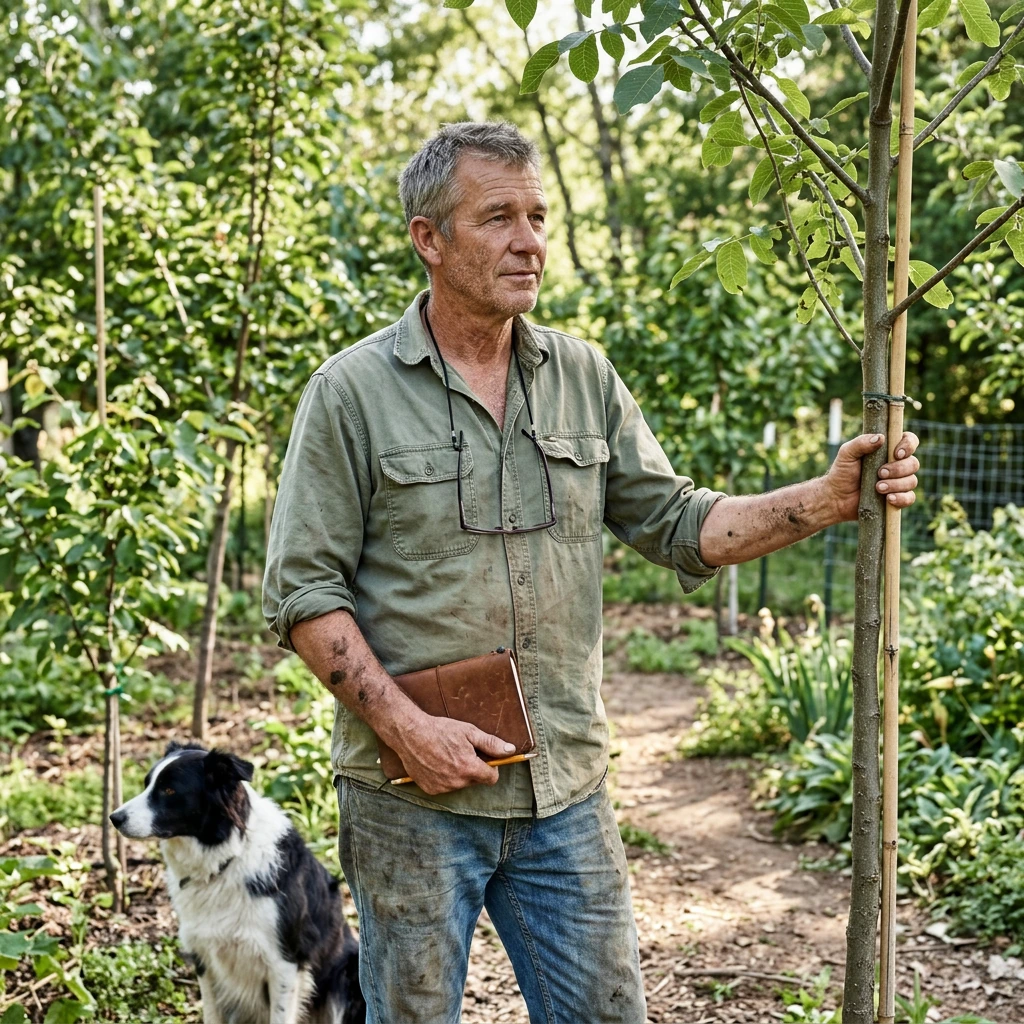
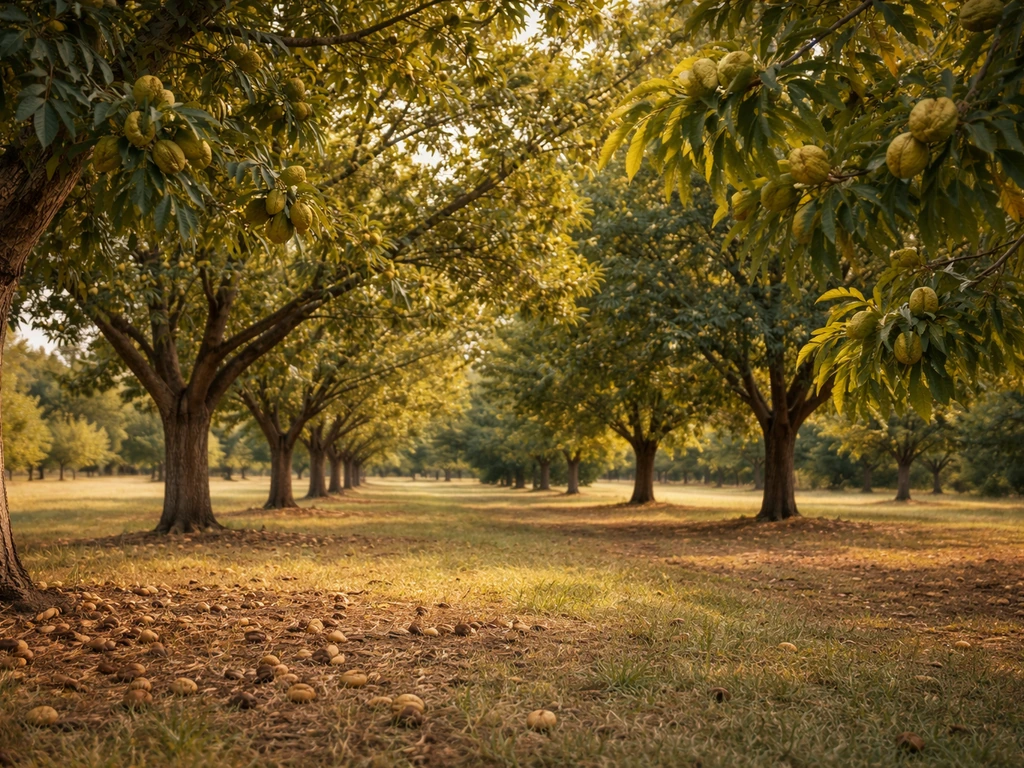
Nut trees that naturally grow in North Carolina
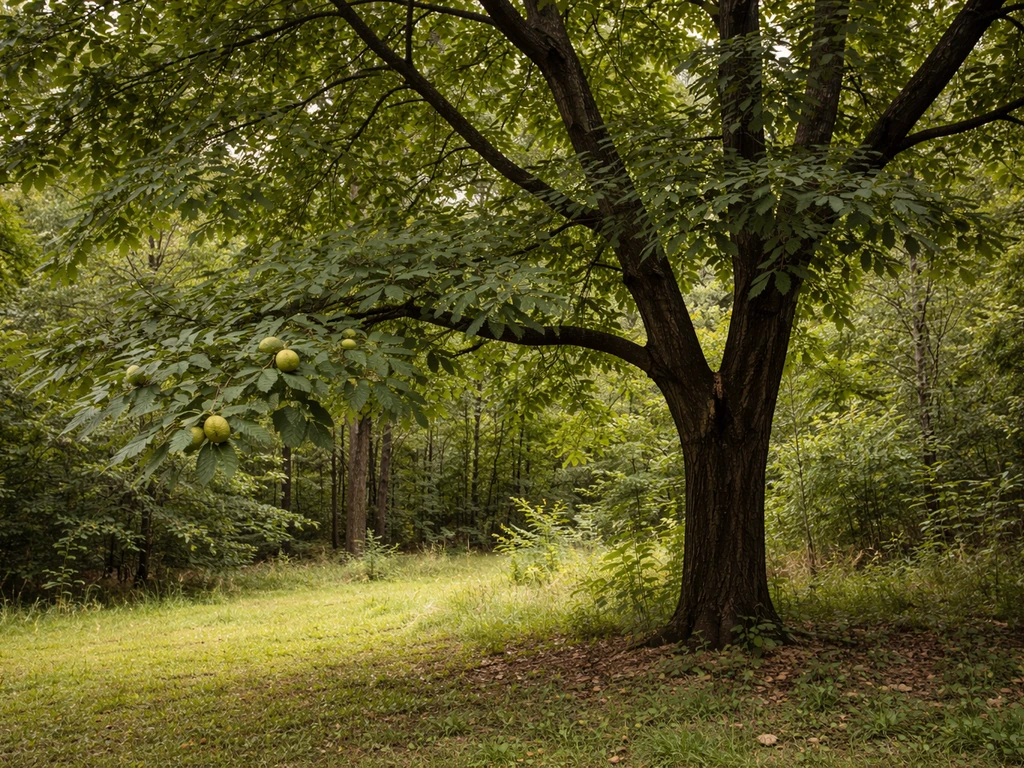
Several nut-producing trees are genuinely native to North Carolina or have naturalized so thoroughly they feel native. Understanding which trees belong here by nature gives you a solid baseline for what the land can actually support.
- Black walnut (Juglans nigra): A true NC native found throughout the state, especially in moist, well-drained bottomlands and mixed hardwood forests. It produces large, hard-shelled nuts with rich, distinctive flavor.
- Hickory (Carya species): Multiple hickory species are native here, including pignut hickory (Carya glabra), which is widespread across NC's forests. Hickory nuts are smaller and harder to crack but are genuinely wild-foraged food.
- American hazelnut (Corylus americana): A native shrub-sized tree common across NC's woodland edges and hedgerows. It's often overlooked as a nut producer, but it reliably sets hazelnuts when multiple plants are nearby.
- Chinquapin (Castanea pumila): The smaller native cousin of American chestnut, and it survived the chestnut blight. Cultivars like 'Fuller' and 'Rush' are recognized by NC State Extension as viable options for NC growers.
- Pecan (Carya illinoinensis): Pecan is native to the American South and grows naturally in parts of eastern NC. It's well within its native range in the Coastal Plain.
American chestnut (Castanea dentata) was once a defining tree of NC's mountain forests before chestnut blight wiped it out in the early 20th century. It no longer grows as a productive native tree, but the blight-resistant breeding work done with Chinese chestnut and Chinese-American hybrid cultivars is making chestnuts a viable cultivated crop in NC again. Those hybrids are the practical choice today, not the original American species.
Best nut trees to plant in NC, broken down by region
NC spans a huge range of climates, from the humid Coastal Plain in the east to the Appalachian highlands in the west. That difference in elevation, temperature, frost dates, and humidity changes which trees will actually produce versus just survive. Here's how the major regions shake out.
Eastern NC and the Coastal Plain
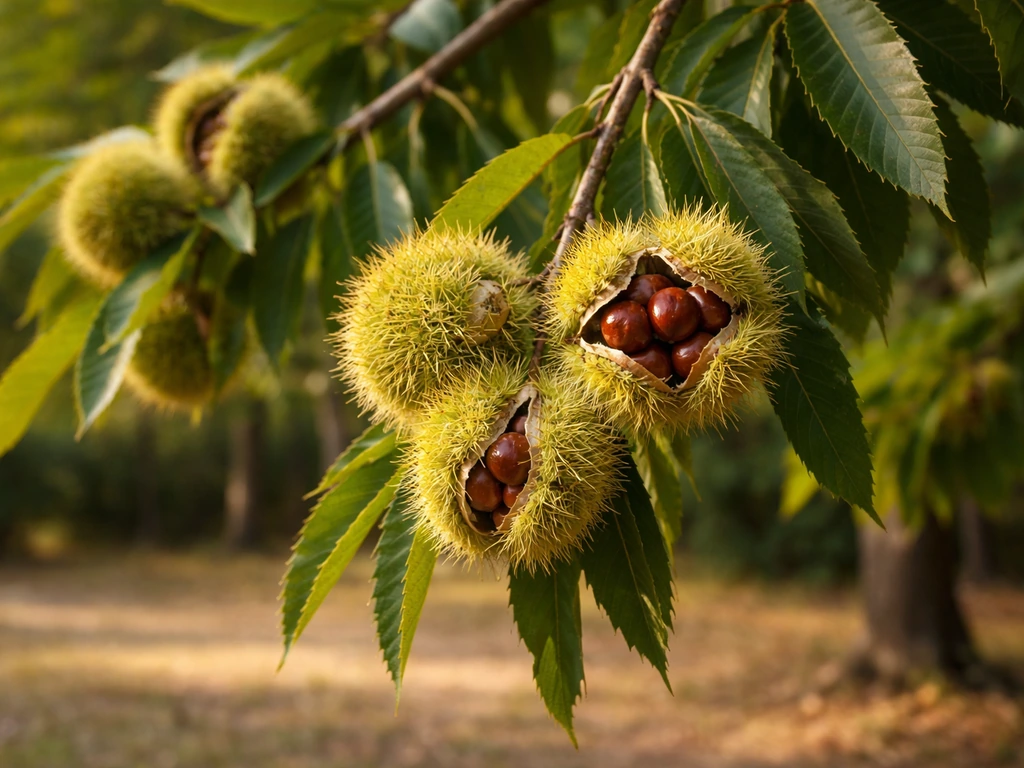
This is pecan country. NC State Extension explicitly recommends growing pecans in the eastern part of the state because the longer growing season, milder winters, and lower elevation reduce the risk from spring temperature swings, early fall freezes, and a shortened season that would limit nut fill further west. Recommended scab-resistant cultivars adapted to NC include varieties like 'Desirable,' 'Cape Fear,' and 'Stuart,' all of which have adequate cold hardiness for eastern NC. Black walnut also does well here. American hazelnut thrives as a productive understory or hedge plant throughout the region.
The Piedmont
The Piedmont is a versatile zone for nut trees. Chinese chestnuts and Chinese-American hybrid chestnuts (like 'Revival,' 'Carolina,' and 'Willamette') perform well here. Black walnut is also a strong choice and is arguably the easiest nut tree to establish in the Piedmont without intensive management. Chinquapin cultivars like 'Fuller' and 'Rush' are underused options worth considering for smaller properties. Pecans can technically be grown in some Piedmont locations, but you're pushing against a shorter growing season and more frost risk compared to the east, so the results are less reliable.
Western NC and the mountains
Above about 2,500 feet, pecan essentially drops off the viable list due to frost risk and the shorter season. Chestnuts, both Chinese varieties and Chinese-American hybrids, are actually well-suited to mountain elevations and cool summers. Black walnut grows here too, though it's slower at higher elevations. American hazelnut is native to the mountain region and works well as a productive native planting. Hickory species grow wild throughout the mountains and can be encouraged but rarely make sense as a managed crop due to harvesting difficulty and the trees' extremely long timeline to production.
What nut trees actually need to thrive in NC
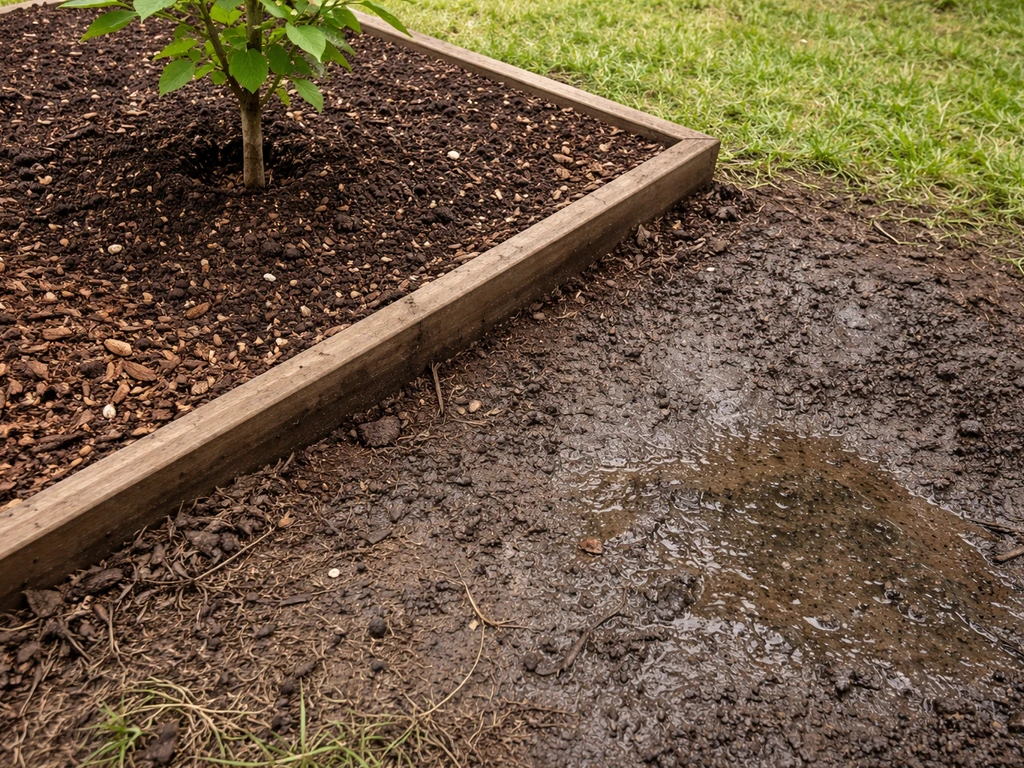
Most nut tree failures in NC come down to a mismatch between what the tree needs and what the site provides. These are the non-negotiables.
Soil and drainage
Drainage is probably the single most important site factor for nut trees. Pecans, despite growing near rivers in the wild, actually require well-drained soil. They rarely succeed on low-lying, poorly drained clay flats, where water hickory outcompetes them naturally. Chestnuts are particularly sensitive to wet feet and need well-drained, slightly acidic soil. Black walnut tolerates a range of soil types but still performs best with good drainage and deep soil. For most nut species, target a soil pH of 6.0 to 6.5. For southern California growers, the best approach is to match nut species to local heat, winter chill, and water availability target a soil pH of 6. That's the range NC State Extension recommends for pecans specifically, and it overlaps well with what chestnuts and hazelnuts prefer too.
Sun exposure
Full sun is non-negotiable for productive nut crops. American hazelnut will tolerate some shade but produces far more nuts in full sun, as NC State Extension notes. Chestnuts and pecans need direct sun for the majority of the day to set and fill nuts properly. Black walnut is naturally a forest-edge and open woodland tree, so it's also a full-sun performer in garden and orchard settings. Shaded nut trees tend to grow slowly and produce little.
Moisture and chilling
Moisture management during establishment is critical, and NC State Extension's pecan guidance is direct about it: maintaining adequate moisture throughout the first year is essential for tree survival. After establishment, most NC nut trees are reasonably drought-tolerant, but irrigation during dry summers significantly improves nut fill. On the dormancy side, NC State Extension's tree fruit and nut guidance notes that varieties with chilling requirements of 750 hours or more are generally better positioned to avoid premature bloom break during late winter warm spells, which can then be killed by frost. Most recommended NC nut cultivars already account for this.
Planting and getting your trees established
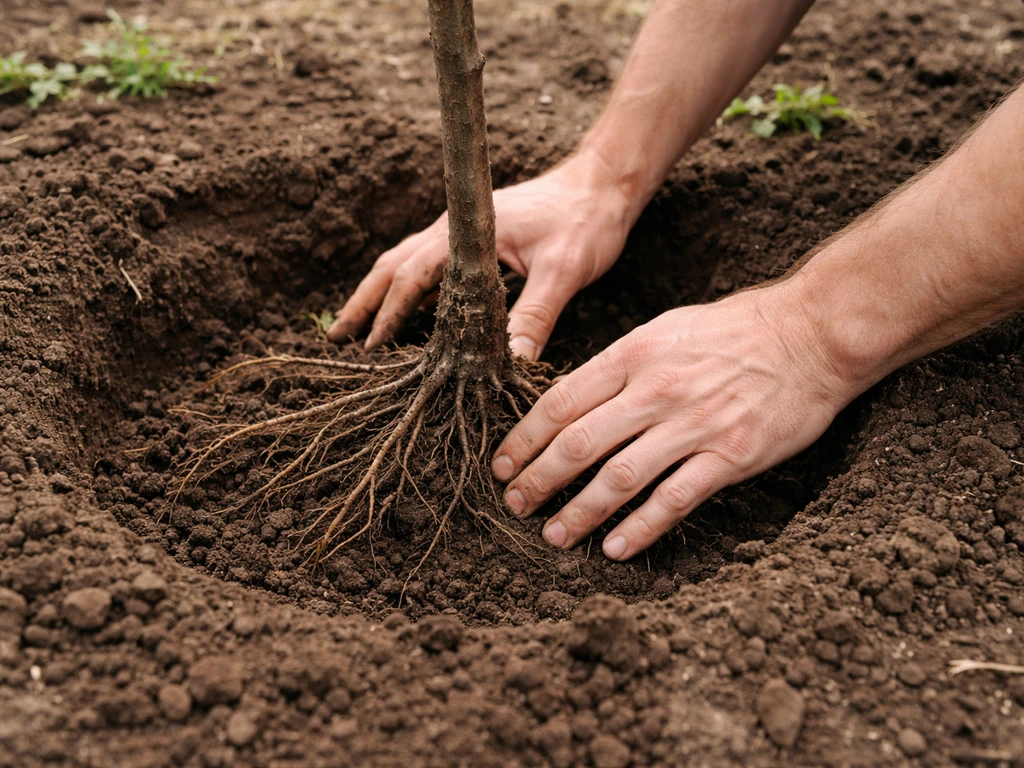
When and how to plant
Bare-root trees should go in during late winter or very early spring, before bud break, when the tree is still fully dormant. Container-grown trees have more flexibility but still benefit from spring planting in NC so the tree gets a full growing season to establish before its first winter. When planting grafted trees (which you should use for chestnuts and pecans, not seedlings), NC State Extension specifically recommends placing the graft union at least 2 inches above the final soil surface after the ground settles. Burying the graft union invites rot and defeats the point of grafting.
Spacing requirements
Nut trees need real space, and this is where home growers often underestimate things. Mature pecans require approximately 70 to 80 feet between rows and between trees within rows, working out to about 6 to 9 trees per acre at full maturity. You can plant them closer initially and thin over time, but plan for that space from day one. Chestnuts at orchard scale are typically spaced 30 to 40 feet apart. Black walnut needs at least 30 to 40 feet of clearance from other trees and structures, and its allelopathic root chemicals (juglone) will suppress or kill many nearby plants, so site selection matters for what's around the walnut too.
Pollination: don't plant just one
Cross-pollination requirements are the most commonly skipped step, and they'll leave you with a beautiful tree that produces almost nothing. For pecans, NC State Extension recommends planting at least three cultivars, including at least one of each pollination type (Type I and Type II), to ensure adequate cross-pollination. Chestnuts require a different cultivar nearby for pollination as well. American hazelnut should be planted in groups for the same reason. The only NC nut tree that sets nuts without a pollination partner is black walnut, though even it benefits from nearby trees.
What to realistically expect: timelines, yields, and common problems
How long until you get nuts
Patience is genuinely required with nut trees. Here's a realistic picture of what to expect by species.
| Tree | First Nuts (approx.) | Full Production | Notes |
|---|---|---|---|
| Pecan (grafted) | 5–8 years | 10–15 years | Alternate bearing common; heavy crop every 2–3 years |
| Chinese chestnut (grafted) | 3–5 years | 7–10 years | Faster than pecan; grafted trees much faster than seedlings |
| Black walnut | 4–7 years | 10–15 years | Seedlings take longer; site for juglone allelopathy |
| American hazelnut | 2–4 years | 4–6 years | Fastest producer; shrub form, multiple plants needed |
| Chinquapin | 3–5 years | 6–10 years | Underused; small sweet nuts, manageable size |
Alternate bearing in pecans
Pecan alternate bearing is real and worth understanding before you plant. NC State Extension's pecan guidance states that alternate-bearing trees are prone to producing heavy crops every two to three years. This isn't a sign something's wrong. It's a natural cycle where a very heavy crop year depletes the tree's stored carbohydrates, resulting in a light crop the following year. Good nutrition management, particularly ensuring adequate zinc (a known pecan deficiency in NC soils), can moderate the swing somewhat, but you'll rarely eliminate it entirely.
Pests, diseases, and long-term care
Pecan scab and fungal diseases
Pecan scab is the number one disease threat for pecans in North Carolina, and NC State Extension is clear that it's the primary pecan disease in the state. Scab infects leaves and developing nuts in wet, humid conditions, which describes eastern NC springs very well. The practical answer is to choose scab-resistant cultivars from the start, since NC State Extension's recommended NC varieties are selected to be at least moderately resistant. If you plant a susceptible variety, you'll be locked into a fungicide program every single season. That's manageable at commercial scale but exhausting for a home grower.
Chestnut blight
Chestnut blight (Cryphonectria parasitica) is still present in NC. It's the reason American chestnut no longer functions as a forest tree. Chinese chestnuts are naturally resistant, which is why they're the recommended species. Chinese-American hybrid cultivars like 'Revival' and 'Carolina' were bred specifically to combine blight resistance with American chestnut characteristics. NC State Extension notes that some of these breeding efforts resulted in trees that are approximately 50% American and 50% Chinese in genetic makeup. The practical takeaway: plant Chinese chestnut or a recognized blight-resistant hybrid, not American chestnut seedlings.
Thousand cankers disease in black walnut
Thousand cankers disease is an emerging threat to eastern black walnut across the eastern U.S. It's caused by a canker fungus spread by the walnut twig beetle. The North Carolina Department of Agriculture has conducted statewide surveys using pheromone traps for the walnut twig beetle to monitor the disease's spread. If you're planting black walnut, source trees from reputable local nurseries and don't bring walnut wood or plant material in from out of state.
Insects and wildlife
Pecan nut casebearer (Acrobasis nuxvorella) is present in NC and can cause significant nut losses if populations aren't monitored. Acrobasis nuxvorella, the pecan nut casebearer, is reported as occurring in North Carolina blank" rel="noopener noreferrer">Pecan nut casebearer (Acrobasis nuxvorella). NC State Extension's pecan IPM guidance emphasizes that timing insecticide applications around the pest's life history is critical, which means you need to be monitoring, not just spraying on a calendar schedule. Beyond insects, squirrels and deer cause serious damage to nut crops. NC State Extension's pecan guidance specifically mentions squirrel control using sheet metal barriers around tree trunks as a physical management method. With hazelnuts, squirrels will harvest the entire crop if you let them, often before the nuts are fully ripe.
Ongoing maintenance needs
Most established nut trees are not high-maintenance crops in the way apples or peaches are, but 'low maintenance' doesn't mean 'no maintenance.' Annual soil testing and pH correction keep trees healthy. Zinc deficiency is a common issue in pecan plantings specifically. Structural pruning in the first few years shapes the tree for better light penetration and easier harvest. Mulching around young trees reduces moisture stress and weed competition. For hazelnuts, regular cutting back of suckers keeps the planting manageable.
How to choose the right nut tree for your specific spot in NC
Run through these questions before committing to a species. They'll narrow your list fast.
- Where in NC are you? Eastern Coastal Plain: pecan is your primary option for a productive orchard crop. Piedmont: chestnuts and black walnut are your best bets. Mountains above 2,500 feet: chestnuts and hazelnut; skip pecan.
- How much space do you actually have? Pecan needs 70 to 80 feet of clearance at maturity. Chestnut needs 30 to 40 feet. If you're working with a typical home lot, hazelnut or chinquapin is far more realistic than a pecan orchard.
- How long are you willing to wait? If you want nuts in 2 to 4 years, plant American hazelnut. If you can wait 5 to 8 years, chestnut is a great option. If you're playing a 10-year game and have the space, pecan or black walnut makes sense.
- Is your soil well-drained? If you have poorly drained clay, none of the major nut species will thrive. Fix drainage first or choose a different site. Test your soil pH and target 6.0 to 6.5.
- Can you plant more than one tree? If you can only plant one tree and it's a chestnut or pecan, you'll have little to no nut production. You need at least two compatible cultivars for chestnuts and three for pecans. Hazelnut shrubs should always go in as a group.
- Are you prepared for pest and disease management? Pecan requires the most active management, especially for scab and casebearer. Chestnut is lower maintenance if you choose a resistant variety. Black walnut and hazelnut are the most hands-off options.
If you're in a similar decision process in a neighboring state, the calculus shifts noticeably. If you're wondering what nut trees grow in Utah, you'll want to start by comparing Utah's colder winters and shorter growing seasons to the species that perform best in similar climates. In California, cashew growing is limited because the crop needs the right warm climate and is generally not suited to most regions. Growers in Virginia, for example, deal with similar chestnut and walnut options but slightly different pecan viability, and South Carolina's longer, hotter growing season opens the window for pecan production farther inland than is practical in NC. If you're curious about what nut trees grow in South Carolina, the best choices depend on your region's growing season, frost risk, and soil conditions. If you're specifically wondering what nut trees grow in Virginia, it helps to start with the state's region-specific climate and the same species that do well in nearby areas. Knowing what your specific region can and can't support is always step one, and NC gives you more options than many people realize. In New Mexico, pecan production depends heavily on matching the right nut trees to your local conditions and climate.
FAQ
What nut trees are most likely to thrive statewide in North Carolina with minimal fuss?
American hazelnut is the safest “anywhere” pick for native low-maintenance planting, but it still benefits from full sun. If you want a single additional option, consider black walnut in full-sun garden or orchard settings, with the key caveat that its juglone and mature size can affect nearby plants.
Can I grow pecans in North Carolina if I’m not in the eastern part of the state?
You can try in some Piedmont locations, but reliability drops because of shorter growing seasons and frost risk during key nut-fill periods. The practical step is to choose scab-resistant cultivars that match your local winter lows, and plan to protect or accept variability if spring freezes show up early.
Do I need grafted trees, or can I start from seed for pecans and chestnuts?
For pecans and chestnuts, grafted stock is generally the better choice if your goal is consistent nut quality and predictable yields. Seed-grown trees often vary widely and may not match the pollination and performance traits you expect, which can turn a “nut tree project” into years of uncertainty.
How far apart should I plant, if I’m working with a small backyard and can’t spare orchard spacing?
Plan around mature canopy size even if you plant closer at first, because thinning later is disruptive. For pecans, backyard closeness is usually temporary, and for black walnut you must keep enough clearance not only for light, but also to prevent juglone impacts and root competition with other plants.
Why are my nut trees flowering but not producing nuts?
The most common cause is missing a compatible pollination partner, especially for pecans, chestnuts, and American hazelnut. For pecans specifically, you need multiple cultivars and at least one cultivar from each pollination type, Type I and Type II, not just multiple trees of the same name.
If black walnut is the only one that self-pollinates, why might I still get a poor crop?
Self-pollination helps, but nut fill can still fail due to site issues, especially wet, poorly drained soil, and inadequate full-day sun. Also consider wildlife pressure and the tree’s age, since black walnut is slower to reach productive yields than many people expect.
How late in the season can I plant, and will fall planting work in North Carolina?
Bare-root trees are best installed while fully dormant, late winter to very early spring, before bud break. Container trees have more flexibility, but fall planting still increases the risk that the tree spends energy establishing before winter, so aim for timing that gives at least a full growing season when possible.
Is soil testing really necessary, or can I just add fertilizer?
Soil testing is worth it because nut trees are sensitive to pH and specific nutrient gaps. Pecan zinc deficiency is a known issue in North Carolina soils, so the “right” input depends on what your soil already has, not what a generic fertilizer label suggests.
What should I do about frost, especially for blossoms and nut fill?
Chilling needs matter because inadequate chill can contribute to premature bloom break during late-winter warm spells, which then gets hit by frost. Choose cultivars that meet chilling requirements for your area, and consider site choices that reduce exposure to cold air pooling (low spots are especially risky).
Do nut trees need fungicide or insecticide every year in North Carolina?
Not every year for every species, but pecans often do face recurring disease and insect pressure. The big difference is prevention versus reaction, with scab-resistant cultivar choice reducing how often you’d need treatments, while insect management for pests like pecan nut casebearer works best when you monitor and time interventions to the pest life cycle.
How do I protect the crop from squirrels, deer, and other animals?
You usually need more than deterrence because squirrels can strip hazelnuts quickly and deer can browse young trees. A specific option mentioned for squirrels is installing sheet metal barriers around the trunk, plus considering netting or other barriers for nuts once they start approaching maturity.
What’s the biggest mistake new growers make with black walnut?
Planting too close to other trees, beds, or structures without accounting for mature size and juglone root effects. Black walnut also moves slower than many people expect, so “not producing yet” can be partly normal, but the plant competition side effect is often what becomes a long-term problem.