Virginia can grow a surprisingly wide range of nut trees: black walnut, pecan, Chinese chestnut, hazelnut, and several hickory species all thrive here depending on where in the state you are. The key is matching the tree to your specific zone, because Virginia stretches from Zone 5b in the cold mountain ridges near the West Virginia border all the way to Zone 8a or 8b down in the Hampton Roads Tidewater area. That's a massive difference in what's realistic. Get the match right and you'll have productive trees for decades. Get it wrong and you're fighting the climate every single season.
What Nut Trees Grow in Virginia Best by Region
Marcus Hendricks
28 May 2026
Virginia's Climate Range and Why It Matters for Nut Trees
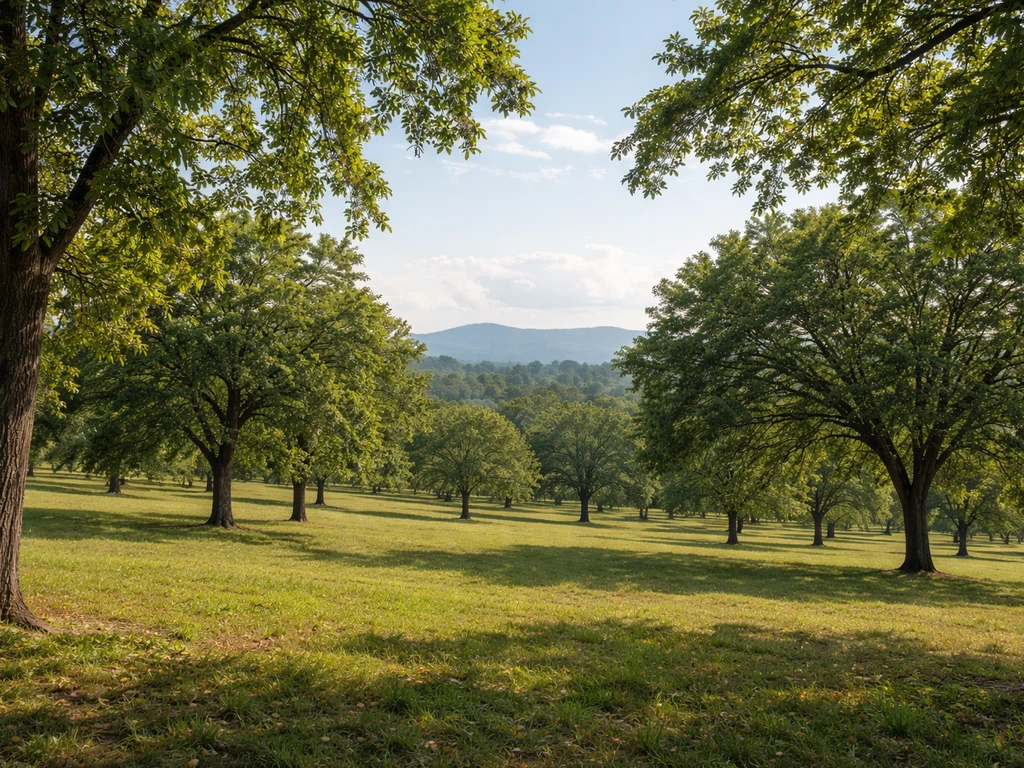
Virginia's USDA hardiness zones run from about Zone 5a in the highest mountain areas around the Blue Ridge and Allegheny ridges, through Zones 6 and 7 across the Piedmont and Northern Neck, and up to Zones 8a and 8b along the coastal Tidewater and Hampton Roads. That east-to-west gradient is one of the most dramatic in any single state east of the Rockies. A pecan tree that produces reliably in Virginia Beach might struggle to set nuts properly in Roanoke, and a hazelnut doing fine in the Shenandoah Valley might get hammered by late spring frosts on the western ridges.
Beyond hardiness zones, Virginia's climate layers in other variables: the Piedmont gets hot, humid summers with significant disease pressure; the coastal plain has milder winters but higher humidity year-round; the mountains get shorter growing seasons and more late-frost events. All of this shapes which nut trees are practical versus which ones are technically possible but unreliable. When you're choosing a species, think of your hardiness zone as the floor, but think of your region's summer heat, humidity, and frost timing as the ceiling on what you'll realistically harvest.
The Nut Trees That Actually Grow Well in Virginia
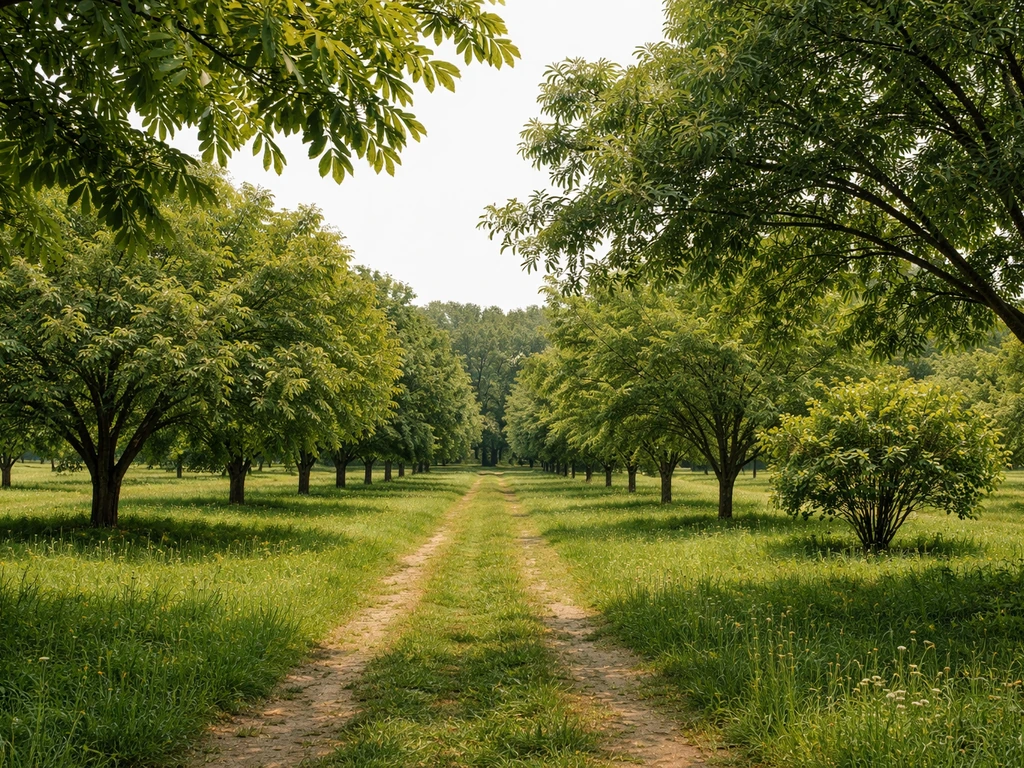
These are the species with a genuine track record in Virginia, covering everything from native forest giants to cultivated orchard crops. Note that these are all true nut-bearing trees in the botanical sense (or very close to it), not shrub-form nut plants or vines.
Black Walnut (Juglans nigra)
This is Virginia's workhorse native nut tree and arguably the most reliably productive one across the entire state. It's native to the Piedmont and mountain foothills, adapts to Zones 5 through 8 without complaint, and will grow almost anywhere in Virginia with decent soil. The catch is juglone, a compound black walnut roots release into the soil that's toxic to many common garden plants including tomatoes, peppers, and rhododendrons. Site selection around a black walnut has to account for this. Expect first nut production around 4 to 6 years after planting a grafted or selected-variety tree, with seedling trees often taking longer. Mature trees drop large crops but husking and processing them is labor-intensive.
Chinese Chestnut (Castanea mollissima)
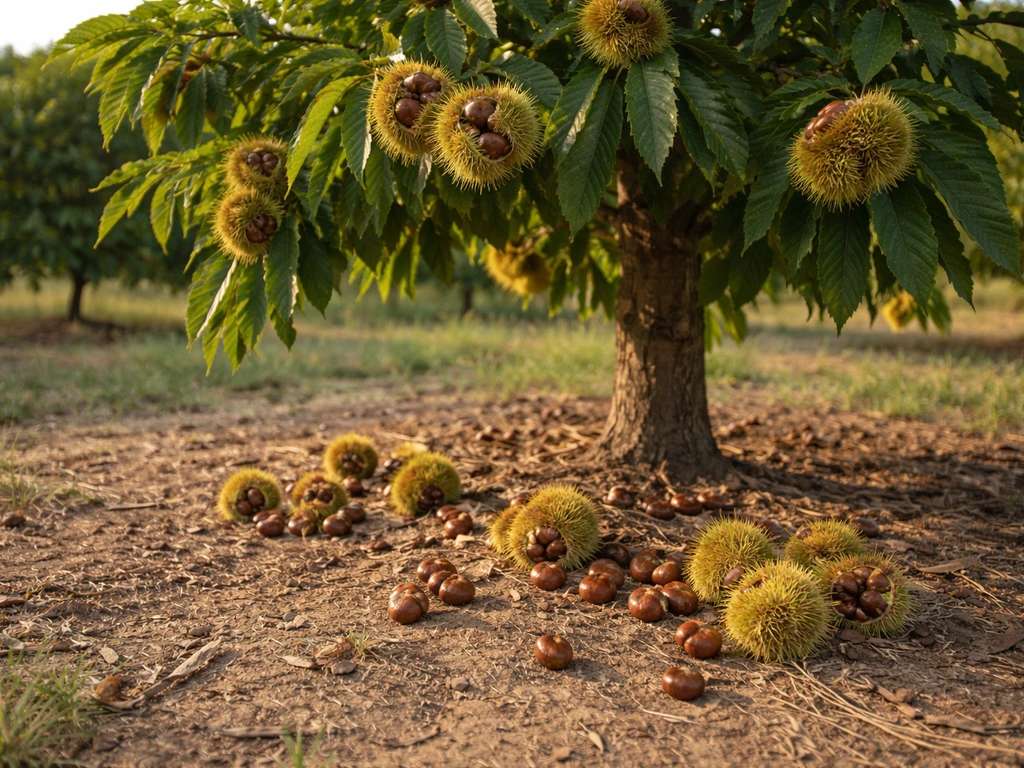
Chinese chestnut is the practical chestnut choice for Virginia. Unlike American chestnut, it carries solid resistance to chestnut blight (Cryphonectria parasitica), the fungal disease that functionally wiped out the American chestnut from eastern forests. Chinese chestnut grows well in Zones 5 through 8, which covers nearly all of Virginia. Trees are medium-sized, typically 40 to 60 feet at maturity, and start producing in 3 to 5 years from a grafted tree. You need at least two trees for good nut set because Chinese chestnut is considered self-unfruitful in practical terms and cross-pollination between different cultivars is necessary for consistent production. The chestnuts themselves are sweet, high-quality, and very marketable if you're growing commercially.
American Chestnut (Castanea dentata)
Growing American chestnut in Virginia today means going in with eyes open. The blight is still present in Virginia's forests, and while trees can persist as root sprouts in the mountains (Virginia's Department of Forestry documents surviving trees in southwestern Virginia), getting a mature nut-bearing American chestnut without blight management is very difficult. Research on hypovirulence and blight-resistant hybrid lines is ongoing through organizations like the American Chestnut Cooperators Foundation, which has ties to Virginia Tech. If you want to plant American chestnut for ideological or conservation reasons, choose blight-resistant hybrid lines and manage the disease actively. For reliable nut production, Chinese chestnut is the realistic alternative right now.
Pecan (Carya illinoinensis)
Pecan is workable in Virginia's warmer zones, primarily Zones 7 and 8, which includes much of the Piedmont, Northern Neck, and Tidewater. In Zone 6 and colder, the trees may survive but the growing season is often too short for nuts to fully mature before frost. The bigger ongoing problem in Virginia is pecan scab (Cladosporium effusum), a fungal disease that thrives in the humid conditions common across central and eastern Virginia.
Scab can devastate nut quality and cause significant nut drop in bad years. Choosing scab-resistant cultivars is not optional if you want reliable harvests here. Cultivars like 'Gloria Grande' have better scab resistance and are cross-pollination-adapted for the Southeast. Pecan trees also need full sun, excellent drainage, and 30 or more feet of clearance from buildings and other trees.
First significant nut production typically takes 7 to 10 years from planting.
Hazelnut / Filbert (Corylus species and hybrids)
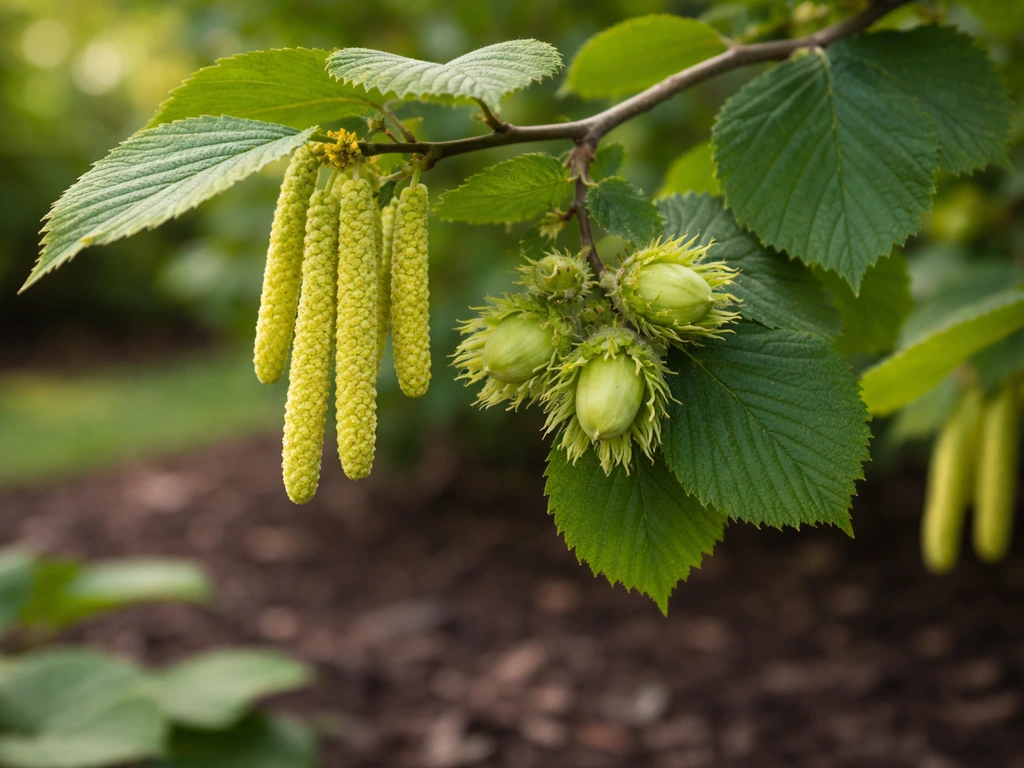
Hazelnut is an underused option in Virginia, especially for smaller properties. American hazelnut (Corylus americana) is native here and grows as a large shrub to small tree across the state. European hazelnut (Corylus avellana) produces bigger, better-quality nuts but is seriously threatened by eastern filbert blight (Anisogramma anomala), a canker disease that's endemic to the eastern U. S.
and can devastate European filbert plantings. For Virginia growers, the best path is to use American hazelnut, proven hybrids with documented EFB resistance, or carefully selected European cultivars with managed disease programs. Either way, plant at least two different varieties for proper pollination, since all hazelnuts do best with cross-pollination. Native American hazelnut will start producing in 2 to 4 years and tolerates a wide range of Virginia soils.
Hickory (Carya species)
Several hickory species are native to Virginia: shagbark hickory (Carya ovata), mockernut hickory (Carya tomentosa), and pignut hickory (Carya glabra) all grow naturally across the state's forests. Shellbark hickory (Carya laciniosa) extends into some Valley and Piedmont areas. Hickory nuts are excellent eating, but you need patience. Hickory trees are notoriously slow to produce, with first nut crops often taking 10 or more years from planting. They're also difficult to transplant because of a deep taproot, so starting with young nursery stock planted carefully is critical. Hickories are best planted for long-term production rather than near-term harvest goals. They're also self-pollinating but nut crops improve with multiple trees present.
Site Requirements by Species
| Species | Sun | Soil | Moisture | Key Constraint |
|---|---|---|---|---|
| Black Walnut | Full sun to partial shade | Deep, well-drained loam; pH 6.0–7.0 | Moderate; drought-tolerant once established | Juglone toxicity affects nearby plants |
| Chinese Chestnut | Full sun | Well-drained, acidic to neutral; pH 5.5–6.5 | Moderate; poor drainage is fatal | Needs 2+ cultivars for pollination |
| Pecan | Full sun | Deep, well-drained loam or sandy loam | Consistent moisture; no wet feet | Scab pressure; needs 30+ ft clearance |
| Hazelnut (American) | Full sun to partial shade | Adaptable; tolerates clay and poor soils | Moderate; tolerates occasional wet periods | EFB risk for European types |
| Hickory | Full sun | Deep, well-drained loam; adapts to clay | Moderate to dry; deep taproot helps | Very slow to produce; hard to transplant |
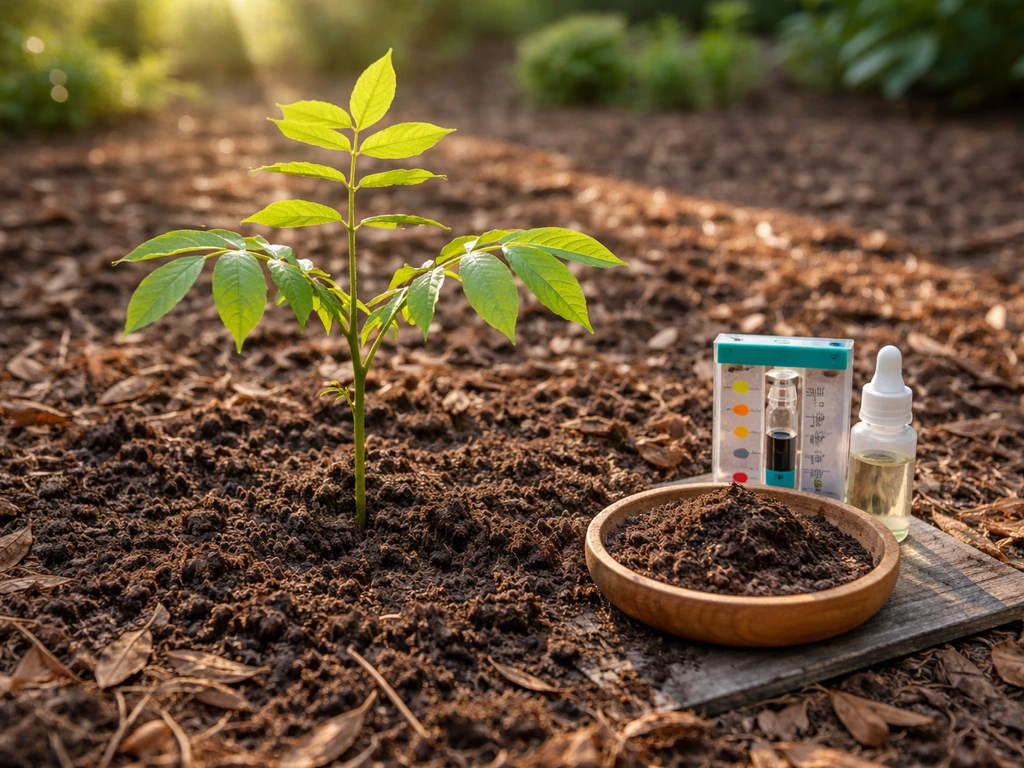
Soil testing before planting is worth every dollar. Virginia Tech's soil testing program (through VCE) will tell you your exact pH and nutrient levels so you're not guessing at lime or fertilizer applications. Most nut trees have opinions about soil pH and drainage, and problems rooted in soil chemistry don't fix themselves once the tree is in the ground.
Pollination and When to Expect Your First Nuts
This is where a lot of first-time nut growers get surprised. Several Virginia nut trees require a second tree, or at least benefit so strongly from one that planting a single tree is a poor decision. Chinese chestnut and hazelnut are both self-unfruitful in practical terms: a single tree of either will produce little to nothing without a nearby companion of a different cultivar or closely related species. Virginia Tech Extension's edible landscape guidance flags walnuts, pecans, and Chinese chestnut hybrids all as self-unfruitful, meaning you need a pollen source. Plan your planting layout with this in mind from the start.
Pecan is technically self-fertile but produces far better crops with cross-pollination, and the asynchrony between male and female flower timing within a single tree means nut set is often unreliable without a second tree present. Penn State Extension confirms pecan can self-pollinate, but in Virginia's variable spring climate, don't count on a single tree for consistent harvests. Plant at least two different cultivars.
Black walnut and hickory are generally wind-pollinated and more reliably self-fertile, though having multiple trees nearby never hurts. Native hickory trees already present in your area will contribute pollen to planted trees.
| Species | Pollination Type | Need 2+ Trees? | Years to First Harvest | First Harvest Realistic Scale |
|---|---|---|---|---|
| Black Walnut | Wind; monoecious | Helpful but not required | 4–6 years (grafted) | Light crop at 5–6 years; heavy by 10+ |
| Chinese Chestnut | Wind; self-unfruitful | Yes, different cultivars required | 3–5 years (grafted) | Small crop at 4 years; reliable by 7+ |
| Pecan | Wind; self-fertile but asynchronous | Strongly recommended | 7–10 years | First real crop at 8–10 years |
| Hazelnut (American) | Wind; benefits from 2+ varieties | Yes for best production | 2–4 years | Small but consistent by year 4–5 |
| Hickory | Wind; monoecious | Multiple trees help | 10–15+ years | Sparse until maturity; very productive long-term |
Cold Limits, Disease Pressure, and What Goes Wrong
Frost and Cold Damage
The mountain zones (5b and 6a) present real cold limits for pecan and, to a lesser extent, Chinese chestnut. Pecan trees planted in Zone 6 may survive the winters fine but still fail to produce mature nuts because the growing season isn't long enough. Late spring frosts in the mountains can damage emerging catkins and new growth on any of these trees, wiping out a season's nut crop even when the tree itself survives. If you're in the Blue Ridge foothills or Shenandoah Valley, this is a real risk to plan for, not a rare exception.
Chestnut Blight
Chestnut blight remains present throughout Virginia's forests and does affect Chinese chestnut to some degree, though Chinese chestnut's resistance is far more robust than American chestnut. Extension’s invasive species resource also describes Cryphonectria parasitica as having major impacts on chestnut composition across the southern Appalachians, making disease pressure a key factor in dependable harvests for American chestnut plantings chestnut blight (Cryphonectria parasitica). Plant Chinese chestnut cultivars with documented resistance ratings, and if you see orange-brown cankers developing on branches, prune them out well below the affected tissue immediately. American chestnut without blight-resistant genetics is not a reliable nut-production plan in Virginia right now, period.
Pecan Scab
Pecan scab is probably the single biggest obstacle to reliable pecan production in Virginia's humid Piedmont and coastal areas. The fungus (Cladosporium effusum) causes dark lesions on young nut shucks, leaves, and shoots, and in a wet year it can cause near-total nut drop. The research is clear: scab-resistant cultivars are not a nice-to-have, they're mandatory in eastern conditions. Cultivars like 'Gloria Grande', 'Jubilee', and 'Melrose' have documented scab resistance scores well below susceptible varieties. If you plant a scab-susceptible cultivar in central or eastern Virginia and have a humid spring and summer, expect to lose a substantial portion of your crop.
Eastern Filbert Blight on Hazelnuts
Eastern filbert blight (EFB) is caused by Anisogramma anomala, a fungus native to eastern North America. European hazelnuts have essentially no natural resistance to it, and without management (pruning out cankers, protective fungicide applications), European filbert plantings in Virginia will decline badly within a few years. American hazelnut has meaningful native resistance and is a much safer choice for a low-maintenance planting. If you want to grow European-type hazelnuts for larger nut size and quality, choose hybrid cultivars with proven EFB resistance, and be honest with yourself about whether you'll actually manage a spray program. OSU Extension's work on EFB-resistant cultivars is the most current resource for evaluating options.
Juglone Toxicity from Black Walnut
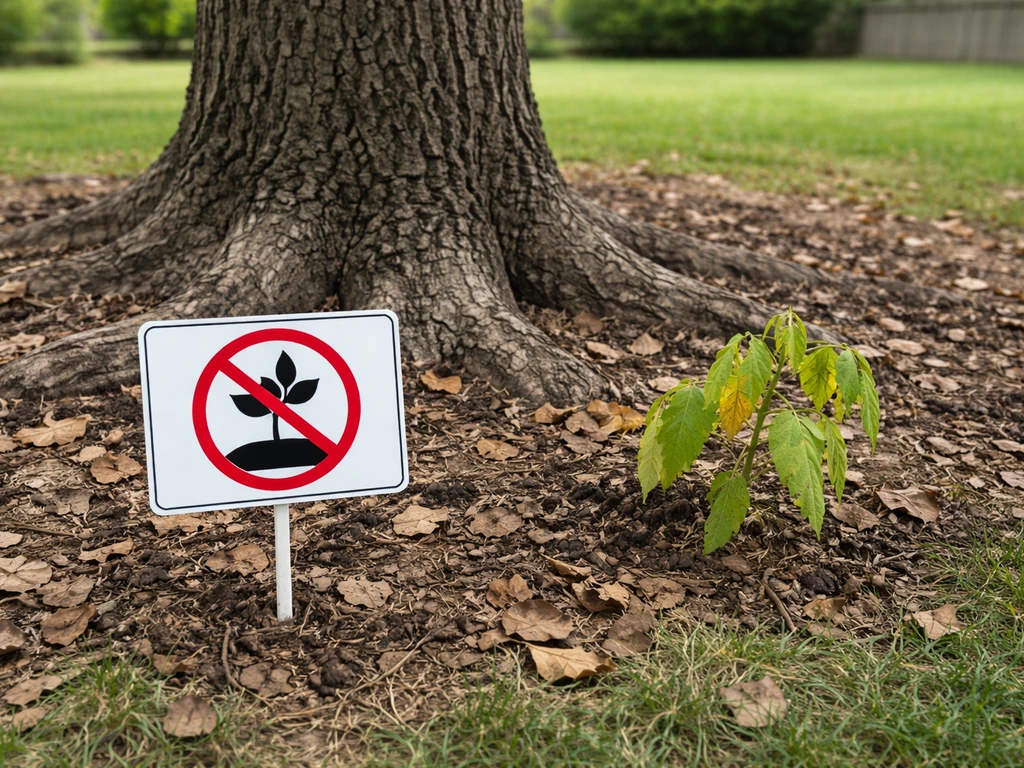
This isn't a disease, but it's one of the most common failure points for growers who plant black walnut without thinking through the site. The juglone zone extends well beyond the drip line of mature trees, and sensitive plants placed anywhere in that zone will often decline mysteriously. If you have existing garden beds, vegetable plots, or landscape plantings nearby, map your planned walnut planting location carefully before you put the tree in the ground.
Planting Guidance and Care Timeline
The best planting window in Virginia is late winter to early spring while trees are dormant and the ground isn't frozen, roughly February through April depending on your region. Virginia Cooperative Extension advises planting dormant seedlings in this window for best establishment. In the Tidewater region you can push toward the earlier end; in the mountains wait until the hardest freezes have passed.
For grafted trees, keep the graft union 4 to 6 inches above the soil surface. Burying it encourages the rootstock to sucker and can damage the base of the tree. Dig your planting hole wide rather than deep, set the tree at its nursery soil line, backfill without amendments (this encourages roots to venture out rather than staying in the hole), and water deeply at planting. Mulch out to 3 to 4 feet but keep mulch away from the trunk.
- Year 1: Focus entirely on establishment. Water weekly in dry spells (about 1 inch per week). Do not fertilize heavily in year one. Pull weeds and grass from around the base to reduce competition.
- Years 2–3: Modest growth begins. Do a soil test and apply fertilizer based on results only. Begin training the tree's structure if needed (single dominant leader for walnut and chestnut; hazelnuts are naturally multi-stemmed).
- Years 3–5: First light nut production may appear on fast-maturing species like hazelnut and chestnut. Don't stress the tree by under-watering during this phase.
- Years 5–7: Chinese chestnut and black walnut should be producing small but real crops by now if establishment went well. Pecan is still building canopy.
- Years 7–10+: Full production phase for walnut and chestnut. Pecan enters first meaningful production. Hickory is still building toward its 10–15 year threshold.
Spacing matters enormously and most home growers underestimate it. Black walnut planted in a plantation context can go 12 by 12 feet for early canopy competition, but for long-term nut production you'll want 30 to 40 feet between mature trees. Pecan needs at least 30 feet from buildings, other trees, and power lines as a minimum. Hazelnuts are much more compact and can be spaced 10 to 15 feet apart in a hedgerow or orchard row setting. Chinese chestnut at 40 to 60 feet mature spread needs at least 30 to 40 feet of spacing for full canopy development and good light penetration.
Choosing the Right Tree for Your Specific Spot
Start with your hardiness zone, but don't stop there. Pull up the USDA Plant Hardiness Zone Map for your specific county or zip code rather than relying on statewide generalizations. Zone 7a in the northern Piedmont and Zone 7a in the southern Piedmont are nominally the same but can have very different rainfall patterns and last-frost dates.
- If you're in the mountains (Zone 5b–6b): Black walnut and American hazelnut are your safest bets. Chinese chestnut can work in protected sites at Zone 6. Skip pecan.
- If you're in the Piedmont or Valley (Zone 6b–7b): This is the sweet spot for Chinese chestnut and black walnut. Hazelnut does well here too. Pecan is possible in the warmer end of this range if you choose short-season, scab-resistant cultivars.
- If you're in the Tidewater or coastal areas (Zone 7b–8b): Pecan becomes genuinely viable here. Chinese chestnut still works but watch humidity and blight pressure. Black walnut grows fine. Hazelnut manages but EFB pressure is higher in the humid coastal environment.
- Regardless of zone: do a soil test before planting, evaluate drainage by digging a test hole and watching how fast water drains after heavy rain, and confirm you have enough clearance for the mature tree size.
One practical decision framework: if you want nuts within 3 to 5 years, plant hazelnut or Chinese chestnut. If you want the best nut trees to grow in Southern California, the same idea applies but you'll need to prioritize heat and winter-chill suited species. If you want a long-term native investment with minimal disease management, plant black walnut or native hickory. If you're in Zones 7b to 8 and willing to manage disease and invest in proper cultivar selection, pecan is worth serious consideration.
If you're comparing your situation to other states, Virginia's nut tree landscape is similar in some ways to what's possible in neighboring North Carolina, where Chinese chestnut and black walnut also dominate and pecan becomes viable in the warmer coastal plain. If you're also comparing options for what nut trees grow in north carolina, this same species mix is often a useful starting point, especially for Chinese chestnut, black walnut, and pecan in the warmer coastal areas.
If you're also curious about the region farther south, you'll find that the best nut tree choices in South Carolina depend on similar hardiness and frost timing factors what nut trees grow in south carolina. If you're planning in New Mexico instead, you'll need to start with the climate and choose species that handle that arid conditions and temperature range, which is covered in what nut trees grow in New Mexico.
If you're asking what nuts grow in California, the same idea applies: match species to your local climate and conditions before choosing a variety pecan becomes viable in the warmer coastal plain. The situation diverges significantly from arid western states where different species entirely come into play. If you're wondering what nut trees grow in Arizona, you'll need to focus on species that can handle dry heat and lower winter chill rather than relying on the eastern U. S.
picks arid western states. If you're comparing climates elsewhere, the question of what nut trees grow in Utah comes down to hardiness and short, dry growing seasons. In California's different climate and growing conditions, cashew production follows a completely different set of rules than in the East arid western states.
Before you buy any tree, confirm that the nursery is selling grafted named cultivars rather than seedlings for species where cultivar matters (chestnut and pecan especially). Seedling trees are unpredictable in nut quality and production timing. For black walnut and hickory, high-quality seedlings from local seed sources are more acceptable since variability is less critical for home production. Whatever you plant, get your soil test done, give the tree the full spacing it needs, and be honest about your timeline. Nut trees are a long game, but in Virginia, the climate is genuinely on your side for most of these species.
FAQ
If I only have space for one nut tree, which species will still produce reliably in Virginia?
Yes, but it depends on the species. Chinese chestnut and hazelnut (and many chestnut or hazelnut hybrids) often need a separate pollen source to get a meaningful crop, so you should plan on at least two plantings. If you only have room for one tree, black walnut or hickory are more forgiving because they’re wind-pollinated and commonly set nuts without a nearby companion.
Why does my pecan tree leaf out every year but not produce (or produce very few nuts) in Virginia?
For pecan, timing is the most common reason people think their tree is “not working.” In Virginia’s spring variability, bloom timing can mismatch year to year, so even a second tree may not guarantee nuts unless you choose cultivars that are known to overlap in flowering time for the Southeast. Also expect that a pecan tree planted too far north (or in a colder microclimate) may leaf out but still fail to mature nuts before frost.
I’m in the right USDA zone, but my nut trees keep getting hit by late frost. What should I check first?
Microclimate matters more than zone alone, especially for late frosts. A north-facing slope, low spot where cold air pools, or an area exposed to spring winds can reduce nut set even when the county zone suggests success. If you have a choice, site nut trees where morning sun warms buds earlier and where cold air can drain away from the tree line.
Should I buy seedlings or grafted trees for nut production in Virginia, and when does it make the biggest difference?
Seedling vs grafted is a big deal for cultivar-dependent crops. For pecan, many growers should buy grafted, named scab-resistant cultivars, because seedling trees can vary widely in disease resistance and nut quality. For Chinese chestnut, grafted trees usually start producing sooner and more consistently than seedlings.
What are the most common planting mistakes that reduce nut production (or cause early decline) in Virginia?
Avoid “planting too deep” and “burying the graft” mistakes. For grafted trees, keep the graft union above the soil (commonly 4 to 6 inches), because burying it can change how the tree forms roots and may reduce vigor or increase unwanted suckering. Also set the tree at the nursery soil line and use a wide planting hole rather than a deeper one.
Can black walnut harm nearby vegetable beds or ornamentals even if the trees seem far away?
Yes, some companion-planting failures happen around black walnut. Juglone can affect sensitive vegetables and ornamentals beyond the canopy drip line, so if you have beds or lawn edges near the walnut, treat it like a zone of concern and plan for tolerant plants there. If you already have existing plantings, consider moving the walnut or choosing a different nut species.
How close do my hazelnut or Chinese chestnut trees need to be, and do they need specific cultivar pairings?
If you’re planting hazelnut or Chinese chestnut, don’t assume one variety will cross-pollinate itself well. You generally need at least two different varieties, or at minimum two plants that are compatible for pollen transfer. A good rule of thumb is to buy two cultivars with documented flowering overlap rather than picking two plants of unknown or mismatched types.
Is it normal that my hickory is taking a very long time to produce nuts in Virginia?
Hickory can be a slow starter, but the other frequent issue is patience with harvesting. Hickories often produce after many years, and early small crops can be deceptive, especially if the tree is still establishing a deep root system. Plan for long-term space and avoid expecting early yields to look like orchard-grown trees.
What should I do with my soil test results before planting, and what mistakes should I avoid?
Nut trees rarely fail because of soil pH alone, but wrong pH and poor drainage can show up as weak growth, leaf issues, or “no progress.” Do your soil test before planting, then address drainage and amendment needs based on results. A common mistake is applying lime or fertilizer without confirming what the soil actually lacks or whether the issue is compaction and waterlogging.
What’s the one pecan decision that most affects whether I get a reliable harvest in Virginia?
For pecan in humid eastern Virginia, skip scab-susceptible cultivars. If you plant a cultivar without documented scab resistance, a wet spring and summer can cause heavy nut drop and poor nut quality even when the tree is healthy. In practice, scab resistance should be your first decision criterion, before you worry about spacing or fertilizing.