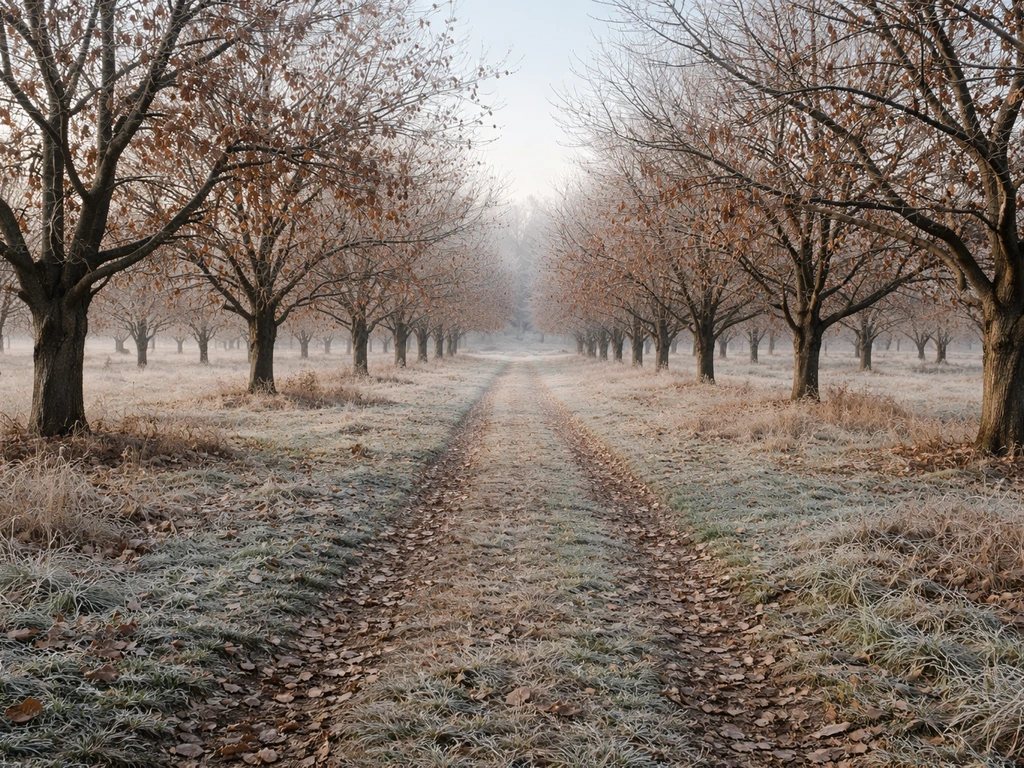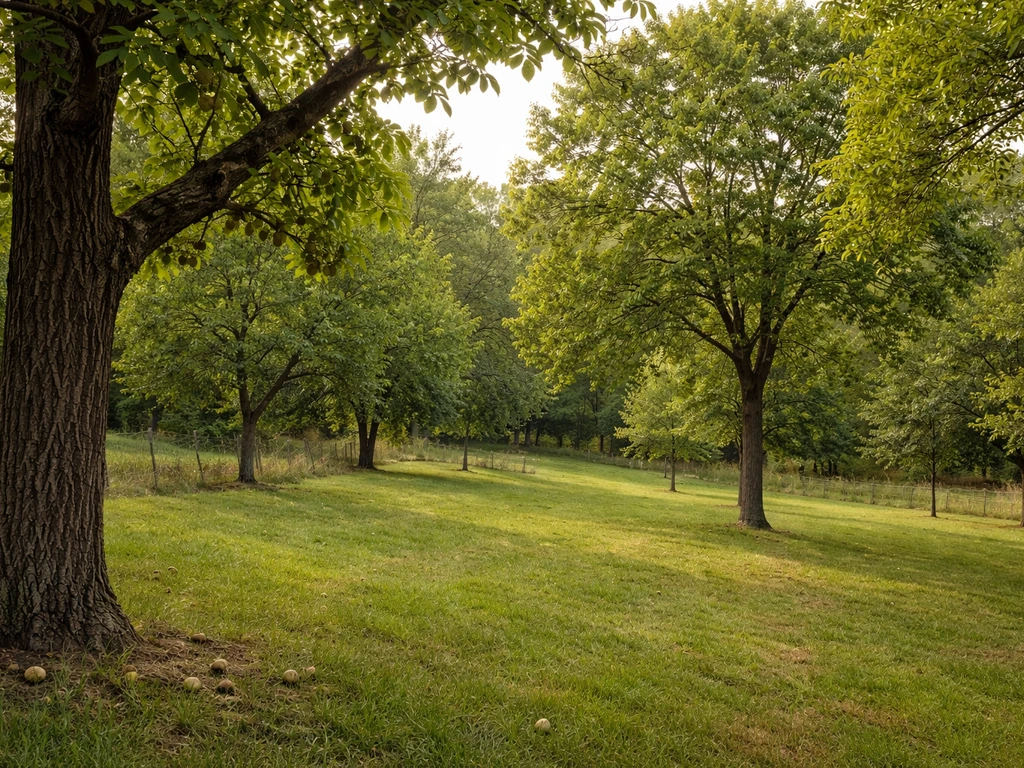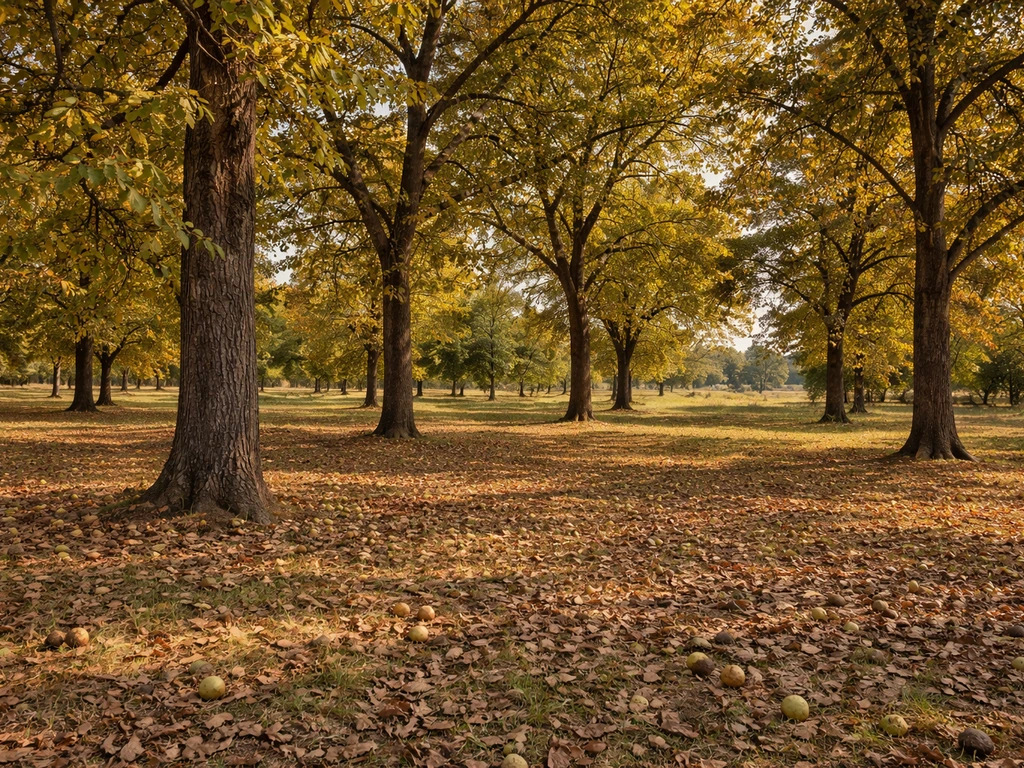
Ohio is genuinely good nut-tree country. Black walnut, hickory, and American hazelnut grow here natively. Chinese chestnut and hybrid chestnuts do well across most of the state. Pecans can produce in southern Ohio with the right cultivar choice. Even English walnuts are worth trying in the right microclimate. The honest short list: black walnut, American hazelnut, Chinese chestnut, shagbark hickory, shellbark hickory, and butternut for natives; Chinese chestnut, hybrid chestnuts, Thomas Black Walnut (select cultivars), and northern-adapted pecans for planted orchard trees. What each one needs, how long it takes, and what can go wrong are all worth knowing before you dig a hole.
What Nut Trees Grow in Ohio: Best Species to Plant
Marcus Hendricks
21 May 2026
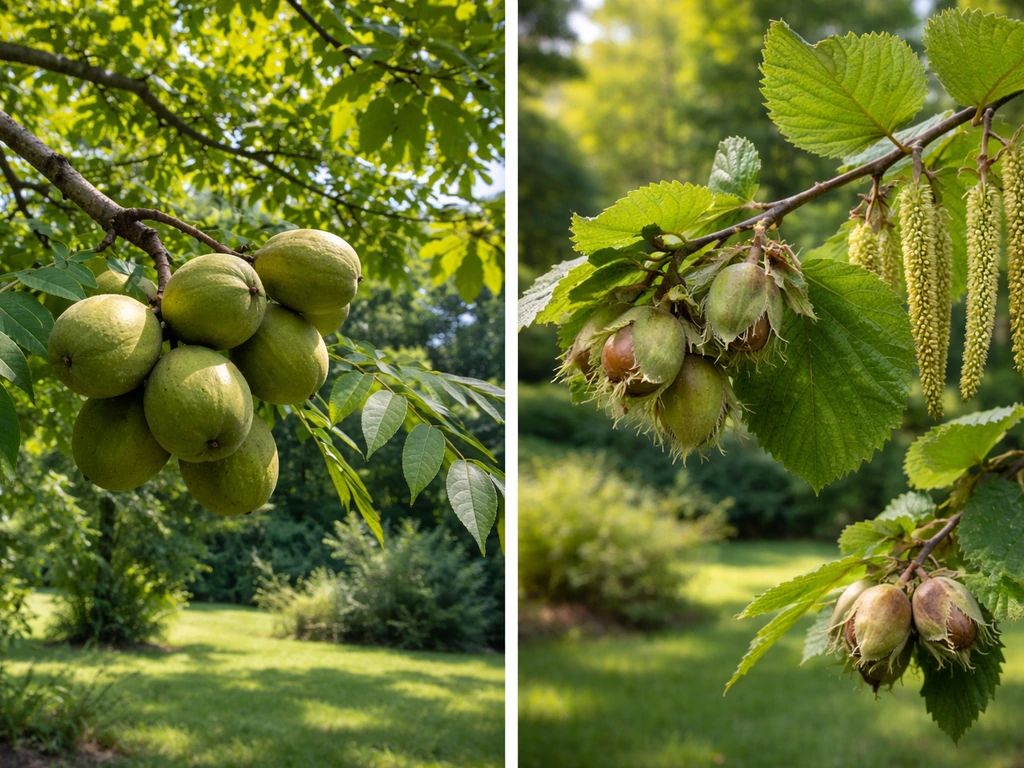
Nut trees that actually grow in Ohio: the quick list
Ohio spans USDA hardiness zones 5b in the northwest to 6b in cities like Akron and the northeast, with the southern counties touching zone 6b as well. That range is broad enough to support a solid lineup of nut trees, both native and cultivated. Here is how they break down:
| Tree | Native to Ohio? | USDA Zones | Realistic for Home Planting? |
|---|---|---|---|
| Black walnut (Juglans nigra) | Yes | 4–9 | Yes, with juglone caution |
| Butternut (Juglans cinerea) | Yes | 3–7 | Yes, but disease pressure is high |
| English/Persian walnut (Juglans regia) | No | 5–9 | Yes, in zone 6 microclimates |
| American hazelnut (Corylus americana) | Yes | 4–9 | Yes, easy and underrated |
| European hazelnut (Corylus avellana) | No | 4–8 | Yes, with pollination planning |
| American chestnut (Castanea dentata) | Yes (historically) | 4–8 | Limited; blight risk |
| Chinese chestnut (Castanea mollissima) | No | 4–8 | Yes, best practical choice |
| Hybrid chestnut (American x Chinese) | No | 4–8 | Yes, excellent option |
| Shagbark hickory (Carya ovata) | Yes | 4–8 | Yes, slow but rewarding |
| Shellbark hickory (Carya laciniosa) | Yes | 5–8 | Yes, prefers wetter sites |
| Pecan (Carya illinoinensis) | No (marginal native) | 5–9 | Yes, southern Ohio only |
Black walnut and English walnut in Ohio
Black walnut: Ohio's most common nut tree
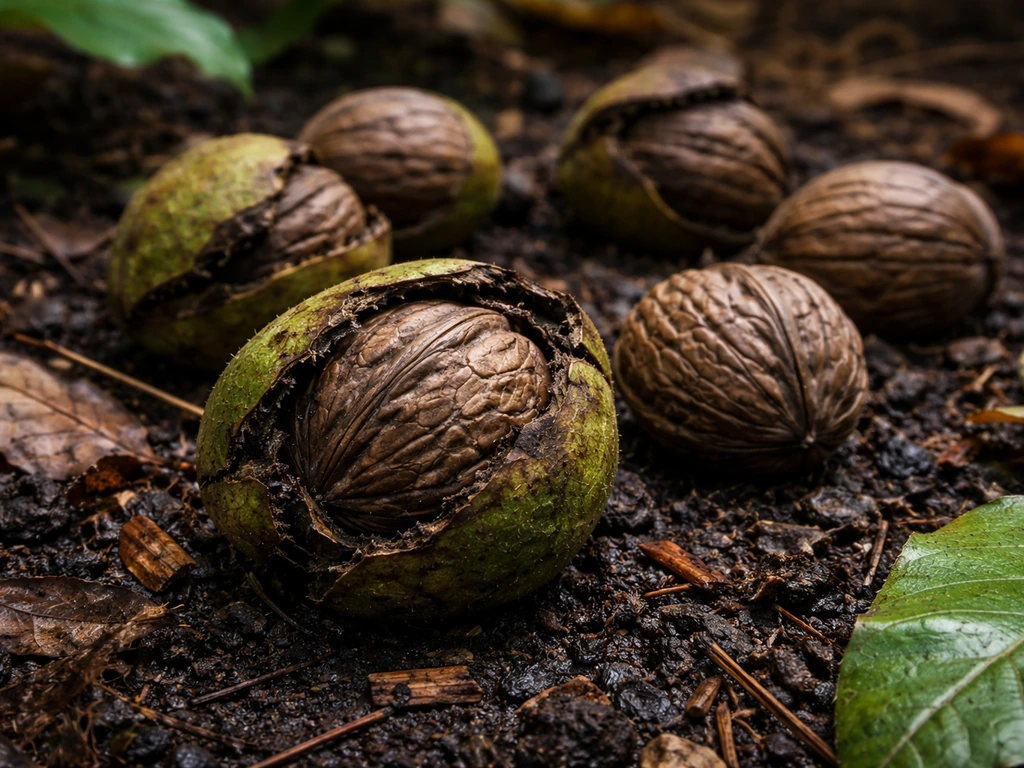
Black walnut (Juglans nigra) is practically synonymous with the Ohio landscape. It is rated cold-hardy to zone 4, so winter survival is never really the concern here. The bigger issues are placement and patience. Black walnut produces juglone, a toxic compound found in the leaves, bark, nut husks, and roots. Juglone kills or suppresses many common garden plants, so where you put this tree matters enormously. Keep it at least 50 to 80 feet from vegetable gardens, roses, rhododendrons, apples, and blueberries. Tomatoes are famously sensitive and will wilt within the root zone.
For nuts, black walnut prefers moist, organically rich, well-drained soils. It does not want compacted clay or standing water. Nuts mature in autumn and drop to the ground as the green husks blacken and rot away. Harvesting promptly matters because the husks stain everything they touch and the nut quality degrades if the husked nuts sit wet on the ground. Wild-grown black walnuts can have thick shells and small nutmeats. If you want better cracking quality, look for named cultivars like 'Thomas,' 'Sparrow,' or 'Emma Kay,' which were selected specifically for thinner shells and larger nutmeats.
English (Persian) walnut: worth trying in the right spot
English walnut (Juglans regia) produces the large, easy-to-crack nut sold in grocery stores. It is reliably hardy to zone 5, which technically covers most of Ohio, but there is a catch: late spring frosts can kill emerging flower buds, and English walnuts bloom earlier than black walnuts. Growers in northern Ohio zones 5b and 6a need a sheltered location or a frost-resistant cultivar like 'Broadview' or 'Carpathian' types to avoid losing crops to late freezes. Southern Ohio (zone 6b) is more forgiving. English walnut also does not have the juglone problem to the same degree as black walnut, which makes garden placement more flexible. Walnut husk fly affects both black and English walnut and is the primary pest concern for nut quality in this region.
Hazelnut options for Ohio: shrub-style and tree-form
American hazelnut: the easiest native nut plant in Ohio
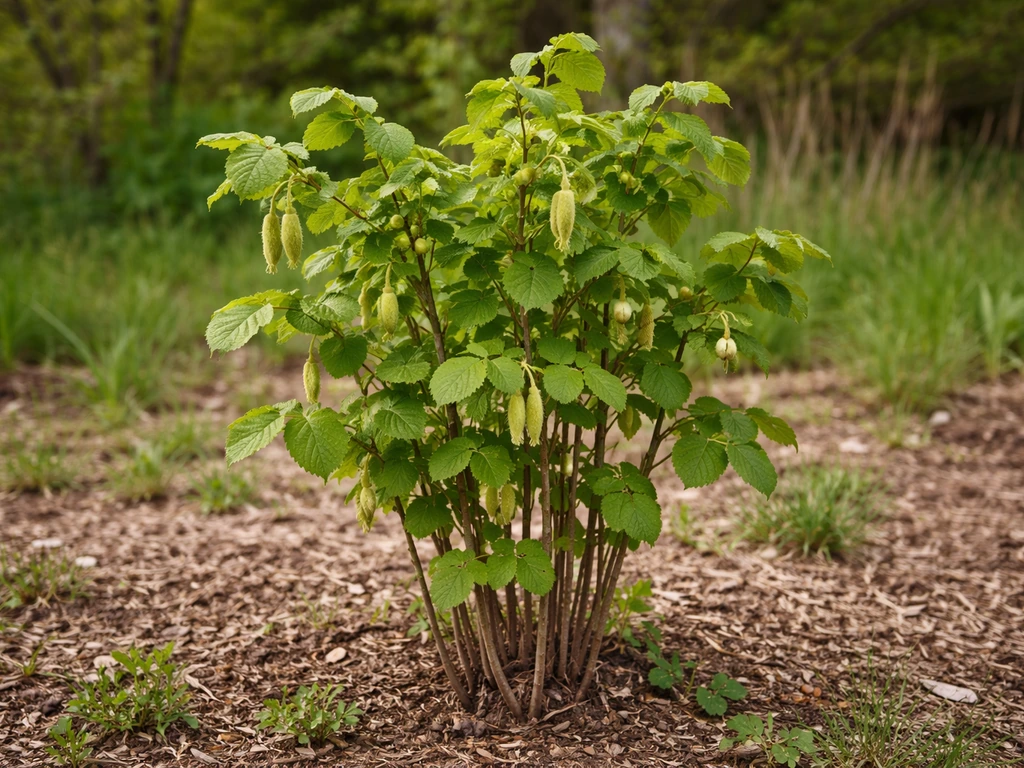
American hazelnut (Corylus americana) is a multi-stemmed shrub that tops out around 8 to 12 feet. It grows natively across Ohio, is cold-hardy to zone 4, and tolerates a wider range of soil conditions than most nut trees. It handles partial shade reasonably well, though nut production is better in full sun. The nuts are smaller than grocery-store hazelnuts but fully edible and richly flavored. For good nut set, plant at least two genetically distinct plants nearby because cross-pollination improves yield significantly. Utah State University Extension notes that nut production is best when cross-pollination occurs with another variety of the same species (or seed-grown plants of the same species), and it provides tables for possible pollinizers cross-pollination improves yield significantly. American hazelnut blooms in late winter, so the pollen window is early and brief. When propagating from seed, the seeds need about five months of cold stratification at 34 to 40°F before they will germinate.
European hazelnut and hybrid types: bigger nuts, more planning required
European hazelnut (Corylus avellana) produces the large filbert-style nuts familiar from commercial cultivation in Oregon and the Pacific Northwest. It is hardy to zone 4 in most references, but in Ohio's variable winters it can suffer dieback in exposed sites at zone 5b. The bigger management issue is pollination. European hazelnuts require compatible pollinizer varieties planted nearby, ideally within about 66 feet of the main cultivar, for reliable nut set. You cannot just plant one European hazelnut and expect nuts. Plan on two or more compatible varieties. Hybrids between American and European hazelnut offer a middle ground: larger nuts than the American species with better winter hardiness than pure European types. Some breeding programs specifically target this cross for Great Lakes region growers, and those selections are worth seeking out if you want filbert-size nuts with less winter worry.
Chestnuts in Ohio: what to plant and what to avoid
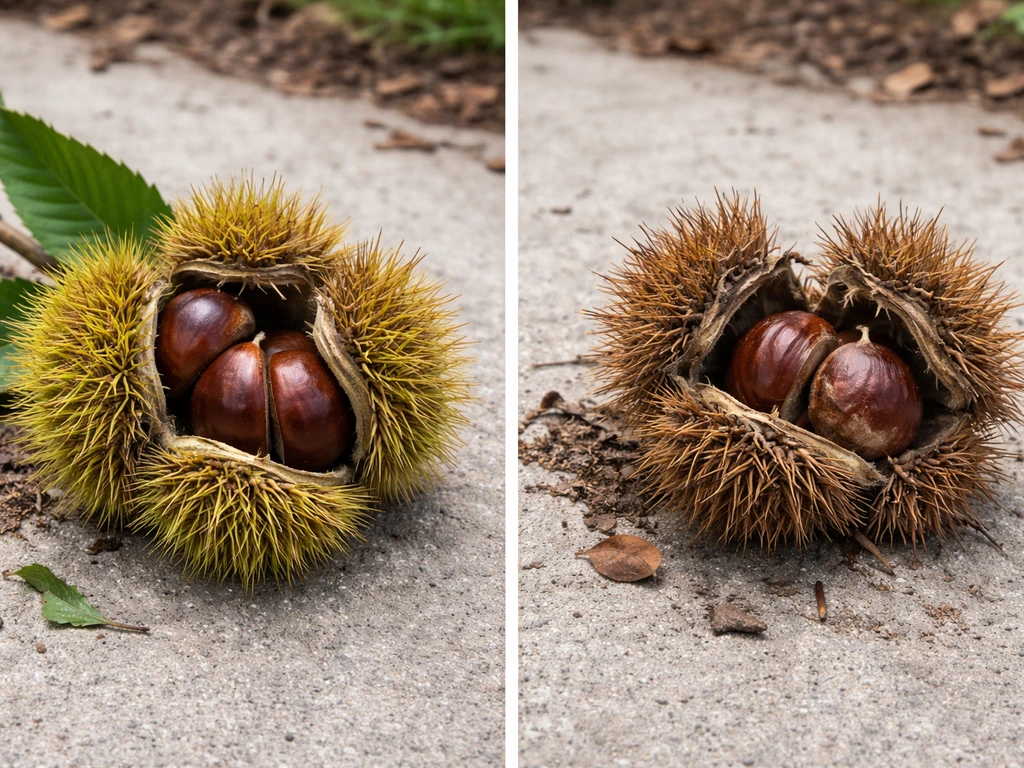
Chestnuts are one of the most exciting nut trees for Ohio growers, but the species choice matters a lot. American chestnut (Castanea dentata) was historically native here and produced enormous, sweet nuts before chestnut blight essentially wiped it out in the early 20th century. Planting a standard American chestnut today means planting a tree that will likely be killed back by blight before it matures to nut production age. The root system can resprout, but the above-ground trunk rarely survives long enough to produce a meaningful nut crop.
Chinese chestnut (Castanea mollissima) is the practical go-to for Ohio. It carries natural resistance to chestnut blight and is cold-hardy to zone 4. The nuts are larger than American chestnut, sweet, and comparable in flavor, though some growers say not quite as fine-textured as the original. Named cultivars like 'Mossbarger,' 'Qing,' and 'Meiling' are commonly recommended for the Midwest. Chinese chestnut reaches nut-bearing age in roughly 3 to 5 years from a grafted tree, which is fast compared to hickory or pecan.
Hybrid chestnuts (American x Chinese crosses) are the other strong option. Breeding programs including work at Penn State and The American Chestnut Foundation have developed trees that blend American chestnut's flavor profile and tall growth habit with Chinese chestnut's blight resistance. These hybrids are tested in Great Lakes region plantings and perform well in Ohio conditions. If you can source a backcross hybrid from a reputable source, it is worth considering alongside pure Chinese chestnut. For all chestnuts, plan to plant at least two different cultivars or seedlings for cross-pollination, since single-tree nut set is poor.
Pecans, hickories, and other native nuts suited to Ohio
Hickory: Ohio's slow-burn nut trees
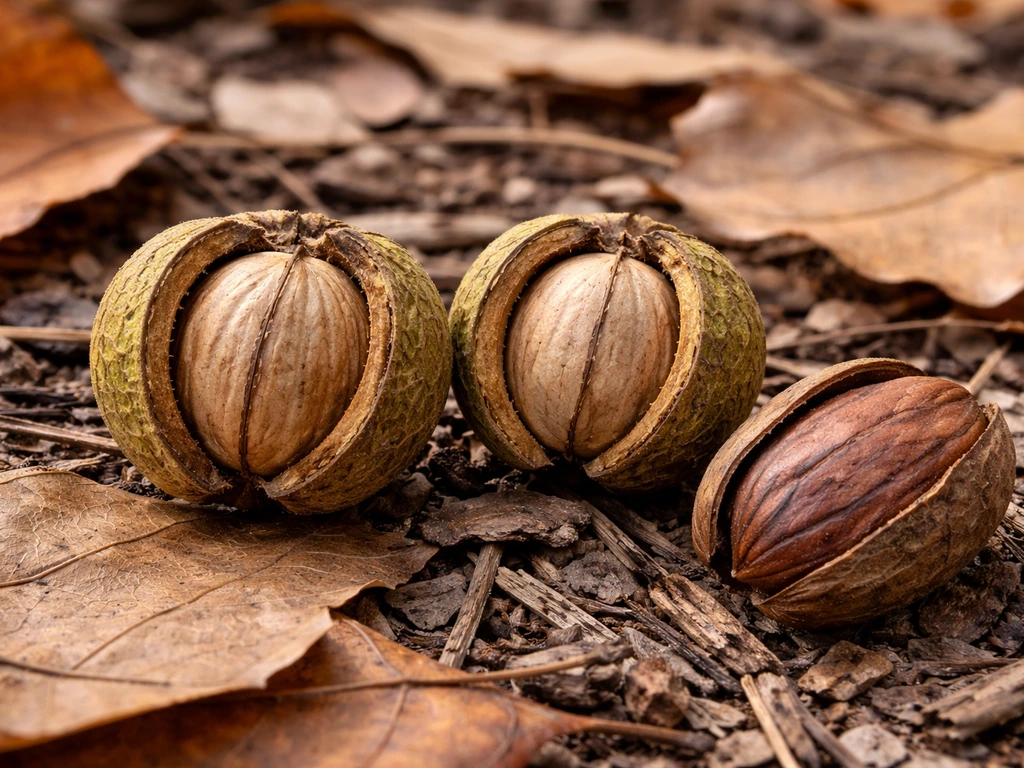
Shagbark hickory (Carya ovata) and shellbark hickory (Carya laciniosa) are both native to Ohio and produce quality edible nuts. Shagbark is the more widely adapted of the two, growing statewide. Shellbark prefers wetter bottomland sites and is more common in the western and central counties. Both are genuinely slow: expect 10 to 20 years before meaningful nut production from a seedling. Their main disadvantage is that timeline. Their advantages are zero winter hardiness concern, no blight risk, and nuts that wildlife and humans compete fiercely over. Hickory nuts have an excellent rich flavor. The primary challenge for home growers is the alternate bearing pattern, where a heavy crop year is often followed by a lighter one, and cracking the nuts requires a heavier hand than most other species.
Pecan: southern Ohio's stretch crop
Pecan (Carya illinoinensis) is a realistic option for southern Ohio, particularly zone 6a and 6b counties near the Ohio River. Farther north it becomes a gamble. blank" rel="noopener noreferrer">Pecan needs deep, moist, well-drained soil and a long growing season to fill out nuts before frost. The tree is slow: seed-bearing age is roughly 10 to 20 years from a seedling, though grafted cultivars are faster. Spacing matters more with pecan than almost any other nut tree here. Oklahoma State Extension recommends at least 40 to 60 feet between trees at maturity. Pollination also requires planning. Pecan cultivars are divided into Type I and Type II pollinators based on when they shed pollen versus when the female flowers are receptive. You need complementary types, or native pecan trees within about 300 feet, for reliable nut set. Northern-adapted cultivars like 'Kanza,' 'Lakota,' and 'Major' have shorter growing season requirements and better cold tolerance than southern varieties. Stick to those selections for Ohio.
One thing to know about pecan going in: alternate bearing is real and common. Trees often deliver a heavy crop one year and a noticeably lighter one the next. This is not a sign something is wrong. It is the normal reproductive cycle. Zinc deficiency is also a common production limiter. Foliar zinc applications address this in most Ohio soils, though if your soil pH is below 6.5, a soil application can work.
Butternut: native but under pressure
Butternut (Juglans cinerea) is Ohio's other native walnut. The nuts have a buttery, mild flavor and are genuinely delicious. The problem is butternut canker disease, a fungal pathogen that has devastated butternut populations across the eastern United States. Planting butternut today means accepting that disease pressure will be significant. If you can source a canker-resistant selection from a breeding program, it is worth trying. Wild-collected seedlings are a higher risk.
Matching the tree to Ohio's climate and your site
Ohio's hardiness zones run from 5b in the northwest and interior to 6b in cities and the northeast Lake Erie shoreline counties. The lake effect gives northeast Ohio modestly warmer winters and delayed spring frosts in some years, but it also means higher humidity and more disease pressure. Southwest Ohio warms up faster in spring, which can be a late-frost liability for early-blooming trees like English walnut and pecan. The practical takeaway: if you are in northern Ohio and want English walnut, choose a Carpathian or 'Broadview' type with demonstrated zone 5 performance and plant on a south-facing or sheltered slope. If you are in southern Ohio, the species list expands, and pecan becomes genuinely viable. If you are also deciding for Missouri, the same hardiness-zone logic helps narrow down which nut trees are most likely to thrive there what nut trees grow in Missouri.
Chill hours matter less for most Ohio nut trees than they do in mild-winter climates, because Ohio reliably delivers the 800 to 1,200 hours below 45°F that most temperate nut trees need. Pollination requirements are the more critical planning factor for Ohio growers. Hazelnut, chestnut, and pecan all need compatible pollinizers within workable distances. Black walnut and hickory are wind-pollinated and more forgiving of a single-tree planting, though even there, multiple trees improve nut set.
Planting and care basics for Ohio nut trees
Soil, sun, and spacing
All the nut trees discussed here want full sun, at least 6 to 8 hours per day. Partial shade reduces nut production across the board. Soil preference varies by species, but the common thread is good drainage. Compacted, waterlogged clay is a problem for walnuts, chestnuts, and pecans in particular. If your site has heavy clay, amend the planting zone or select hazelnut or shellbark hickory, which are more tolerant of occasional wet conditions.
For walnut plantations, a soil pH near 7.0 is the target. Chinese chestnut prefers slightly acidic conditions, around pH 5.5 to 6.5. Test your soil before planting and adjust accordingly rather than guessing. Spacing varies widely by species: walnut plantation spacing starts at 12 by 12 feet for density planting with later thinning, but a permanent orchard tree needs 30 to 40 feet. Chestnuts want 30 to 40 feet at maturity. Pecans need 40 to 60 feet. Hazelnuts are smaller and can be spaced 10 to 15 feet apart for a multi-shrub planting.
When to plant and how long until nuts
Plant bare-root trees in early spring while they are still dormant, typically March through early April in Ohio. Container-grown trees can go in through early fall with enough watering support. Mulch around the base after planting to retain moisture and suppress competition, but keep mulch away from the trunk. Water consistently through the first two summers.
Production timelines are where many first-time nut tree growers get surprised. Here is a realistic breakdown:
| Tree | First Nuts (grafted) | First Nuts (seedling) | Full Production |
|---|---|---|---|
| Chinese chestnut | 3–5 years | 5–8 years | 8–12 years |
| American hazelnut | 2–4 years | 3–5 years | 5–8 years |
| European hazelnut | 3–5 years | 4–6 years | 6–10 years |
| Black walnut (select cultivar) | 4–6 years | 8–12 years | 10–15 years |
| English walnut | 4–6 years | 7–10 years | 10–15 years |
| Shagbark/Shellbark hickory | 10–15 years | 15–20 years | 20+ years |
| Pecan (grafted) | 5–8 years | 10–20 years | 15–20 years |
If you want nuts in a reasonable timeframe, hazelnut and grafted Chinese chestnut are your best bets. If you are planting for the long game or for the next generation of the property, hickory and black walnut make complete sense.
Pests, diseases, harvest timing, and storage
Common problems to expect
Walnut husk fly is the primary pest for both black walnut and English walnut in Ohio. The fly lays eggs in the developing husk; the larvae tunnel through and cause the husk to rot prematurely and blacken. Infested nuts lose quality and shelf life. Because the fly does not lay eggs in husks that have already split, one management strategy for English walnut is to hasten nut maturity and husk splitting using an ethephon (growth regulator) application, which forces earlier husk opening. Insecticides are the more conventional control option once populations are established in your area.
Pecan weevil is the main insect threat for pecans and hickories. The adult weevil crawls up the trunk from the soil to reach developing nuts. Trunk barrier treatments and timed insecticide applications at the right emergence window are the primary controls. For chestnuts, chestnut blight remains the most serious disease concern even with resistant varieties, because the fungus persists in the environment. Inspect grafted chestnuts annually for canker signs and prune out infected wood promptly.
Butternut canker, eastern filbert blight (for European hazelnut), and anthracnose in wet years are the other disease issues worth knowing about. Eastern filbert blight is less severe in Ohio than in the Pacific Northwest, but it is present and can build up on susceptible European hazelnut cultivars over time. American hazelnut has natural resistance to eastern filbert blight, which is one more reason it is the lower-maintenance choice for Ohio.
Harvest timing in Ohio
- American hazelnut: mid-August to mid-September; nuts fall to the ground or are harvested just before they drop
- Chinese and hybrid chestnuts: September through October; burrs split open and nuts fall out naturally
- Black walnut: September to October; green husks turn yellow-green then black as they soften and drop
- English walnut: September to October; harvest when husks begin to crack or split
- Shagbark and shellbark hickory: September to October; hulls split when ripe and nuts fall to the ground
- Pecan (southern Ohio): October to November; shucks split open and nuts drop when fully mature
Storage after harvest
Remove husks from walnuts and chestnuts as quickly as possible after harvest. Walnut husks are caustic and will stain nuts darker if left on. Rinse walnuts and let them dry in a single layer in a cool, ventilated space for two to three weeks before cracking. Dried, in-shell black walnuts store for a year or more in a cool dry location. Chestnuts are the outlier: they have high moisture content and cannot be stored dry. Fresh chestnuts need refrigeration and should be used within two to four weeks, or frozen for longer storage. Hickory nuts and pecans store well in-shell for several months at room temperature, or up to two years frozen in airtight bags.
Which nut tree should you actually plant in Ohio?
If you want the fastest results with the least complexity, start with American hazelnut or grafted Chinese chestnut. Both will give you nuts within a few years, tolerate Ohio winters without drama, and do not require highly specific site conditions. If you have space and patience, add black walnut as a long-term investment: it grows vigorously in Ohio, the nuts have serious value, and the timber alone makes it worthwhile on a larger property. English walnut is worth trying in the warmer southern counties or in a sheltered microclimate elsewhere, but go in knowing late frosts can wipe out the annual crop. Pecan belongs only in southern Ohio and only with northern-adapted cultivars.
Growers in neighboring states face similar decisions. Growers in neighboring states face similar decisions, so if you want to compare climates, see what nut trees grow in idaho next. Nut trees that grow in Wisconsin depend on your site and hardiness zone, but several species from the Midwest can work with the right cultivar and spacing what nut trees grow in wisconsin. Indiana and Michigan share many of the same species options as Ohio, with slightly colder winters pushing the northern edge of viability for English walnut and pecan even closer. In Michigan, many of the same nut tree species can work, but hardiness limits the best choices by region and microclimate nut trees in Michigan. Indiana has many of the same nut tree options discussed for Ohio, but the exact best picks depend on your part of the state and winter cold what nut trees grow in indiana. Illinois and Missouri growers have more pecan-friendly conditions in their southern counties. Ohio sits in a genuinely productive middle ground for nut diversity.
Whatever you choose, the practical next steps are: test your soil pH before planting, select named cultivars rather than generic seedlings for any tree you expect to produce well, plan your pollination partners before you buy, and think carefully about spacing at maturity rather than at planting. Whatever you choose, the practical next steps are: test your soil pH before planting, select named cultivars rather than generic seedlings for any tree you expect to produce well, plan your pollination partners before you buy, and think carefully about spacing at maturity rather than at planting what nut trees grow in ontario. Getting those fundamentals right at the start saves years of frustration later.
FAQ
What nut trees grow in Ohio that are most likely to actually produce nuts for a first-time planter?
If you want the highest chance of nuts within a reasonable timeframe, American hazelnut and grafted Chinese chestnut are the most beginner-friendly. They reach nut-bearing age faster than hickory and black walnut, and they tolerate Ohio winters without as much cultivar-specific risk.
Can I plant just one nut tree in Ohio and still get a crop?
Some species can set nuts with less planning because they are wind-pollinated (black walnut and hickory are more forgiving). But most of the reliable home-crop choices require partners for cross-pollination, especially hazelnuts, chestnuts, and pecans. For those, you generally need two compatible cultivars within workable distances.
How far apart should I plant nut trees in Ohio if I want to avoid pollination problems and overcrowding?
Spacing for mature size is usually much wider than people expect. As a practical rule, aim roughly at 30 to 40 feet for chestnuts and walnut, about 40 to 60 feet for pecans, and 10 to 15 feet for hazelnuts in multi-shrub plantings. Also plan pollination partners within those same workable distances, not just the space between rows.
Do chill hours matter for nut trees in Ohio?
For most Ohio nut trees, chill hours are less limiting than pollination and timing of spring growth. Ohio commonly provides enough cold for many temperate nut trees, so your bigger risk factors are late frosts for early-blooming types (notably English walnut and pecan) and ensuring compatible pollen availability.
Where should I plant black walnut so it does not harm my garden or fruit trees?
Black walnut’s juglone is the main issue, and distance matters. Keep it well away from vegetables and common sensitive ornamentals and fruits, and avoid placing it where feeder roots will overlap (for example, a yard planting area that shares irrigation or a downhill garden receiving runoff from the walnut).
Are English walnuts realistic anywhere in Ohio, or are they too risky?
They are realistic, but location and cultivar choice matter. In northern zones, late spring frost can damage emerging buds because English walnut blooms earlier. Choose a demonstrated cold-tolerant cultivar and plant on a sheltered site, ideally with protection from cold air pooling, to reduce the odds of annual crop loss.
What is the most common pest that ruins walnut and chestnut nut quality in Ohio?
For walnut, walnut husk fly is the key quality threat because larvae damage the developing husk and reduce nut quality and shelf life. For chestnuts, disease management is often more important than insects, since chestnut blight risk persists even with resistant types, and canker inspections and pruning are part of normal care.
If I plant Chinese chestnut or hybrid chestnut, will it always avoid blight problems?
They are much better protected than American chestnut, but resistance is not the same as immunity. Inspect for canker signs and remove infected wood promptly, and expect blight pressure to fluctuate by site and year, especially because the fungus remains in the environment.
Why does my hickory or pecan tree seem to produce heavily one year and then poorly the next?
Alternate bearing is normal for both hickory and pecan in many situations. A light year after a heavy year is often a reproductive pattern rather than a clear sign of failure, though soil nutrition issues like zinc deficiency can also contribute, especially for pecans.
What are the soil pH targets for nut trees in Ohio, and how do I adjust if I’m far off?
Soil test results should drive decisions. Aim near pH 7.0 for walnut plantations, while Chinese chestnut performs best in a more acidic range (about pH 5.5 to 6.5). If your soil is far outside these ranges, it is usually better to adjust site strategy early (species choice, amendments, or localized planting areas) than to rely on hoping conditions improve after planting.
Which nut trees in Ohio are most tolerant of wetter soil or heavy clay?
If your site is heavy clay or tends to stay wet, avoid walnuts and pecans in the lowest, most waterlogged spots. Shellbark hickory and American hazelnut are generally more tolerant of less ideal moisture conditions than many other nut-tree options.
How soon after planting will I see nuts, and what changes if I use seedlings instead of grafted trees?
Nuts typically come much faster from grafted material than from seed-grown trees. As a general expectation, hickory and black walnut often take many years before meaningful production, while grafted Chinese chestnut and hazelnut tend to start producing sooner. For pecans, seed-grown trees usually take much longer than grafted cultivars.
What is the best way to harvest and store nuts from walnut, chestnut, and hickory in Ohio?
Walnuts and chestnuts should be processed quickly after harvest because husks can stain and quality declines if nuts sit wet. Black walnuts store well after drying in-shell in cool, dry conditions for about a year or more. Chestnuts are the exception, they need refrigeration and are best used within a short window, or frozen for longer storage.
Can I grow pecans in all of Ohio if I choose a cold-hardy cultivar?
Pecans are still primarily a southern Ohio choice because they need a long enough season and consistent warmth to fill nuts before frost. Even with northern-adapted cultivars, the risk rises quickly as you move north, so focus on southern counties and correct spacing to avoid weak growth and poor yields.