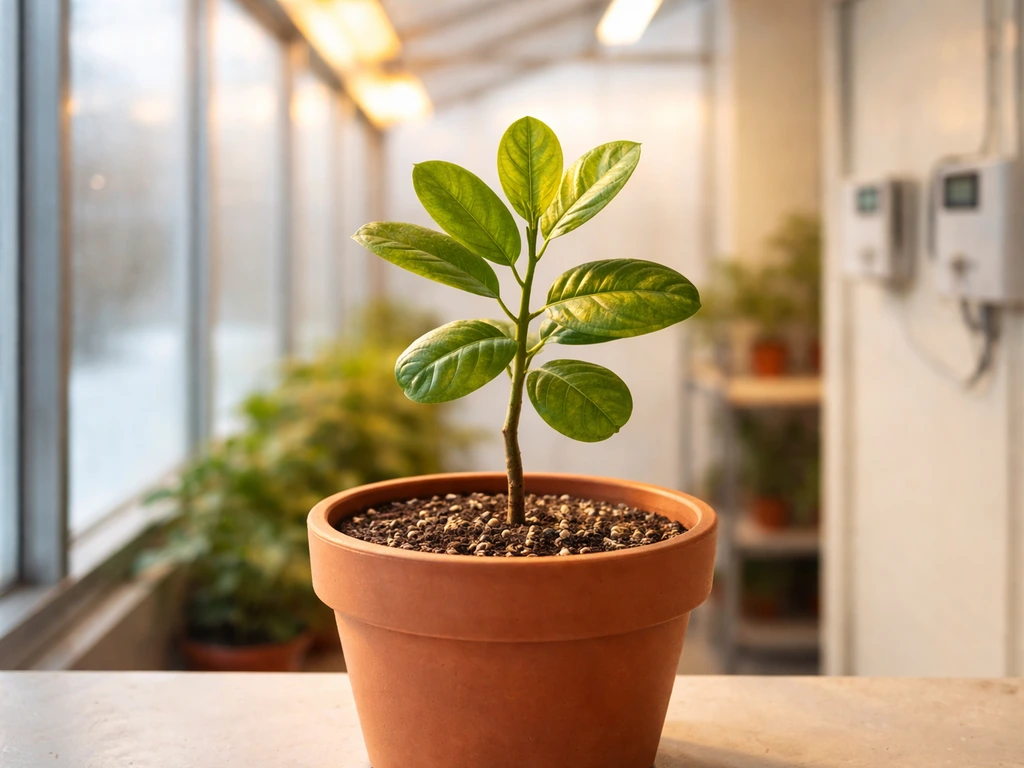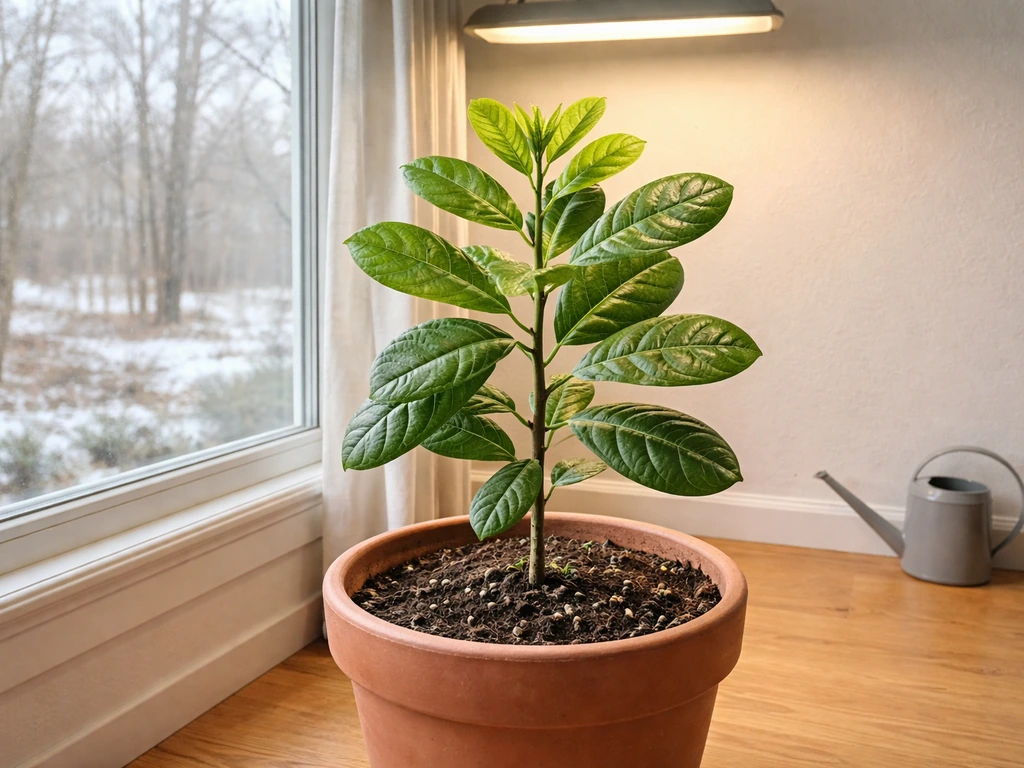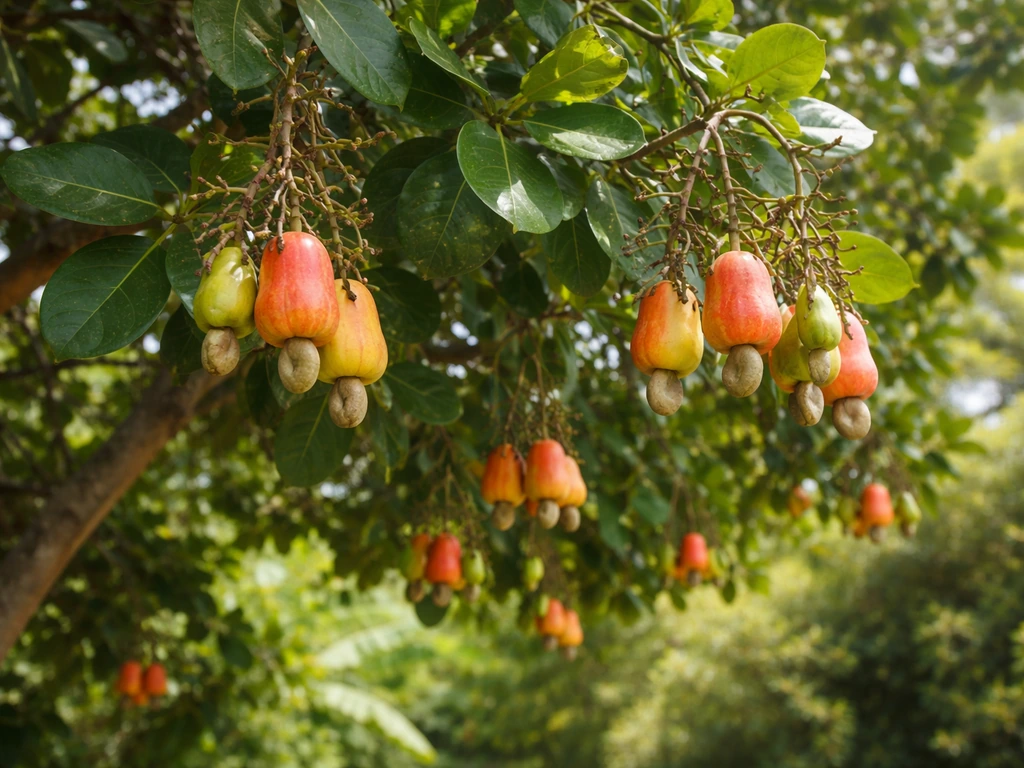
You can grow a cashew tree in Michigan, but you almost certainly cannot harvest cashews from it outdoors. Keeping the plant alive through even one Michigan winter as an outdoor tree is essentially impossible. Cashews (Anacardium occidentale) are tropical trees that die at temperatures below about 28°F (-2°C), and most of Michigan sees lows well below that every single winter. What is realistic is growing cashew as a container plant, bringing it indoors or into a heated greenhouse before the first frost, and treating it as a long-term tropical houseplant project. For many people, the practical answer to where you can grow cashews is inside as a container plant or in a heated greenhouse where can you grow cashews (inside as a container plant or heated greenhouse). Whether you ever see fruit depends on how much heat, light, and space you can provide year-round.
Can You Grow Cashews in Michigan? Realistic Guide
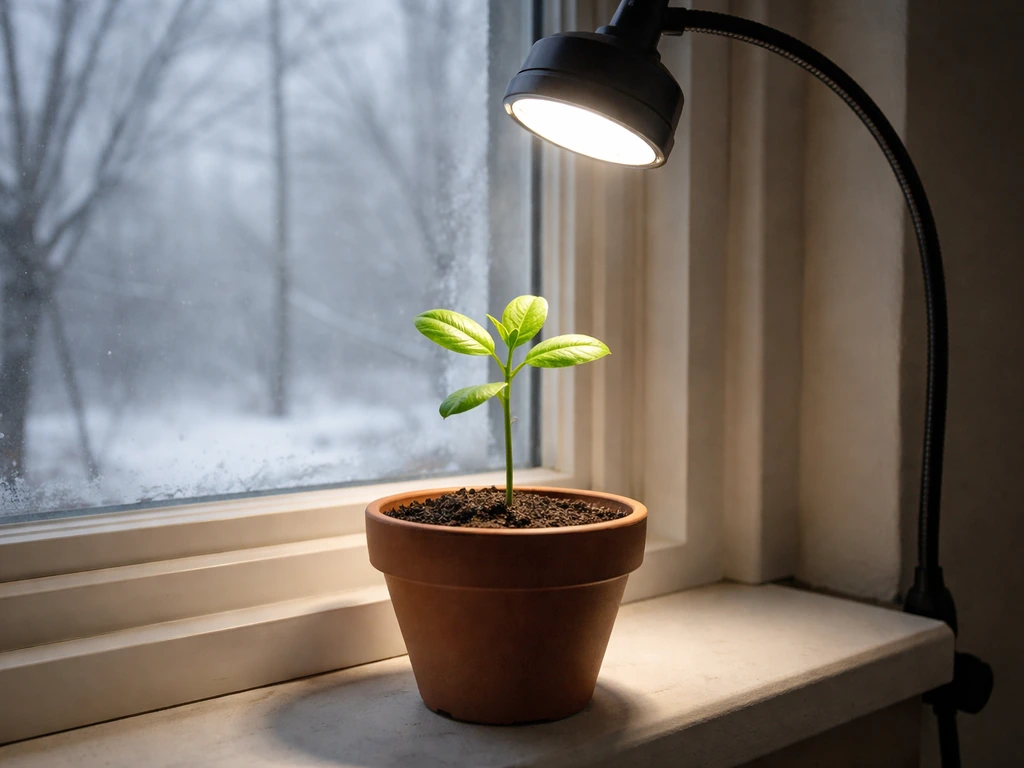
Why Michigan's climate is so challenging for cashews
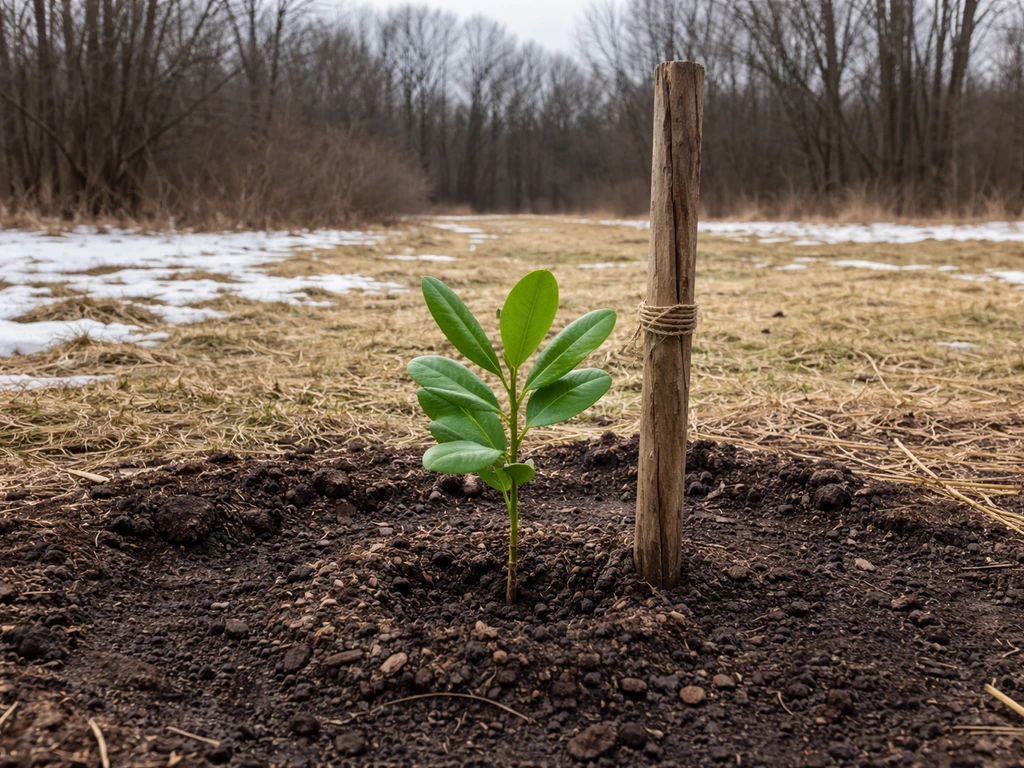
Cashew is native to northeastern Brazil and thrives in hot, seasonally dry tropical climates. It needs a long frost-free season, intense sunlight, and temperatures that stay above 50°F (10°C) even at night. Michigan is the opposite of that in almost every measurable way.
Michigan spans USDA hardiness zones 4a through 6b. The Upper Peninsula and northern Lower Peninsula sit in zones 4a to 5b, where average annual minimum temperatures range from -30°F to -10°F. Even in the mildest corners of southwest Lower Michigan, near Lake Michigan in zone 6b, winter lows regularly drop to 0°F or below. Cashew trees are rated as frost-sensitive to zone 10b at the hardiest, and even a brief dip to 28°F can cause dieback or kill the tree outright. There is no part of Michigan where cashew survives outdoors year-round.
The growing season heat is also a limiting factor. MSU Enviro-weather tracks growing degree days (GDD) across the state using a 50°F base. MSU Extension describes Michigan’s growing degree day patterns, with cooler accumulated totals (about 1,200, 1,700 GDD) in the Upper Peninsula and northern Lower Peninsula and warmer totals (about 2,400, 3,100 GDD) in southern Michigan growing degree day patterns (GDD) across Michigan. Southern Michigan accumulates roughly 2,400 to 3,100 GDD in a typical season. That sounds like a lot until you compare it to cashew's native range, where annual heat accumulation is far higher and the growing season never stops. Cashews typically need five to eight years to begin flowering, and even a mature tree requires sustained high heat and a distinct dry period to trigger reliable flowering and nut development. Michigan's outdoor season simply does not provide either.
It is worth being precise about what success actually means here. There are two separate goals that readers often blend together: keeping a cashew plant alive, and actually getting it to produce cashew nuts. The first goal is achievable in Michigan with the right indoor setup. The second goal is genuinely difficult and, for most Michigan growers, not realistic with current resources.
The best spots in Michigan to attempt it (microclimates matter)
If you want to give a cashew the best possible outdoor time during Michigan's warm months, location within the state matters a lot. Southwest Lower Michigan, particularly the counties along Lake Michigan from Berrien to Ottawa, benefits from the lake's thermal buffering. Frost arrives later in fall and retreats earlier in spring compared to inland areas. These spots can see an outdoor frost-free window from mid-April through late October in favorable years. That is still only about six months of outdoor growing time, and the tree still needs to come indoors.
Within any Michigan property, south-facing walls, paved courtyards, and spots near masonry or concrete structures create warmer microclimates by absorbing daytime heat and radiating it at night. A container cashew parked against a south-facing brick wall in Grand Rapids will stay warmer on cool late-summer nights than one sitting in an open garden bed. These microclimates do not change the winter reality, but they do extend the usable outdoor season by a few weeks in either direction, which helps with total heat accumulation.
The Upper Peninsula and northern Lower Michigan offer no realistic outdoor advantage. Average January minimum temperatures around Houghton Lake run near 10°F (-12°C), and that represents a mid-state station, not the coldest northern areas. If you are in Marquette or Traverse City, the cashew tree spends even more of the year inside. The math on heat accumulation becomes very unfavorable for flowering and fruiting.
Starting your cashew plant: germination and early growth
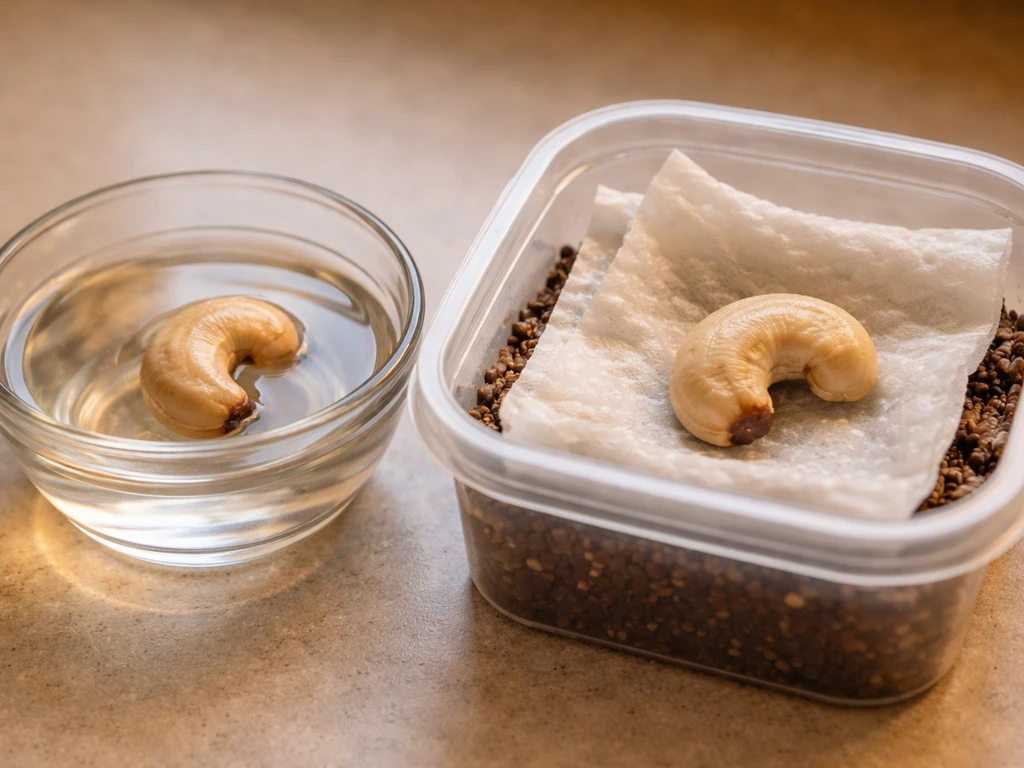
You cannot start a cashew from the roasted nuts in the grocery store. If you are wondering whether you can grow a cashew tree from a cashew, the key is to start with a raw seed, not roasted nuts. The roasting process kills the seed embryo. You need a raw, unprocessed cashew still in its shell, sometimes sold as "raw cashew seeds" from specialty tropical plant suppliers. These are difficult to source and have variable germination rates because the caustic liquid inside the shell (anacardic acid) can damage the seed if the shell is not handled carefully. Handle them with gloves.
To germinate, soak the raw seed in warm water for 12 to 24 hours. Plant it about an inch deep in a well-draining mix, with the curved end of the seed pointing downward. Keep the soil consistently warm, ideally 80 to 95°F (27 to 35°C). Bottom heat from a seedling heat mat makes a significant difference. At the right temperature, germination typically takes 4 to 8 days, though some seeds take up to three weeks. Germination rates are often 50 to 70 percent even with fresh seed, so start a few at once.
For Michigan growers, starting seeds in February or March under grow lights gives the young plant the longest possible first season indoors before its first summer outdoors. Use a pot at least 12 inches deep from the start, because cashew develops a deep taproot quickly and resents being disturbed. Cashews grow fast in good conditions, often putting on several feet of height in the first year under warm, bright conditions.
What the plant needs all year long
Light
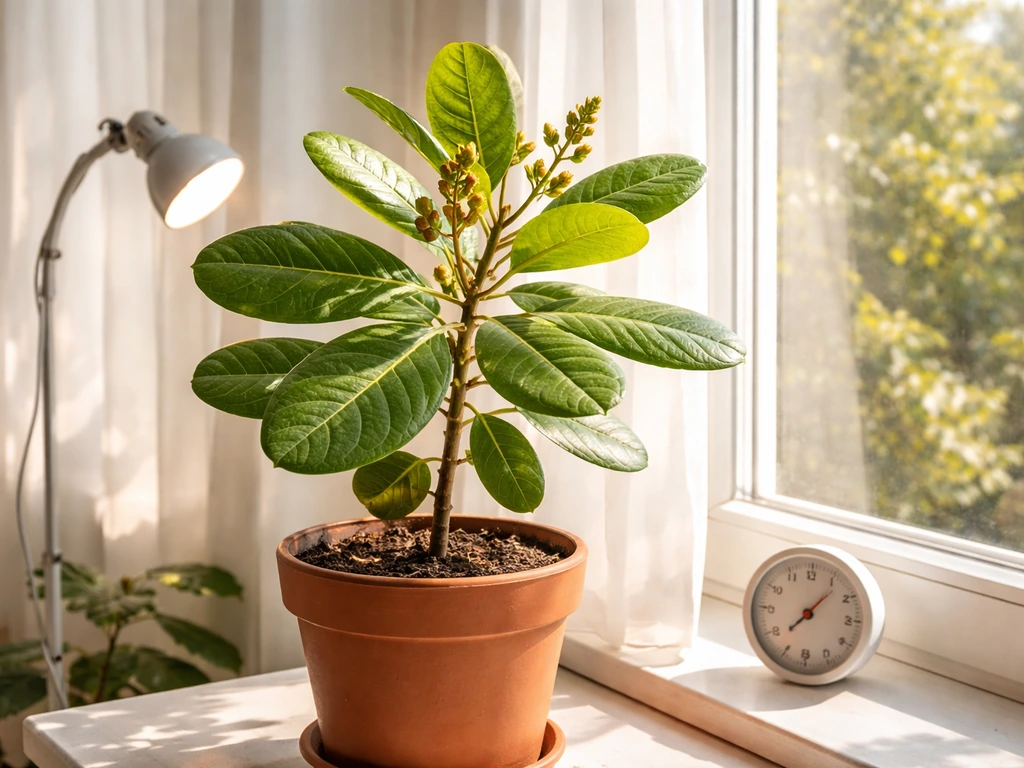
Cashew wants full, intense sunlight for at least six to eight hours a day, and more is better. Outdoors in a Michigan summer, a south-facing position in full sun works well. Indoors, even a south-facing window is usually not enough, especially in winter when day length drops to nine hours and light intensity is low. Supplement with full-spectrum grow lights, positioning them 12 to 18 inches above the canopy for 14 to 16 hours daily when the plant is inside.
Temperature
Keep the plant above 50°F at all times, and ideally above 65°F for active growth. Temperatures between 75 and 95°F promote the fastest development. Cold drafts near doors or windows in a Michigan winter can damage leaves even if the room thermostat reads 68°F. Keep the container away from exterior walls and uninsulated windows.
Humidity
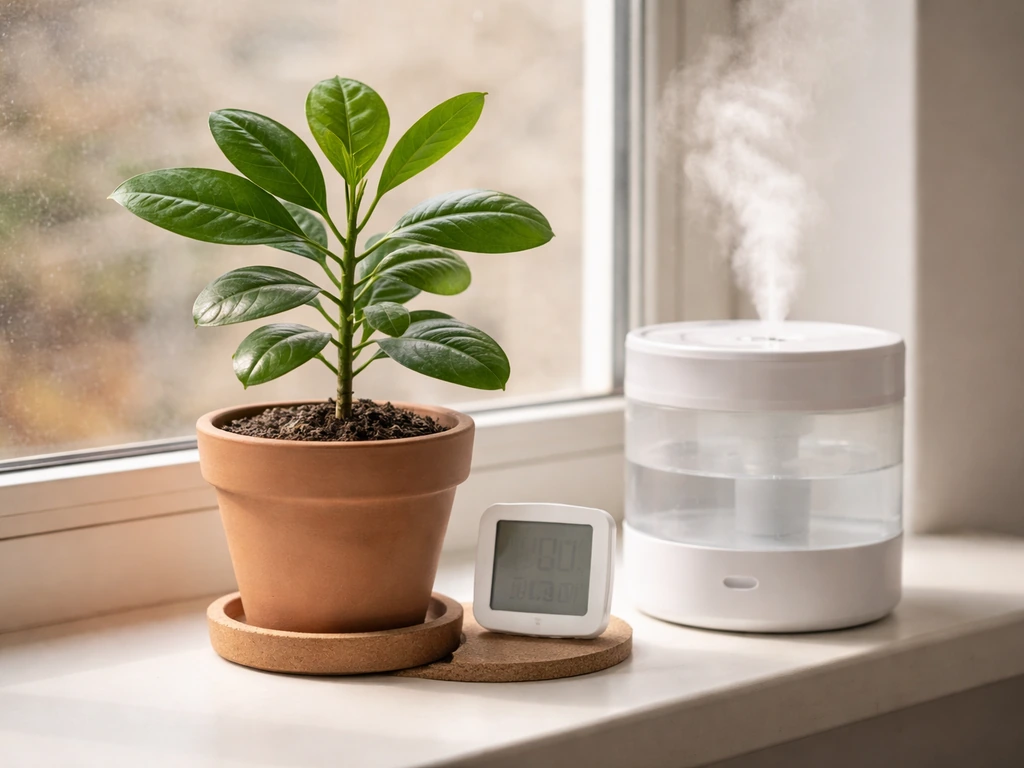
Cashews are adaptable to relatively low humidity during dry seasons in their native range, but Michigan's dry winter heating air can stress the plant. Aim to keep indoor humidity at 40 to 60 percent. A humidity tray or room humidifier near the plant helps during the heating season.
Soil and drainage
Cashews absolutely require excellent drainage. Root rot is the fastest way to kill a container cashew. Use a mix of roughly 50 percent coarse perlite or pumice and 50 percent quality potting mix. The pH target is 5.0 to 6.5. Avoid heavy peat-dominant mixes that stay wet. Make sure your container has large drainage holes and is never sitting in standing water.
Watering
During active growth (spring through early fall), water thoroughly when the top inch of soil dries out. In winter, when the plant is growing slowly indoors under limited light, back off significantly. Overwatering in low-light winter conditions is extremely common and almost always leads to root rot. Let the top two to three inches dry before watering from November through February.
Fertilization
Feed with a balanced slow-release fertilizer (such as 10-10-10) in spring when new growth begins, then switch to a lower-nitrogen, higher-potassium fertilizer in midsummer to encourage the plant toward reproductive maturity. Avoid heavy nitrogen feeding in fall, which pushes soft new growth that is vulnerable to cold. Stop fertilizing entirely from November through January.
Getting through Michigan winters: your overwintering options
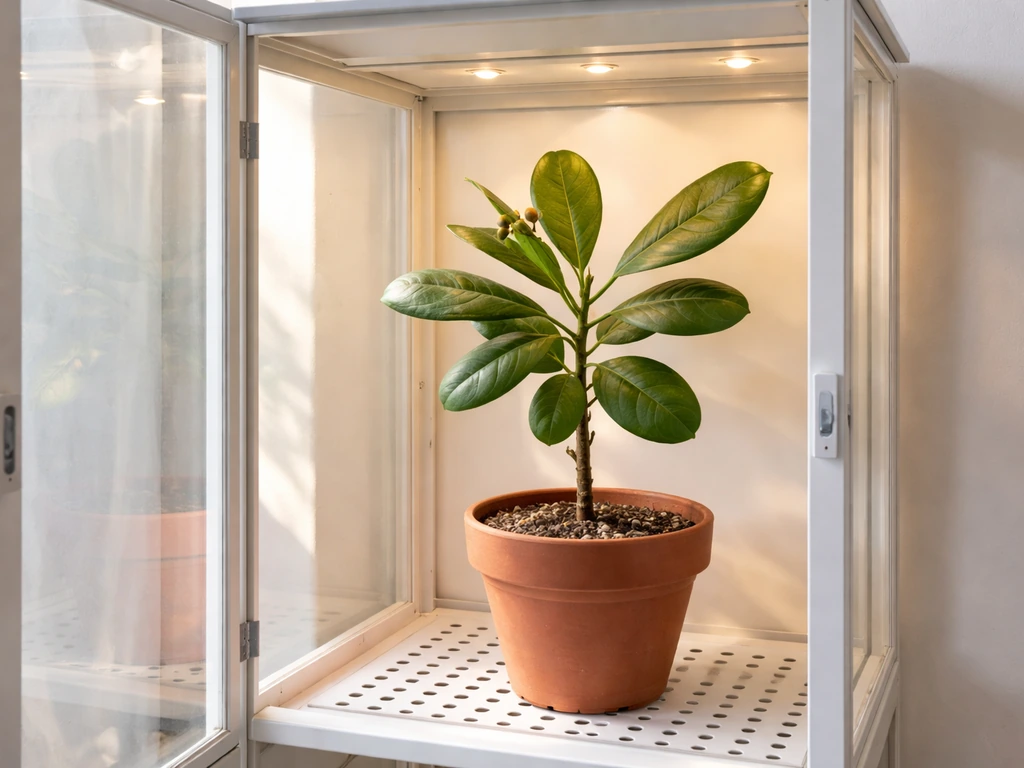
This is where Michigan cashew growing either succeeds or fails. The tree must be inside before nighttime temperatures approach 40°F to be safe. In most of Michigan, that means bringing the tree inside by mid to late September. It will not go back outside until late May or early June, meaning roughly eight months indoors every year.
You have three realistic overwintering approaches, and the one you choose largely determines whether the plant thrives or just survives.
- Bright indoor room with supplemental lighting: The most common approach. Place the tree near your sunniest south-facing window and add full-spectrum LED grow lights on a 14-to-16-hour timer. Maintain room temperature above 65°F. This works for keeping the plant alive but rarely provides enough light intensity to trigger flowering.
- Heated greenhouse or sunroom: The best option for serious growers. A south-facing sunroom or a dedicated heated greenhouse that stays above 55°F overnight and reaches 75 to 85°F during sunny days provides conditions close to what the plant needs. Glass or polycarbonate glazing transmits far more light than even the best indoor window. If you have this option, use it.
- Semi-dormant cool overwintering: Not recommended for cashew. Unlike some tropical trees that tolerate cool dormancy, cashew does not handle cold rest well. Attempting to hold it at 45 to 50°F to save energy will stress the plant and often leads to leaf drop and slow recovery.
When moving the plant outside each spring, do it gradually. A week of partial shade and gradually increasing sun exposure prevents sunscald, which can blister leaves that have adapted to indoor light levels.
Flowering, fruiting, and what to realistically expect in Michigan
Here is the honest conversation about nut production. Cashews begin flowering at three to five years from seed under ideal tropical conditions. Under the stress and limited light of container culture in Michigan, expect that timeline to stretch considerably, often to seven or more years. And even when flowering occurs, the plant requires specific conditions to set fruit.
Cashew flowers are triggered by a distinct dry season followed by warmth and high humidity, a cycle that does not naturally occur in Michigan's climate calendar. Achieving this artificially means withholding water for four to six weeks in late fall or winter while keeping the plant warm, then resuming watering to simulate the start of the rainy season. This can coax flowering in a mature specimen, but it requires careful attention and a plant that is already healthy and root-established.
If the plant does flower, each individual cashew nut develops from a single flower, hanging below the swollen, fleshy cashew apple. The nut itself takes about two months to mature after pollination. In a container setting without natural pollinators, hand pollination with a small brush improves fruit set. Even so, a container cashew in Michigan is unlikely to produce more than a handful of nuts in a good year, and many growers never see fruit at all.
The realistic summary: if you start a cashew from seed today, keep it healthy indoors through Michigan winters, and provide supplemental lighting and careful dry-season simulation, you might see flowers in seven to ten years and a small nut set after that. Most Michigan growers who try this will enjoy the plant as an interesting tropical foliage specimen long before they ever harvest a cashew nut from it.
Comparing your options: cashews vs. actually growing nuts in Michigan
| Option | Cold Hardiness | Nut Production in Michigan | Container Viable | Time to First Nuts |
|---|---|---|---|---|
| Cashew (Anacardium occidentale) | Zone 10b (28°F minimum) | Very unlikely outdoors; possible indoors with effort | Yes, with major light support | 7–10+ years under container conditions |
| Hazelnut (Corylus americana) | Zone 4 | Yes, outdoors throughout Michigan | No (needs space) | 3–5 years |
| Black Walnut (Juglans nigra) | Zone 4 | Yes, throughout Michigan | No | 10–15 years |
| Heartnut / Japanese Walnut (Juglans ailantifolia) | Zone 4–5 | Yes, in most of Michigan | No | 5–7 years |
| Chestnut (Castanea mollissima hybrid) | Zone 4–5 | Yes, throughout Michigan | No | 3–5 years |
If true cashew production isn't your goal, here's what to do instead
If you want to harvest actual nuts from trees you plant in Michigan, the honest advice is to shift focus to cold-hardy species. American hazelnuts are the most forgiving, producing nuts in as few as three years, growing across all Michigan zones, and tolerating the coldest Upper Peninsula winters without protection. Hybrid chestnuts from Chinese-American crosses are another excellent choice, producing sweet, usable nuts in five years or less. Both species are dramatically more productive and far easier to manage in Michigan than any tropical nut tree.
If what you actually want is to grow a cashew tree because it interests you botanically or as a tropical plant project, go ahead and try it. It is a rewarding container plant with attractive foliage, and the challenge of learning its needs is genuinely interesting. Just go in with clear expectations: you are growing a tropical specimen that lives in your house eight months of the year, not a productive orchard tree.
Growers in other northern states face the same constraints. Growers in other northern states face the same constraints, so if you are asking can you grow cashews in canada, the answer follows the same basic climate limits and indoor overwintering needs. If you are wondering whether you can grow cashew nuts in the UK, the same tropical temperature and winter-overwintering challenges apply can you grow cashew nuts in the uk. The situation in Michigan is comparable to trying to grow cashews in Ohio or attempting cashew cultivation in Canada, where the climate gap between what the tree needs and what the environment provides is simply too large for reliable outdoor production. States like Florida represent the realistic northern outdoor limit for cashew in the continental US, and even there, a hard freeze can kill established trees.
Your practical next steps
- Source raw, unprocessed cashew seeds from a reputable tropical seed supplier. Verify the seeds are truly raw and unroasted before purchasing.
- Set up a germination station with a heat mat targeting 85°F, a deep container with a well-draining mix, and a grow light on a 16-hour timer.
- Start seeds in February or March to maximize the first season's growth before outdoor placement in late May.
- Plan your overwintering space now. If you have a heated sunroom or greenhouse, great. If not, budget for quality LED grow lights before the first fall.
- Track your local frost dates using MSU Extension's Michigan Gardening Calendar to know exactly when to move the tree outside and when to bring it back in.
- If you want to harvest nuts in the next five years, plant American hazelnuts or hybrid chestnuts in a Michigan-appropriate outdoor location as a parallel project.
FAQ
Can you grow cashews in Michigan outdoors at all, even if you can’t overwinter them?
Yes, you can keep a container cashew outdoors during the warm months, but it must be moved in before nights consistently approach the 40°F range. Expect little or no progress toward flowering outdoors, because cashews still need sustained warmth and strong light, plus a cold- and frost-free winter they will not get outside.
What’s the minimum temperature my cashew can tolerate if I keep it in a container?
Treat 50°F as the safety floor and avoid drafts near doors and uninsulated windows. Even if the room thermostat is higher, cold air leaking at night can trigger leaf damage. If you must gamble on late-season weather, use indoor placement as the default, not “just one more cold snap.”
Do I need a heated greenhouse in Michigan, or will a window setup work?
A window setup usually keeps the plant alive but often fails to provide enough winter light and warmth for strong growth. If you do not have supplemental grow lights, plan on slower growth, more leaf drop, and longer timelines before any possible flowering. For best results, grow lights plus consistent indoor temperatures matter more than a large window alone.
Can I keep my cashew outside in summer without acclimating it?
No, sudden full-sun exposure after being indoors can cause sunscald, blistering, and leaf burn. Move it gradually using partial shade for about a week, then step up sun exposure until it is in full sun.
Is it better to grow cashews from seed, or buy a nursery plant?
From a planning standpoint, seed is usually the clearer route because you control the start date and can ensure the plant is root-established before winter. Nursery plants can be fine, but you still must verify whether they are healthy, well-rooted, and already accustomed to container conditions, then be ready for the same lighting and overwintering demands.
Will cashews grow if I use a regular potting soil without changing the drainage?
It’s risky. Cashews need a fast-draining mix, about half quality potting mix and half coarse perlite or pumice, plus a pot with large drainage holes. Heavy soils that stay wet commonly lead to root rot, especially during Michigan’s low-light winter months.
How often should I water a Michigan container cashew in winter?
Much less than you think. In November through February, let the top two to three inches dry before watering, because overwatering in low light is the most common killer. If you use saucers, empty them every time to prevent standing water.
What humidity level should I target indoors in Michigan?
Aim for roughly 40 to 60 percent during winter heating season. Dry indoor air can cause stress and leaf issues even when temperatures are acceptable. A humidifier nearby or a humidity tray can help, but do not allow the plant to sit in wet material.
Do I need to hand-pollinate flowers if my cashew blooms indoors?
If you want any chance at fruit set in a container, hand pollination is often necessary because there are no natural pollinators. Use a small brush to transfer pollen between blooms, then watch for nut development timing. Even with pollination, expect only a small nut set in a good year.
How long will it take before a cashew might flower in Michigan?
With Michigan’s indoor container constraints, flowering often stretches to about seven or more years from seed. Even then, flowers do not guarantee nuts because fruiting depends on a realistic dry-season trigger and overall plant maturity.
Can I force flowering by withholding water every winter?
Sometimes, but it requires a healthy, established plant and careful timing. The approach involves a multi-week dry period in late fall or winter while keeping the plant warm, then resuming watering to simulate the rainy season. If you do this too early, or you keep conditions too dry for too long, you can stress the plant instead of triggering flowering.
What pot size should I use, and should I repot after the first year?
Use a deeper container early, at least 12 inches, because cashews develop a deep taproot quickly and resent disturbance. If repotting is necessary, do it carefully and only when the plant is actively growing, then keep temperatures stable and lighting strong to help recovery.
Are there Michigan climates where cashews fruit reliably outdoors?
No. The limiting factors are both winter hardiness (cashews die around the upper-20s°F) and the total heat and seasonal pattern needed for flowering. Even the warmest Michigan corners still cannot provide consistent outdoor year-round conditions.
If I want nuts in Michigan, what’s the easiest alternative to cashews?
For practical nut production, cold-hardy species are dramatically more reliable, such as American hazelnuts and hybrid chestnuts. They tolerate Michigan winters and tend to start producing much sooner, with far less need for indoor climate control.