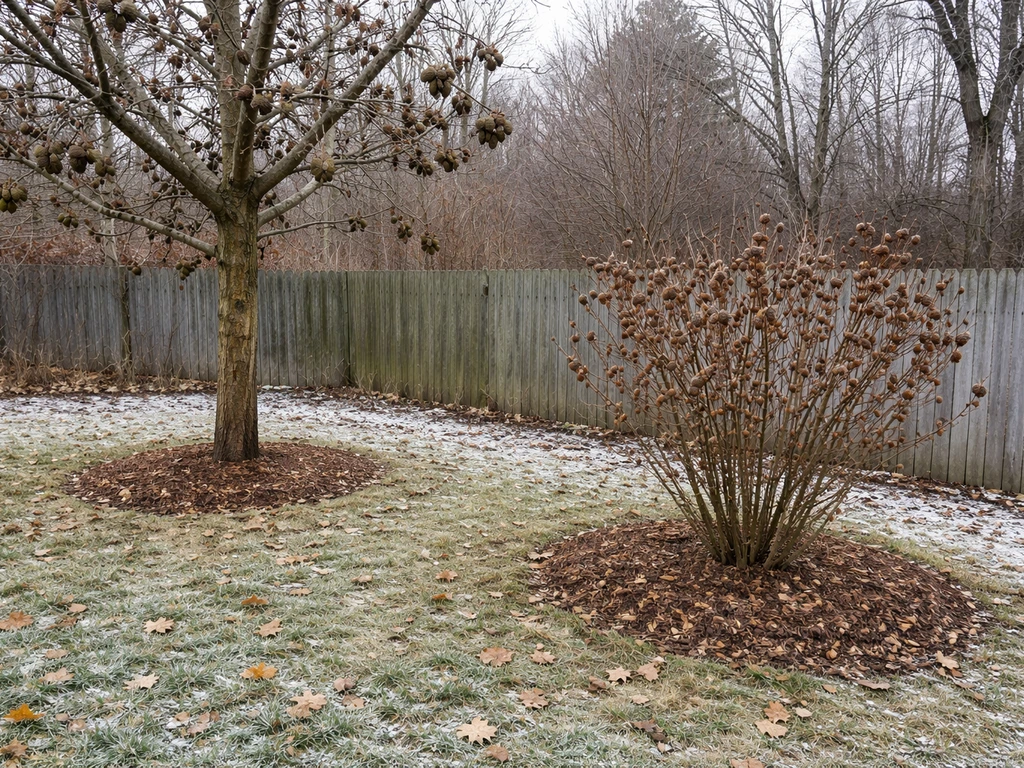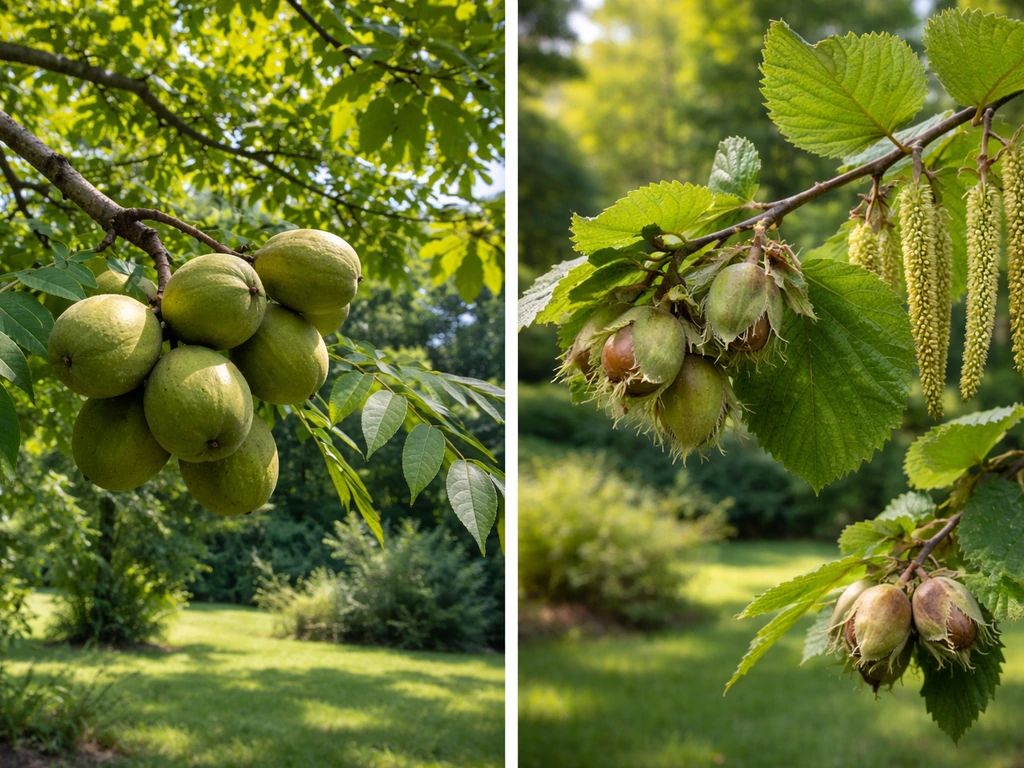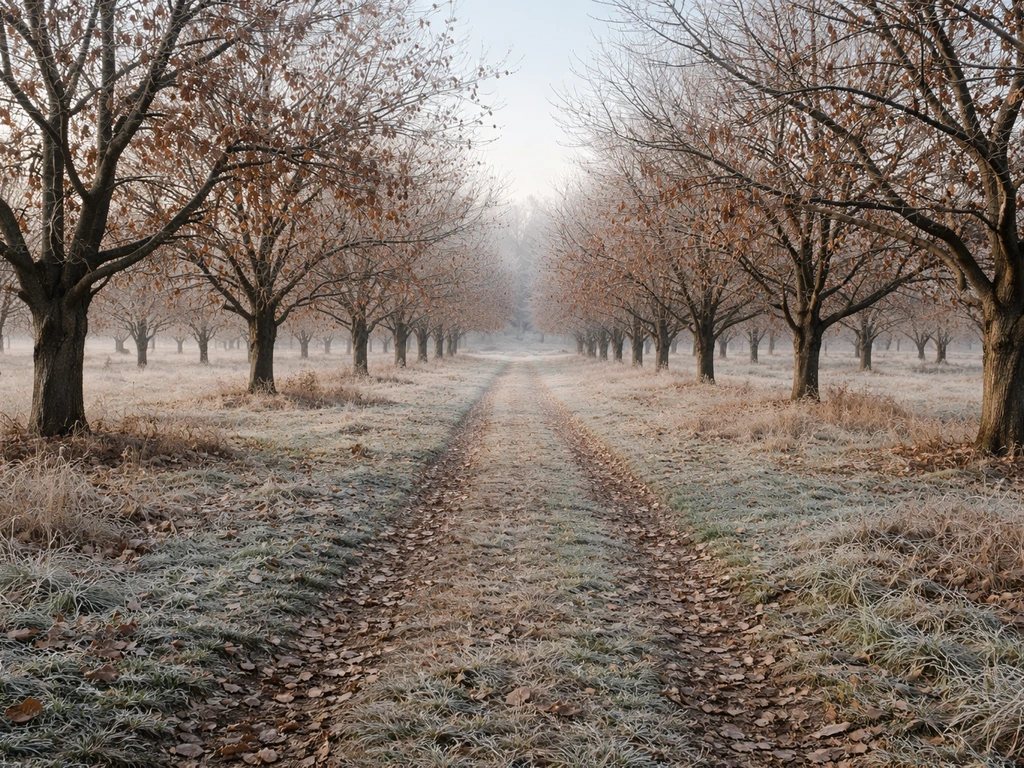
Ontario is genuinely one of the better Canadian provinces for growing nut trees, but the range of realistic options depends heavily on where in Ontario you are. In southern Ontario (roughly zones 5b to 7a), you can grow hazelnuts, hybrid chestnuts, black walnut, heartnut, and even English-type walnuts in sheltered spots. Push into central Ontario and the list shrinks to hazelnuts, black walnut, and the hardiest hickories. Get into near-northern Ontario and you're mostly working with native hazelnuts and a few cold-tolerant exotics. The key is knowing your hardiness zone, your summer heat accumulation, and which specific cultivars have been tested for Ontario conditions.
What Nut Trees Grow in Ontario: Best Options by Region
Marcus Hendricks
27 May 2026
Nut tree shortlist for Ontario
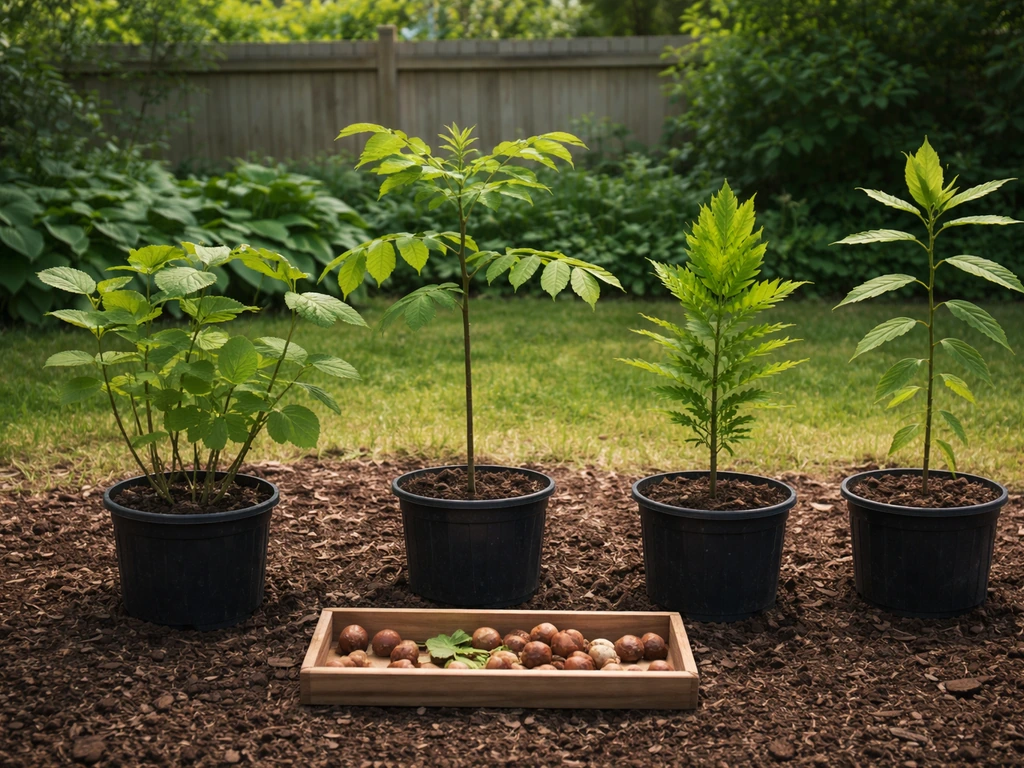
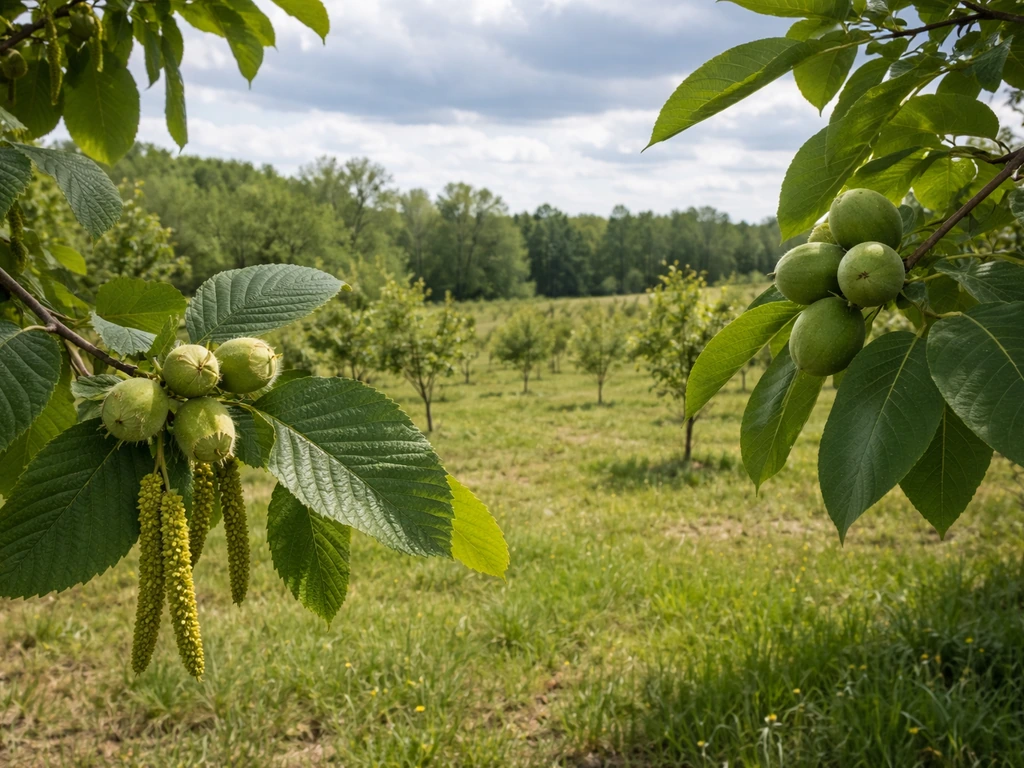
Not every tree that produces something nut-shaped is worth planting for food. Here are the species that actually bear edible nuts in Ontario under realistic growing conditions, listed from most to least widely adaptable across the province.
- Hazelnut (Corylus avellana hybrids and Corylus americana): the most broadly adaptable nut crop for Ontario, with breeding programs specifically targeting Ontario hardiness and disease resistance
- Black walnut (Juglans nigra): native to southwestern Ontario, productive, and cold-hardy, though the nuts take effort to process
- Heartnut (Juglans ailantifolia var. cordiformis): a Japanese walnut relative that performs well across much of southern Ontario and cracks more easily than black walnut
- Hybrid chestnut (primarily Chinese x American or Chinese x European crosses): the practical chestnut option for southern Ontario; blight resistance is essential
- Shagbark and shellbark hickory (Carya ovata, Carya laciniosa): slow, but native and genuinely productive in southern Ontario with patience
- English/Persian walnut (Juglans regia): viable in warmer pockets of southern Ontario with the right cultivar, but spring frost is a recurring problem
- Butternut (Juglans cinerea): native and historically productive, but devastated by butternut canker and legally protected; not a planting recommendation today
- Almond and pecan: possible only in very specific southern Ontario microclimates; borderline cases discussed separately below
Ontario's climate: zones, heat units, and why location really matters
Ontario spans an enormous range of climates. The USDA hardiness zone system (based on average annual extreme minimum winter temperature, using 10°F zones divided into 5°F half-zones) is the standard framework for assessing winter survival. Southern Ontario towns like Ajax sit around zone 6b, while areas like Alexandria in eastern Ontario are closer to zone 5a. As you move north toward Sudbury and beyond, zones drop to 4b and colder. That 2-zone difference translates to winter lows that can be 10 to 20°F colder, which eliminates most commercial nut species outright.
Winter cold is only half the story. Nut trees also need enough summer warmth to fill and ripen nuts before frost. Ontario uses Crop Heat Units (CHU) as its primary heat-accumulation metric, which accounts for both daytime highs and nighttime lows in a way that reflects crop development better than simple Growing Degree Days (GDD). Chestnuts and English walnuts need more accumulated heat than hazelnuts or black walnuts, which is why the same species can winter-survive in zone 5b but still fail to ripen its crop if the summer is cool and short. This CHU gap catches a lot of gardeners off guard: their tree survives the winter fine, then never produces usable nuts because the growing season runs out before the kernels develop.
Spring frost timing adds a third variable, particularly for hazelnuts and English walnuts. Even if a tree survives winter and accumulates enough summer heat, a late frost in April or early May can damage catkins (the male flowers on hazelnuts) or kill emerging flower buds on walnuts, wiping out a year's crop. Ontario's cold and wet spring conditions are a recurring problem in this regard, not a rare event.
Best bets by region
Southern Ontario (zones 5b to 7a)
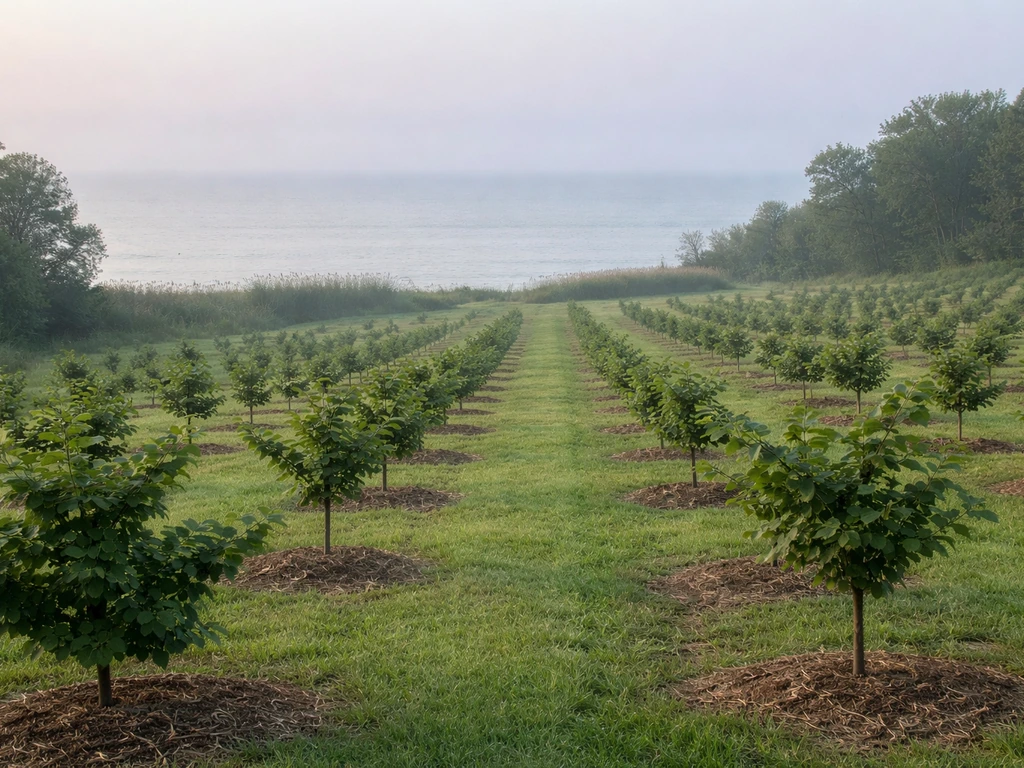
This is the sweet spot for nut growing in the province. The Niagara Peninsula, Essex County, and the areas around Lake Erie and Lake Ontario benefit from moderating lake effects that push effective hardiness into zone 6b and 7a territory in spots. Here you can seriously consider hybrid chestnuts, heartnut, English walnut (with cultivar selection), hazelnuts, and even push the limits with almond or pecan on south-facing slopes with good heat retention. Black walnut is common and productive in moist, low-lying areas of southwestern Ontario specifically. The University of Guelph's research stations at Simcoe and Vineland (both in this southern band) conduct cultivar trials that are directly relevant to what will work in your yard if you're in this region.
Central Ontario (zones 5a to 5b, roughly from Barrie to the Ottawa Valley)
Your reliable options here are hazelnuts (with Ontario-adapted cultivars), black walnut in sheltered lowlands, heartnut in protected sites, and shagbark hickory for the long haul. Hybrid chestnuts are marginal: some winters you'll be fine, others will kill branches back to the graft. English walnut is mostly a gamble here unless you have a genuinely warm south-facing microclimate with good air drainage. Hazelnut is honestly the most practical nut crop for this zone, with breeding work at the University of Guelph specifically addressing winter hardiness and Eastern filbert blight (EFB) tolerance for Ontario conditions.
Near-northern Ontario (zones 3b to 4b, north of Georgian Bay and Sudbury)
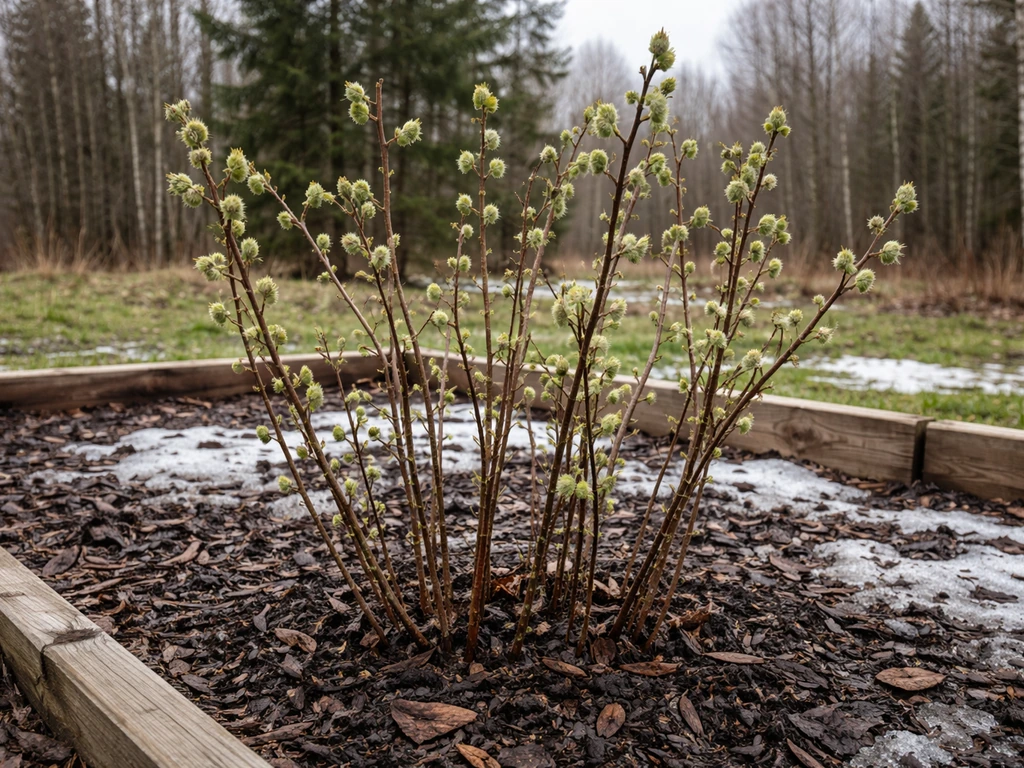
The practical list here is short: native American hazelnut (Corylus americana) and the hardiest hybrid hazelnut cultivars. Black walnut can survive in the warmest pockets but rarely thrives or produces reliably. Most other nut species simply don't have the cold hardiness to survive zone 4 winters without significant die-back. If you're in this region and committed to nut growing, focus your energy on siting hazelnuts perfectly and sourcing cultivars from Ontario-specific breeding programs rather than trying to push southern species north.
Species profiles: what you actually need to know
Hazelnut
Hazelnut is the most practical nut tree for the widest range of Ontario gardeners, and it's the one with the most Ontario-specific research behind it. Corylus americana (American hazelnut) grows wild across Ontario and is the cold-hardiest option, but produces smaller nuts than European-type cultivars. The real interest is in hybrid cultivars that cross European filbert (Corylus avellana) genetics with American hardiness, and this is exactly where University of Guelph's replicated cultivar trials are focused, testing winter hardiness, spring frost tolerance, and EFB resistance across multiple Ontario growing regions.
Eastern filbert blight is the disease you need to worry about most. EFB is a fungal canker that can kill European-type hazelnut stems within a few years in Ontario conditions. Sourcing EFB-tolerant or EFB-resistant cultivars isn't optional here, it's the difference between an orchard that lasts and one that's dead in five years. The other major issue is spring frost: hazelnut catkins (the male flowers) are produced over winter and released early in spring, and a hard frost at the wrong moment interrupts pollination and kills the season's crop even when the tree itself is healthy. Early-leafing varieties face higher frost injury risk, so cultivar phenology matters as much as cold hardiness ratings.
Black walnut
Black walnut (Juglans nigra) is native to southwestern Ontario and performs well in moist, low-lying areas of that region. It's genuinely cold-hardy (zones 4 to 9), long-lived, and produces prolifically once established. The downsides are processing difficulty (the husks stain everything and the shells are brutally hard) and juglone, the allelopathic compound black walnut and butternut produce in quantity. Juglone leaches from roots, husks, and leaves and can seriously harm or kill nearby plants, especially vegetables, many perennials, and some other fruit trees. Plan your spacing and companion planting around this. Also worth knowing: nuts with decomposed husks may have juglone-contaminated kernels that aren't fit to eat.
Heartnut
Heartnut (Juglans ailantifolia var. cordiformis) is an underused gem for Ontario growers. It's a Japanese walnut relative that's hardy to about zone 5, produces heart-shaped nuts that crack cleanly and easily (a major advantage over black walnut), and is generally more adaptable to a range of Ontario soils. OMAFRA has a crop profile specifically for heartnut in Ontario, recognizing it as a realistic commercial and home-garden option. Butternut canker is caused by a fungus called Ophiognomonia clavigignenti-juglandacearum, and the Ontario page explains it spreads through rain-splashed spores and that all naturally occurring butternut trees in Ontario are protected under the Endangered Species Act OMAFRA has a crop profile specifically for heartnut in Ontario. If you want walnut-type nuts without the processing ordeal of black walnut and without the spring-frost vulnerability of English walnut, heartnut is worth serious consideration.
Chestnut
The only chestnuts worth planting in Ontario today are hybrid types, primarily Chinese chestnut (Castanea mollissima) crosses or Chinese x American hybrids. American chestnut (Castanea dentata) is functionally extinct in the landscape due to chestnut blight, and while the Canadian Chestnut Council and other programs have been working on blight-resistant American x hybrid material since the early 2000s, these trees are still in development and not widely available for general planting. Ontario even conducted demonstration plantings of American chestnuts in southern Ontario in 1998 to 1999, but blight remains the single greatest threat.
Chinese chestnut is blight-resistant and hardy to about zone 4b to 5, making it practical across most of southern Ontario. It does best in well-drained, loamy to sandy-loam soils with good sun exposure. Poorly drained clay soils are a consistent problem for chestnut in Ontario. You'll need at least two genetically distinct trees for cross-pollination, as chestnuts are not reliably self-fertile. Ontario has a small but growing chestnut industry based primarily on Chinese and hybrid types, so there are local growers and nurseries with Ontario-tested stock.
Hickory
Shagbark hickory (Carya ovata) and shellbark hickory (Carya laciniosa) are native to southern Ontario and genuinely cold-hardy, but they are slow. Expect 10 to 15 years before meaningful nut production, and some trees take even longer. The nuts are excellent once you get them, and the trees are long-lived, so planting hickory is an investment in something your grandchildren will appreciate. They're not a practical commercial option for most growers, but for a permanent homestead or large property in southern Ontario, they're worth including.
Borderline options: pecan, almond, and what it takes to make them work
Pecan (Carya illinoinensis) is technically possible in the warmest pockets of southwestern Ontario, zone 6 and warmer, but it needs a very long, hot growing season to ripen nuts. Most Ontario summers simply don't accumulate enough CHU for reliable pecan nut fill, even when the tree winters fine. If you're determined to try, you need a south-facing slope, a heat-absorbing wall or dark surface nearby, and a northern-adapted short-season cultivar. Even then, expect inconsistent crops rather than reliable annual harvests.
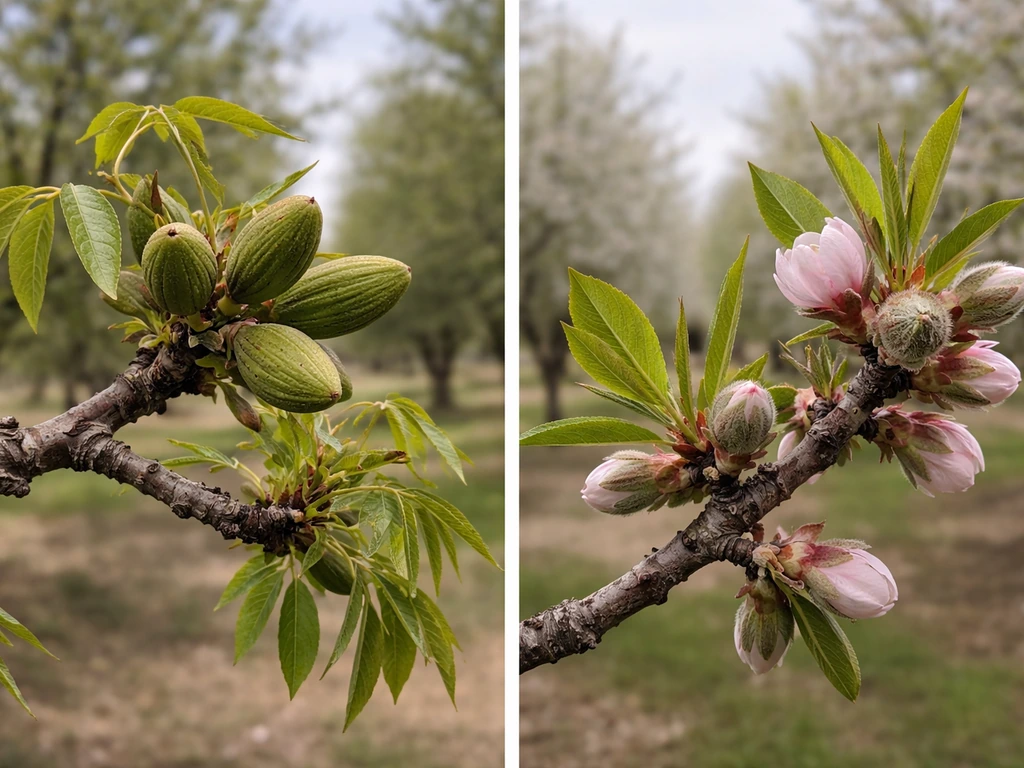
Almond (Prunus dulcis) is at or beyond its northern hardiness limit across most of Ontario. The problem isn't just winter cold, it's the combination of winter survival, early spring bloom timing, and the near-certainty of frost hitting those early flowers before pollination is complete. Ontario industry guidance specifically flags that early pollination is essential if almond has any chance, and even then late frosts routinely end the crop. In zone 7a microclimates on the Niagara Peninsula with a sheltered south-facing aspect and good air drainage, a dedicated grower might get sporadic crops. For everyone else, almond is a nice landscape tree that will frustrate you as a food crop.
Planting requirements and orchard basics
| Species | Hardiness Zone (min) | Soil preference | Sun | Spacing | Pollination need |
|---|---|---|---|---|---|
| Hazelnut (hybrid) | 4b–5a | Well-drained, pH 6.0–6.5 | Full sun | 3–5 m apart | 2+ cultivars required |
| Black walnut | 4a | Deep, moist, well-drained | Full sun | 10–15 m apart | Self-fertile, cross improves yield |
| Heartnut | 5a | Well-drained, fertile | Full sun | 10–12 m apart | Cross-pollination beneficial |
| Hybrid chestnut | 4b–5a | Sandy-loam, well-drained, pH 5.5–6.5 | Full sun | 8–10 m apart | 2+ trees required |
| Shagbark hickory | 4a | Deep, well-drained | Full sun | 12–15 m apart | Cross-pollination beneficial |
| English walnut | 5b (min) | Deep, well-drained, fertile | Full sun, air drainage | 10–15 m apart | Often self-fertile but cross helps |
| Pecan | 6a (min) | Deep, well-drained, fertile | Full sun | 12–15 m apart | 2+ trees strongly advised |
A few principles apply across all nut trees. Drainage is non-negotiable: most nut trees are intolerant of wet feet, and planting in poorly drained clay soils is a common reason Ontario nut orchards fail before they even get started. Full sun means at least 6 to 8 hours of direct sunlight daily, ideally all day. Spacing is something people consistently underestimate at planting time, then regret a decade later when trees are crowded. Pollination requirements are real: chestnuts and hazelnuts especially will not produce nuts reliably from a single tree, so always plant at least two genetically different individuals of the same species.
Air drainage matters more than most gardeners realize. Cold air sinks and pools in low spots, creating frost pockets that can be several degrees colder than a nearby slope. For spring-frost-sensitive species like hazelnut and English walnut, planting on a gentle slope where cold air can drain away from the trees reduces late frost damage significantly. This is especially relevant in central Ontario where spring temperatures are erratic.
Practical care and realistic timelines
Nut trees are not fast. Here's an honest look at what to expect in terms of time to first meaningful harvest, which is one of the most under-discussed aspects of nut growing.
| Species | Years to first nuts | Years to reliable production | Key early management |
|---|---|---|---|
| Hazelnut (hybrid) | 3–5 | 6–8 | Prune for airflow, watch for EFB cankers, protect from late frosts |
| Black walnut | 5–7 | 10–15 | Weed control critical when young, mulch heavily |
| Heartnut | 4–6 | 8–12 | Thin fruit clusters to improve nut size |
| Hybrid chestnut | 3–5 | 6–10 | Weed control, protect from deer, monitor for blight symptoms |
| Shagbark hickory | 10–15 | 20+ | Mulch and patience; almost no intervention needed once established |
| English walnut | 4–6 | 8–12 | Spring frost protection, site selection is critical |
| Pecan | 8–12 | 15+ | Not reliably productive in most of Ontario |
Young nut trees need the basics: weed suppression (especially in the first three years, when competition is most damaging), adequate moisture during establishment, and protection from deer browsing, which can set trees back by years. Mulching generously around the base (but not against the trunk) conserves moisture, moderates soil temperature, and suppresses weeds all at once. Most nut trees need little to no fertilization in good soil, and over-fertilizing pushes vegetative growth at the expense of nut production.
The biggest setback most Ontario nut growers face is not winter cold but unexpected late spring frosts after buds break. This can happen even in zone 6b years, and it's essentially unpreventable at any scale. What you can control is site selection (slopes with air drainage), cultivar choice (later-blooming varieties are less exposed), and having enough trees that a bad year on one doesn't wipe out everything.
How to pick cultivars and make a plan today
The most important step before buying any tree is confirming your hardiness zone and thinking honestly about your site. If you’re wondering what nut trees grow in Idaho, start by matching species to your local hardiness zone and making sure you have enough summer heat for nut fill and ripening. In Michigan, the nut-tree options depend largely on your hardiness zone and your ability to ripen nuts before fall frost. Look up your town on a zone map (Plantmaps has an Ontario-specific tool with town-level detail) and note whether you're in the upper or lower half of your zone. Then assess your actual site: soil drainage, slope, sun exposure, and any nearby structures or bodies of water that moderate temperatures.
For hazelnut, prioritize cultivars from Ontario-specific trials. The University of Guelph's work at Simcoe and Vineland has produced and evaluated varieties specifically for EFB tolerance and Ontario winter hardiness. Ask any nursery you're buying from whether their hazelnut stock is EFB-tolerant and what hardiness zone it was selected for. Avoid sourcing European-type hazelnuts from catalogs aimed at the Pacific Northwest, where EFB pressure and winter conditions are completely different.
For chestnut, seek out Chinese or Chinese x hybrid cultivars from Ontario or northeastern North American sources. Confirm blight resistance before purchasing. For English walnut, look specifically for cultivars with late leafing and spring frost tolerance, as this is what separates productive trees from ones that survive but never crop. Heartnut cultivars are less widely available but worth hunting for; Ontario's OMAFRA heartnut crop profile is a good starting reference for names and sources.
If you're in southern Ontario and want to maximize your options, a practical starting combination is two to three hazelnut cultivars (for cross-pollination and EFB hedge), one or two hybrid chestnuts, and a heartnut or black walnut depending on your available space. This gives you nuts from different seasons, spreads your risk across species, and covers a range of harvest timings. Gardeners in the Great Lakes states like Michigan, Ohio, and Indiana face very similar decisions, and what works along the southern shore of Lake Erie often translates reasonably well to the Canadian side. In Wisconsin, many of the best nut-tree choices similarly depend on your USDA hardiness zone, your heat accumulation, and how well spring frost timing fits your site. Similarly, the approach overlaps with what growers in Wisconsin and Illinois navigate, though Ontario winters generally run colder.
Finally, connect with local resources before you plant. If you’re also wondering what nuts grow in Oregon, the best first step is still matching the species to your local hardiness zone and summer heat. Ontario has extension-level guidance through OMAFRA, active chestnut and hazelnut grower networks, and research programs at the University of Guelph that are actively publishing Ontario-specific cultivar data. If you are comparing locations outside Ontario, you can also look up what nut trees grow in Ohio so you can match species to Ohio hardiness and heat. If you're searching specifically for what nut trees grow in Missouri, start by matching Missouri's hardiness zones and heat accumulation to the species and cultivars that ripen reliably in your local climate. Sourcing trees from Ontario growers who've already done the cold-tolerance filtering for you is worth a premium over ordering generic stock from out-of-province catalogs. The tree that's already proven itself through a few Ontario winters in someone's yard nearby is worth more than any zone rating on a label.
FAQ
Can I plant just one hazelnut or chestnut tree and still get a harvest?
Not reliably, in most of Ontario. Many nut trees are wind-pollinated and still need cross-pollination from a genetically distinct individual of the same species (especially hazelnuts and chestnuts). If you only plant one tree, you may get good growth but low or inconsistent nut set. Plan on at least two trees for those species, with flowering times that overlap.
What site changes matter most if my yard is on the edge of the recommended hardiness zone?
Start with the warmest, most protected microclimate you have. A north-facing slope usually won’t “fix” cold sensitivity, but a gentle south or west slope can delay flowering and reduce exposure, while air drainage reduces late-frost damage in spring. Also avoid low spots where cold air pools, even if the overall property “feels” warm.
My chosen tree survives winter, but how do I know it will actually ripen nuts in Ontario?
Treat “zone” as winter survival only, then check whether the species can ripen before fall. In Ontario, English walnuts and chestnuts can survive winters but still fail to fill nuts when summers are cool. Before buying, look for cultivar descriptions that mention late leafing (for walnuts) or reliably ripening nuts locally (for chestnut and hybrid chestnut) rather than relying on hardiness alone.
Why do hazelnuts sometimes grow well but produce almost no nuts after a cold spring?
For hazelnuts, later-blooming cultivars and those selected for Ontario conditions reduce the odds of catkins or early buds being hit by a late frost. Phenology matters because catkins are formed over winter and released early, so a healthy tree can still skip the crop if the timing is wrong. When comparing varieties, ask nurseries when catkins typically break in your region and whether the cultivar is known for better frost avoidance.
How do I choose hazelnut plants that won’t fail from eastern filbert blight?
EFB-tolerant or EFB-resistant hazelnut cultivars are the difference between a planting that stays productive and one that declines after several years. If you buy generic “European filbert” stock or mislabeled plants, you may not find out until symptoms progress. Ask the seller for the cultivar name and whether it is specifically marketed as Ontario-adapted with EFB tolerance.
Can I grow vegetables or other fruit trees near black walnut and still harvest food?
Black walnut’s allelopathy is the hidden constraint. Juglone can affect nearby vegetables, many perennials, and some fruit trees, and it can also come from decomposing husks, potentially making kernels unsuitable for eating. If you want a food garden, plan long spacing, keep sensitive crops well away, and remove fallen husks promptly.
If I plant multiple cultivars, will I automatically get cross-pollination and better yields?
Yes, but cross-pollination requirements still apply. Many growers get better nut set by planting multiple cultivars of hazelnut (within the same species group) or by ensuring chestnuts have another genetically distinct tree nearby. Even if the trees are compatible, flowering overlap can be the limiting factor, so staggered bloom times can reduce or improve results depending on the year.
Which nut tree is easiest to process for home use in Ontario?
Watch out for “brutally hard” shells and messy husks, which also make processing planning part of the decision. If you have limited time for cracking and cleaning, black walnut can be frustrating even when production is good. Heartnut is often chosen because nuts tend to crack more easily and avoid the same level of staining.
How long should I expect before my Ontario nut trees produce real harvests?
Hickories can outperform in the long run, but they are slow to start. Plan for about a decade or more before meaningful nut production, and sometimes longer. If you want nuts within a few years, focus on hazelnut, hybrid chestnut, heartnut, or black walnut, and treat hickory as a long-term planting.
What causes nut trees to fail in Ontario even when they look healthy after winter?
The most common failure point in Ontario is spring frost after buds break, not winterkill. You can’t prevent frosts, so you manage exposure through slope and air drainage (cold-air settling reduces outcomes), cultivar selection (later bloom helps), and diversity (so one bad year doesn’t wipe everything out). If your yard sits in a frost pocket, consider redirecting the planting to a higher, better-drained area.
Should I fertilize nut trees heavily to boost nut production?
Over-fertilizing is a frequent mistake. Too much nitrogen can push vegetative growth, delay or reduce nut production, and create more tender growth that is vulnerable after spring damage. If your soil is already fertile, skip heavy feeding and instead prioritize weed control, consistent establishment moisture, and proper mulching.
Are almond or pecan worth trying in Ontario, or will I waste money?
Yes, but it usually becomes an intentional experiment. Almond and pecan are not dependable food nut crops for most of Ontario because they need both enough heat units and a narrow window where early bloom is not wiped out by late frost. If you do try, you must select for very short-season behavior, provide strong heat retention features, and accept inconsistent yields.